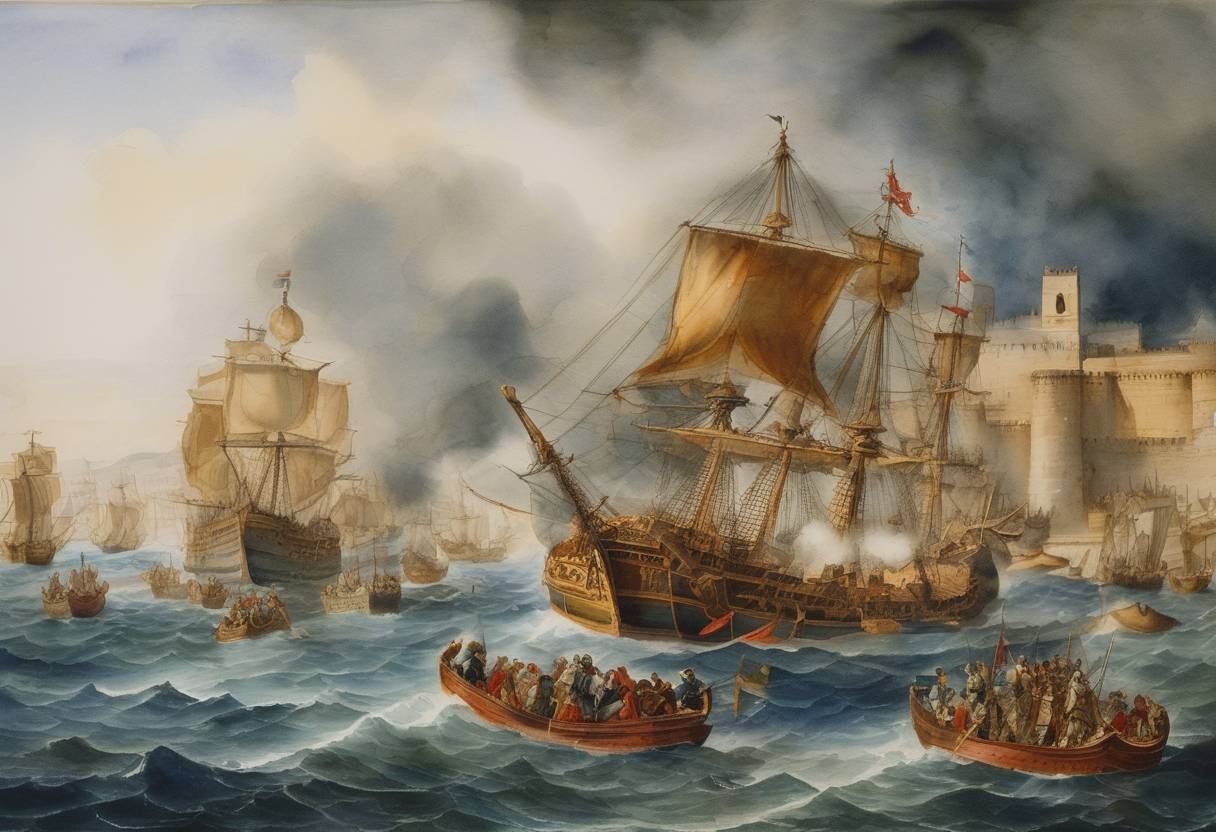
The Naval Battle of Malta (7 August 1283)
Background
The Naval Battle of Malta was a significant confrontation during the War of the Sicilian Vespers, a conflict that engulfed the Mediterranean in the late 13th century. The war began in 1282 after a popular uprising against Charles of Anjou’s French rule in Sicily, leading to an open rebellion supported by the Kingdom of Aragon. The fight over the control of Sicily saw many naval and land battles, with the Maltese waters becoming a strategic arena.
The Battle
On August 7, 1283, the fleets of the Kingdom of Aragon, commanded by Roger of Lauria, and the Kingdom of Sicily, which was aligned with Charles of Anjou’s forces under the leadership of Hugh of Sully, clashed off the coast of Malta. The Aragonese fleet was formidable, known for its seasoned crews and capable leadership, which greatly contributed to their performance in naval engagements throughout the conflict.
Roger of Lauria employed tactical maneuvers to maximize his advantage. Known for his naval expertise, he organized his fleet in a manner that capitalized on the wind and sea conditions of the day. The Aragonese forces used their superior naval tactics to overcome the Sicilian fleet, despite being similar in size.
Outcome
The battle concluded with a decisive victory for the Aragonese fleet. Roger of Lauria’s strategy resulted in the capture of numerous Sicilian vessels, and many of Hugh of Sully’s ships were either destroyed or commandeered. Hugh of Sully was captured during the battle, delivering a significant blow to the Sicilian cause and diminishing Charles of Anjou’s military presence in the region.
Aftermath
The Aragonese victory at the Battle of Malta had far-reaching implications. It reinforced their naval dominance in the Mediterranean and further eroded Charles of Anjou’s influence in Sicily. This defeat reduced the Angevin capacity to project power in the central Mediterranean, consolidating the Aragonese control over the contested territories. This battle contributed to the eventual resolution of the War of the Sicilian Vespers, solidifying Aragonese influence over Sicily and altering the power dynamics in the region for years to come.