The Battle of Barnet: April 14, 1471
1471 · Barnet, England
The Battle of Barnet took place during the Wars of the Roses, where Edward IV defeated the Lancastrian forces led by the Earl of Warwick, solidifying his claim to the English throne.
October 2, 1470
The Battle of Edgecote Moor was fought in England during the Wars of the Roses between the forces of the rebellious Richard Neville, Earl of Warwick, and King Edward IV of England. Warwick's forces captured Edward IV, a significant event in the intermittent civil wars between the House of Lancaster and the House of York.
Edgecote, England | House of York
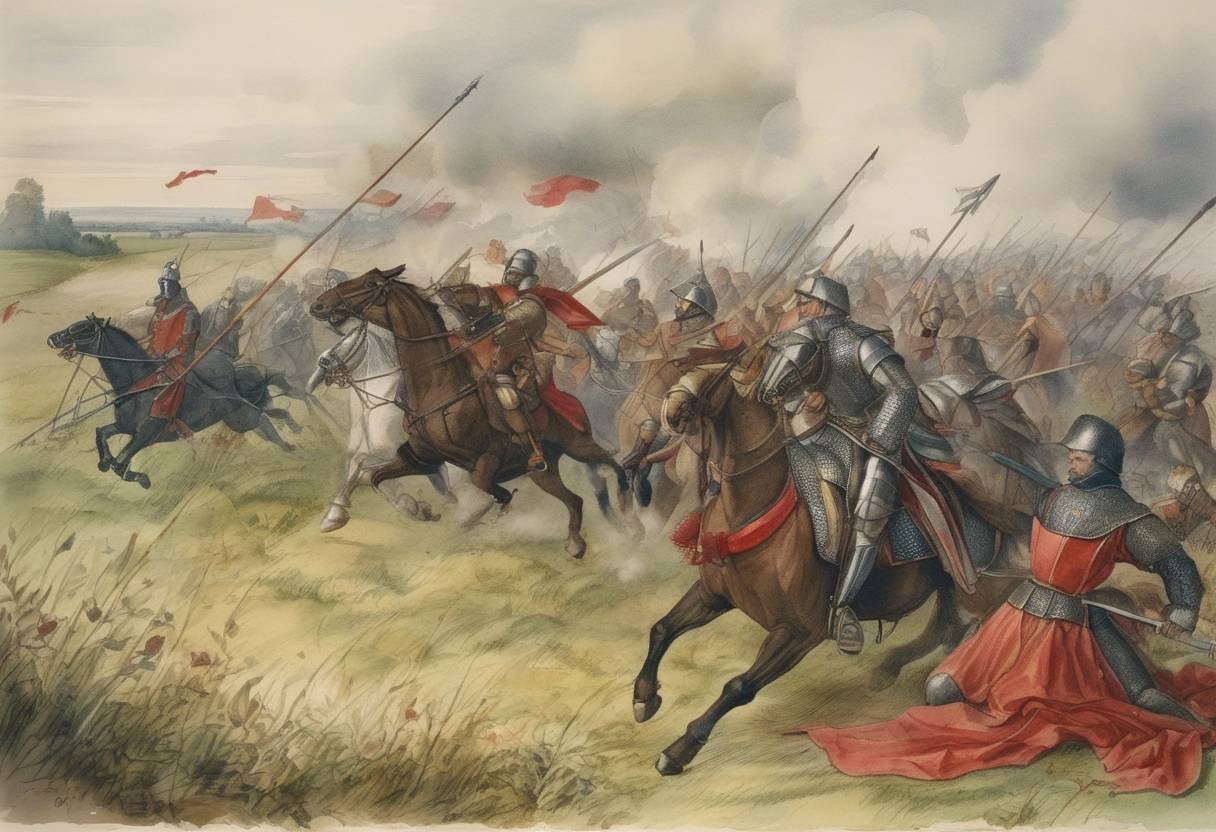
The Battle of Edgecote Moor was a key engagement during the Wars of the Roses but did not occur on October 2, 1470. Instead, it was fought on July 26, 1469. This battle marked a significant confrontation between the forces of Richard Neville, Earl of Warwick, and King Edward IV of England, who were entangled in the complex dynastic and factional struggles characterizing the Wars of the Roses.
Wars of the Roses: A series of civil wars fought over the English throne between factions of the House of Lancaster and the House of York. The conflict was driven by the struggle for power among the English nobility.
Richard Neville, Earl of Warwick: Known as the “Kingmaker,” Warwick originally supported Edward IV but their relationship deteriorated over political disagreements and Edward’s secret marriage to Elizabeth Woodville, which undermined Warwick’s influence.
Location: Edgecote Moor, near Banbury in Oxfordshire, England.
Forces: Warwick’s army, commanded by his cousin, Sir John Conyers, faced off against the royal forces supporting Edward IV.
Outcome: Despite Warwick’s absence from the field, his forces managed to defeat the royal army. The conflict led to the capture of King Edward IV shortly thereafter.
Capture of Edward IV: The aftermath of the battle saw the temporary capture of Edward IV by Warwick’s forces, a pivotal moment that shifted the balance of power temporarily.
Impact on Warwick’s Influence: The victory initially bolstered Warwick’s position, allowing him to attempt to exercise control over Edward.
Repercussions: The capture, however, was short-lived as political dynamics shifted again. Edward IV was reinstated to power, leading to further alliances and conflicts until his eventual consolidation of the throne.
Long-term Effects: The ongoing tussles between the two Houses kept England embroiled in intermittent warfare until the eventual ascendancy of the Tudor dynasty.
The Battle of Edgecote Moor is remembered for its influence on the power dynamics during one of England’s most tumultuous periods. Despite its immediate outcomes, the battle highlighted the volatile alliances and the complex nature of aristocratic politics that characterized the Wars of the Roses.
Source: en.wikipedia.org