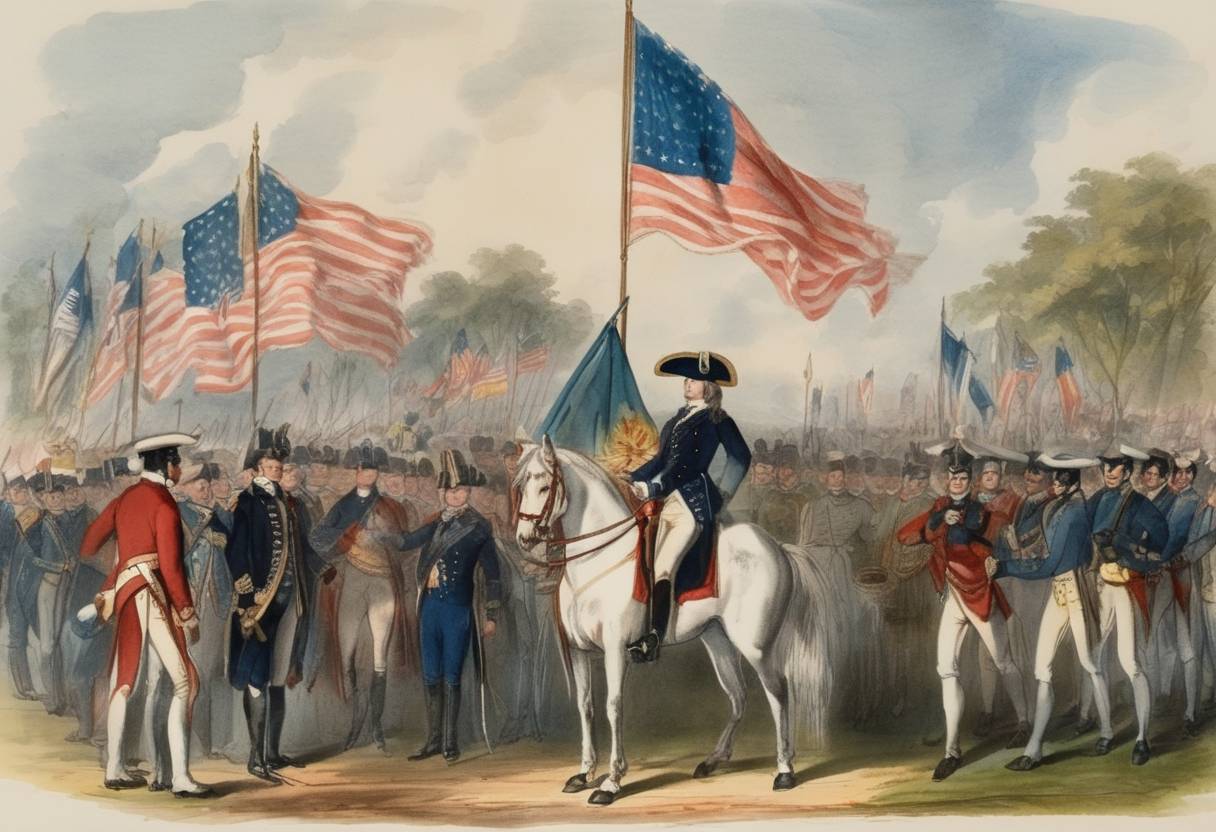
Three Flags Day: December 30, 1803
On December 30, 1803, the United States officially took possession of the Louisiana Territory from France in a formal ceremony held in St. Louis, Missouri. Known as the “Three Flags Day,” this event symbolized the culmination of the Louisiana Purchase, a landmark 828,000 square mile land acquisition which effectively doubled the size of the United States.
Historical Context
Background: The Louisiana Territory, initially claimed by France, had been transferred to Spain in 1762 following the Seven Years’ War. However, it was secretly returned to France in 1800 under the Treaty of San Ildefonso.
The Louisiana Purchase: The United States, under President Thomas Jefferson, seized the opportunity to secure the territory and gain control of the Mississippi River, an essential trade route. Negotiations between the American envoys, Robert R. Livingston and James Monroe, and French officials led to the purchase of the territory for $15 million in April 1803.
The Ceremony
St. Louis Ceremony: The ceremonial transfer on December 30 in St. Louis, Missouri, involved a symbolic three-part ritual. Although the actual signing of the Louisiana Purchase treaty occurred in April 1803 in Paris, this ceremony represented the formal transition of government control.
Flags Transition: The day was named for the procedure where flags from three empires were raised and lowered. Initially, the Spanish flag was lowered, temporarily replaced by the French Tricolore, symbolizing the transfer from Spain to France.
American Flag Raised: Finally, the American flag was raised, signifying the official handover to the United States. This action marked the transfer of governance from French to American hands.
Significance
Territorial Expansion: By acquiring the Louisiana Territory, the United States secured a vast tract of land west of the Mississippi River, facilitating westward expansion and the notion of Manifest Destiny.
Political Implications: The purchase was significant politically, as it strengthened the Jeffersonian Republicans who favored expansion, showcasing the administration’s effective foreign policy.
Economic Impact: Control of the Mississippi River and New Orleans, a critical port, bolstered American trade prospects and stimulated economic growth in the early 19th century.
Aftermath
Integration Challenges: The incorporation of the new land posed challenges, including governance, land distribution, and the negotiation of boundaries with adjacent territories.
Cultural Impact: The acquisition brought various cultural and linguistic groups into the United States, contributing to a more diverse American demographic structure.
The ceremony in St. Louis on December 30, 1803, underscored the changing geopolitical landscape in North America and highlighted the emerging prominence of the United States on the world stage.