Recognition of Indonesian Independence by The Netherlands on December 27, 1949
1949 · Jakarta, Indonesia
The Netherlands officially recognized Indonesian independence, ending over three centuries of colonial rule.
August 16, 1945
The Republic of Indonesia was proclaimed by Sukarno and Mohammad Hatta, marking the beginning of the Indonesian National Revolution against Dutch colonial rule.
Jakarta, Indonesia | Indonesian Nationalists
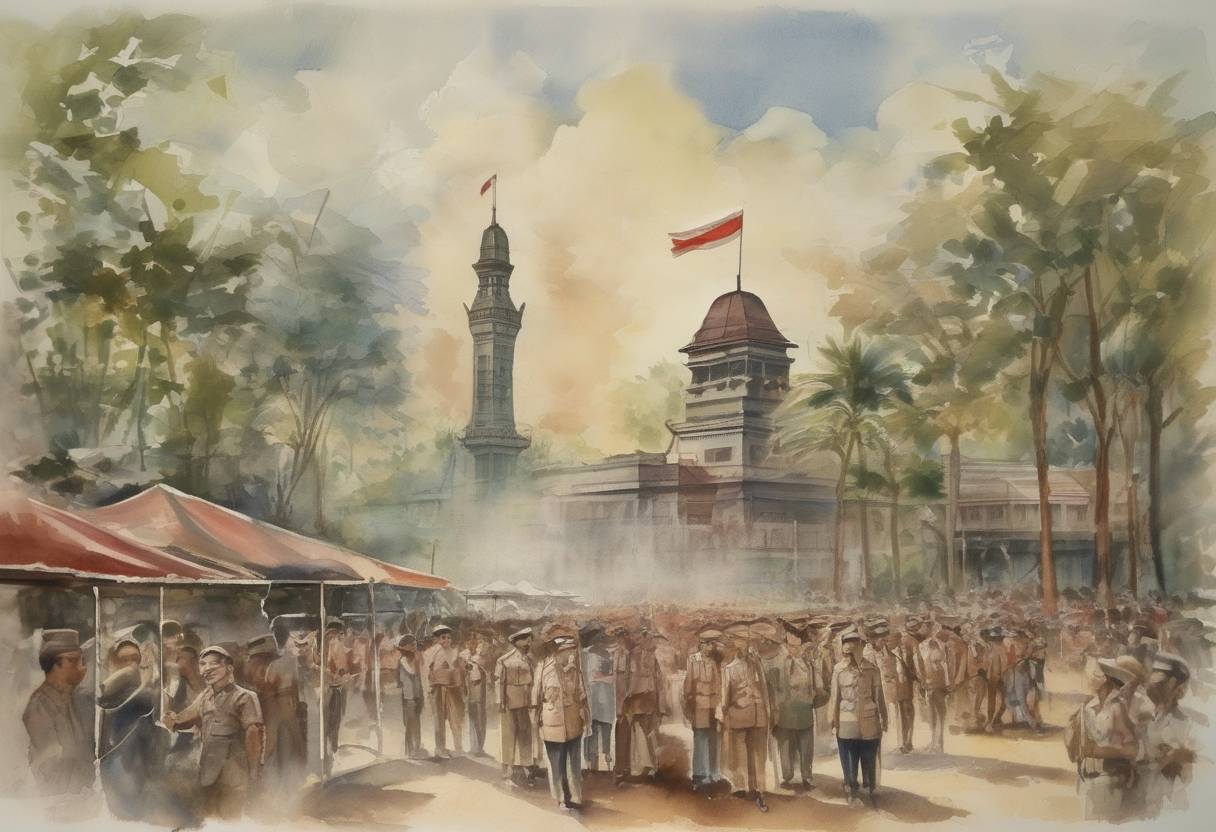
On August 17, 1945, the Republic of Indonesia was proclaimed by Sukarno and Mohammad Hatta, marking a pivotal moment in the nation’s history and the beginning of the Indonesian National Revolution against Dutch colonial rule.
Japanese Occupation: During World War II, the Japanese occupied the Dutch East Indies (now Indonesia) from 1942 to 1945. This occupation disrupted Dutch colonial control and provided a platform for Indonesian nationalists to organize and mobilize.
Indonesian Nationalism: The early 20th century saw the rise of Indonesian nationalism, with various movements and organizations advocating for independence from Dutch rule. Key figures like Sukarno and Hatta emerged as leaders in this struggle.
Japanese Surrender: On August 15, 1945, Japan announced its surrender to the Allied forces, creating a power vacuum in the region. Indonesian nationalists saw this as an opportune moment to declare independence.
Date and Location: The proclamation took place on August 17, 1945, at Sukarno’s residence in Jakarta, then known as Batavia.
Key Figures: Sukarno, a prominent nationalist leader, and Mohammad Hatta, his close associate, were the principal figures in the declaration. They were later appointed as the first President and Vice President of Indonesia, respectively.
Content of the Proclamation: The brief proclamation, read by Sukarno, declared the independence of Indonesia from colonial rule. It was a simple yet powerful statement of sovereignty and self-determination.
Indonesian National Revolution: The proclamation marked the beginning of the Indonesian National Revolution, a four-year struggle against Dutch attempts to re-establish colonial control. This period was characterized by diplomatic negotiations and armed conflict.
International Recognition: Initially, the proclamation did not receive immediate international recognition. However, after years of conflict and negotiation, the Dutch formally recognized Indonesian independence on December 27, 1949.
Legacy: The proclamation of independence is celebrated annually as Indonesia’s Independence Day. It symbolizes the country’s struggle for freedom and the resilience of its people.
Decolonization: Indonesia’s successful fight for independence inspired other colonized nations in Asia and Africa to pursue their own paths to sovereignty, contributing to the global wave of decolonization in the mid-20th century.
Nation Building: The proclamation set the stage for the development of Indonesia as a unified nation-state, despite its diverse ethnic, cultural, and linguistic landscape.
The proclamation of Indonesian independence remains a cornerstone of the nation’s identity and a testament to the enduring spirit of its people in their quest for self-determination.
Source: en.wikipedia.org