Vasco da Gama's Death in Cochin - December 24, 1524
1524 · Cochin, India
Portuguese explorer Vasco da Gama, famous for establishing a sea route from Europe to India, died in Cochin, present-day Kochi, India.
May 20, 1498
Portuguese explorer Vasco da Gama arrived at Calicut (now Kozhikode), India, becoming the first European to reach India by sea, marking a significant milestone in the Age of Discovery.
Calicut, India | Portuguese Empire
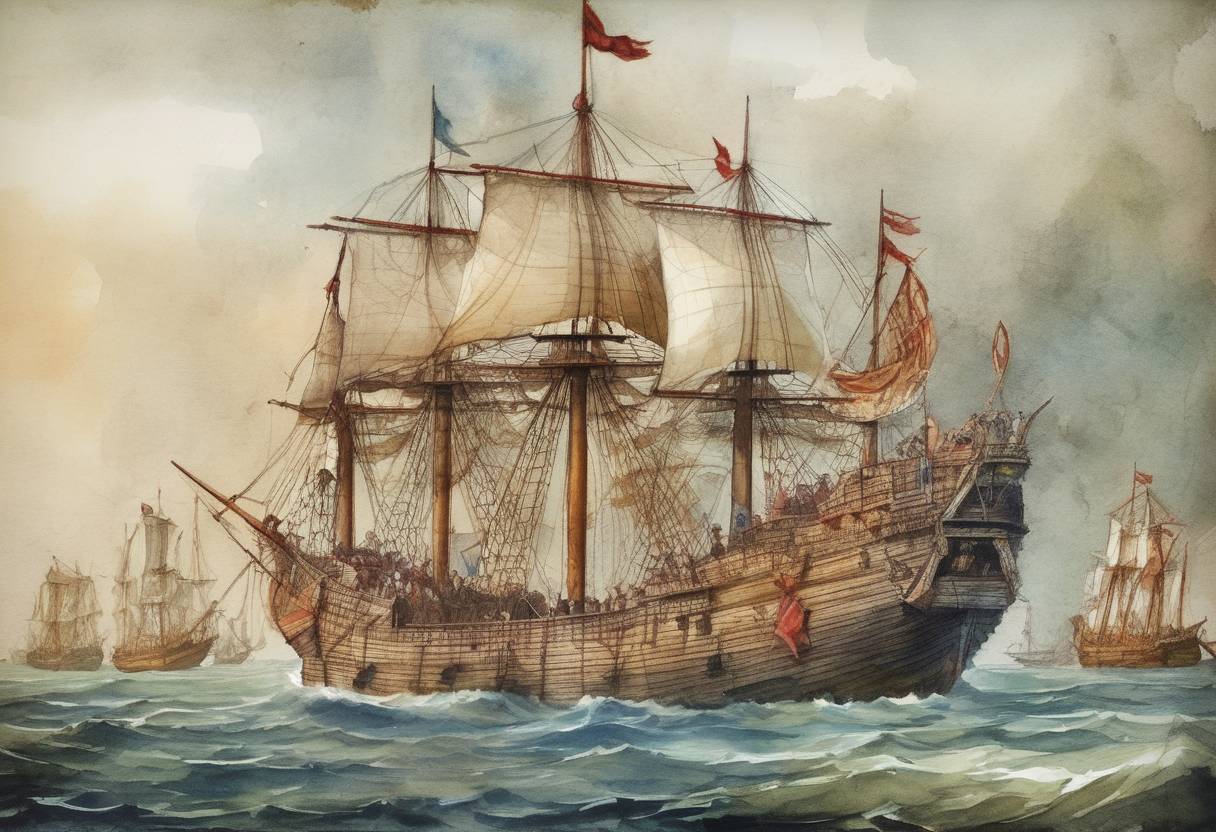
On May 20, 1498, Portuguese explorer Vasco da Gama reached the shores of Calicut (present-day Kozhikode) on the Malabar Coast of India. This event marked a pivotal moment in the Age of Discovery, as da Gama became the first European to reach India by sea, establishing a direct maritime route from Europe to Asia.
Age of Discovery: The late 15th and early 16th centuries were characterized by European exploration aimed at finding new trade routes and expanding territorial claims. The Portuguese, under the patronage of Prince Henry the Navigator, were at the forefront of these explorations.
Motivation: The primary motivation for finding a sea route to India was to access the lucrative spice trade, which was dominated by Middle Eastern and Venetian merchants. Spices such as pepper, cinnamon, and cloves were highly valued in Europe.
Previous Attempts: Before da Gama’s successful voyage, several attempts were made to reach India by sea. Notably, Bartolomeu Dias had rounded the Cape of Good Hope in 1488, proving that the Atlantic and Indian Oceans were connected.
Departure: Vasco da Gama set sail from Lisbon on July 8, 1497, with a fleet of four ships: São Gabriel, São Rafael, Berrio, and a supply ship. The expedition was commanded by da Gama under the auspices of King Manuel I of Portugal.
Route: The fleet followed the route pioneered by Dias, sailing down the west coast of Africa, rounding the Cape of Good Hope, and then traveling up the eastern coast of Africa. They made stops at present-day Mozambique and Mombasa before reaching Malindi, where they secured a local pilot to guide them across the Indian Ocean.
Arrival in Calicut: On May 20, 1498, da Gama’s fleet arrived in Calicut. The city was a major trading hub, known for its bustling markets and diverse population of traders from across Asia and the Middle East.
Trade Relations: Da Gama’s arrival opened the door for direct trade between Europe and India, bypassing the overland routes controlled by Middle Eastern powers. This had profound economic implications, leading to the establishment of Portuguese trading posts and colonies in India.
Cultural Exchange: The voyage initiated a period of cultural and technological exchange between Europe and Asia, although it also led to conflicts and colonization.
Portuguese Empire: The success of da Gama’s expedition laid the foundation for the Portuguese Empire in Asia, which would dominate the spice trade for much of the 16th century.
Legacy: Vasco da Gama’s journey is celebrated as a monumental achievement in navigation and exploration, symbolizing the beginning of a new era of global interaction.
Vasco da Gama’s arrival in Calicut was not just a triumph of navigation but a transformative event that reshaped global trade and interaction, setting the stage for the modern interconnected world.
Source: en.wikipedia.org