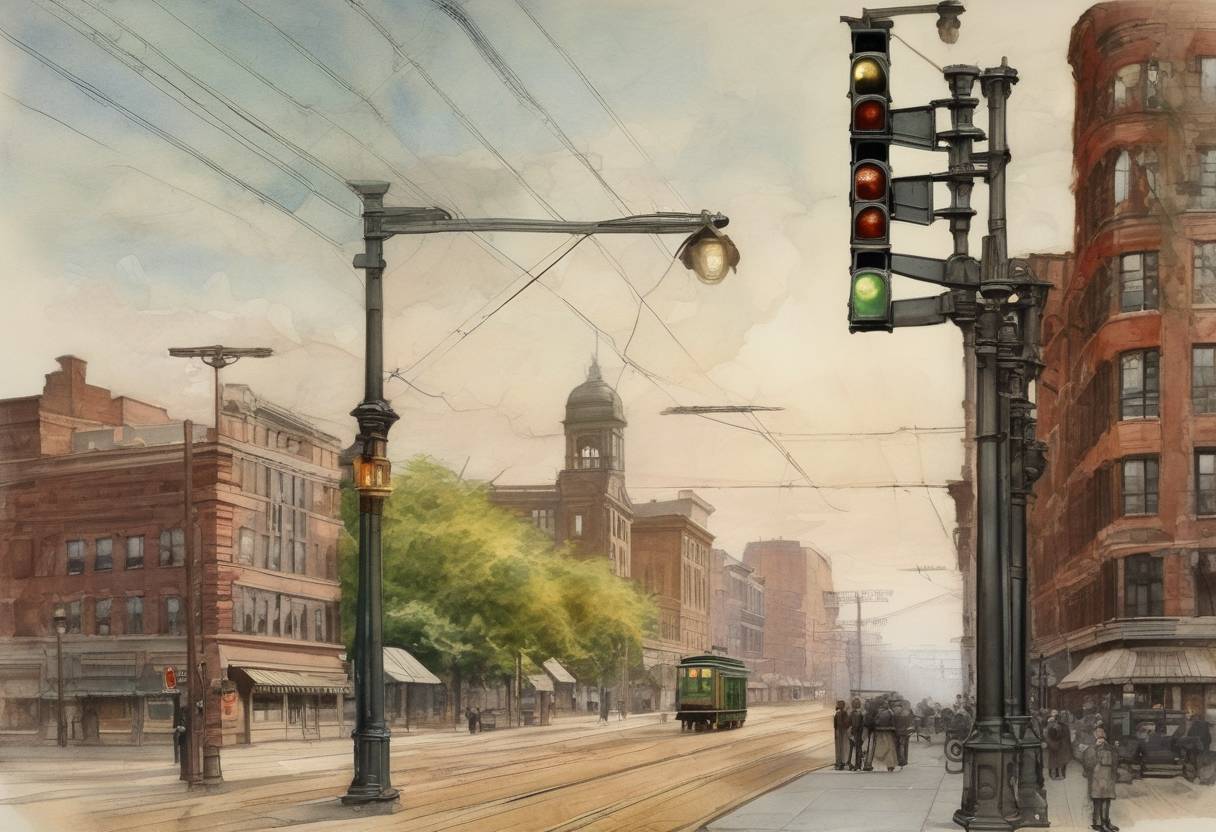
The First Electric Traffic Light: August 5, 1914
On August 5, 1914, the world witnessed a significant advancement in urban infrastructure with the installation of the first electric traffic light in Cleveland, Ohio. This innovation marked a pivotal moment in the evolution of traffic management and urban planning.
Context and Background
As the 20th century began, the proliferation of automobiles led to increased traffic congestion and accidents in urban areas. Cities were in dire need of a system to manage the growing number of vehicles and ensure the safety of both drivers and pedestrians.
The Installation
The first electric traffic light was installed at the intersection of East 105th Street and Euclid Avenue in Cleveland. This location was chosen due to its heavy traffic flow, which made it an ideal testing ground for the new technology.
Design and Operation
- Inventor: The traffic light was designed by James Hoge, who patented the system in 1913.
- Features: The system used red and green lights to signal stop and go, respectively. It was manually operated by a police officer stationed nearby.
- Technology: The lights were powered by electricity, a novel feature at the time, which distinguished them from earlier, manually operated semaphore signals.
Significance and Impact
The introduction of the electric traffic light represented a major step forward in traffic control technology. It laid the groundwork for the development of more sophisticated traffic management systems and contributed to the reduction of accidents at busy intersections.
Broader Implications
- Urban Planning: The success of the Cleveland traffic light spurred other cities to adopt similar systems, leading to widespread changes in urban infrastructure.
- Traffic Safety: The implementation of traffic lights improved road safety and efficiency, setting standards for future innovations in traffic control.
Aftermath and Legacy
Following the successful implementation in Cleveland, electric traffic lights quickly spread to other cities across the United States and eventually around the world. Over time, the technology evolved to include automated systems, multiple colors, and synchronized networks, becoming an integral part of modern urban life.
The installation of the first electric traffic light in Cleveland is remembered as a landmark event in the history of transportation, symbolizing the intersection of technology and urban development.