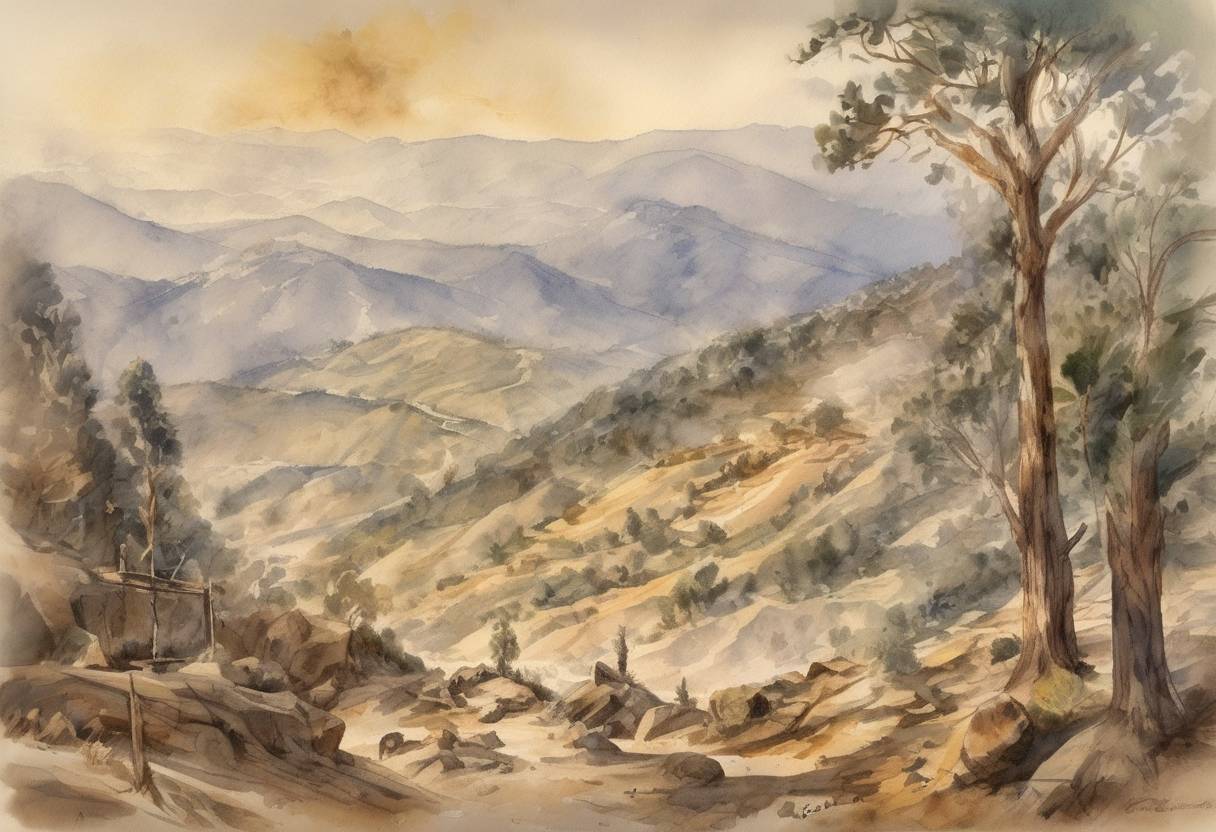
Discovery of Gold at Rancho San Francisco - March 9, 1842
The first documented discovery of gold in California took place on March 9, 1842, at Rancho San Francisco, located in present-day Santa Clarita Valley. This event occurred six years before the more famous California Gold Rush of 1848, which began with the discovery at Sutter’s Mill.
Context and Background
- Rancho San Francisco: This was a Mexican land grant given to Antonio del Valle in 1839. The area was primarily used for cattle ranching and was part of the larger Mexican territory of Alta California.
- California in the 1840s: At this time, California was under Mexican rule, and its economy was largely based on agriculture and ranching. The region was sparsely populated, with a mix of indigenous peoples, Mexican settlers, and a few American and European immigrants.
The Discovery
- Francisco López: The discovery is credited to Francisco López, a rancher and majordomo of Rancho San Francisco. According to accounts, López found gold while resting under an oak tree. He reportedly dug up some wild onions and noticed gold flakes clinging to the roots.
- Initial Reaction: The discovery did not immediately lead to a large-scale rush. However, it did attract some local attention, and small-scale mining operations began in the area. The gold found was placer gold, which is typically found in riverbeds and streams.
Aftermath and Significance
- Limited Impact: Unlike the later Gold Rush, the 1842 discovery did not lead to a massive influx of settlers or significant economic change. The remote location and lack of infrastructure limited the immediate impact.
- Prelude to the Gold Rush: This early discovery set a precedent and demonstrated the presence of gold in California, which would later fuel the massive migration and economic transformation during the Gold Rush of 1848-1855.
- Historical Recognition: While overshadowed by the events at Sutter’s Mill, the 1842 discovery remains a significant moment in California’s history, marking the beginning of its association with gold mining.
Broader Historical Significance
- Economic Transformation: The eventual Gold Rush dramatically altered California’s economy, leading to rapid population growth and statehood in 1850.
- Cultural Impact: The Gold Rush era brought diverse groups to California, contributing to its multicultural society and laying the groundwork for its future as a major economic and cultural hub.
The discovery at Rancho San Francisco is a reminder of the rich and complex history of California’s development and the pivotal role that natural resources have played in shaping its trajectory.