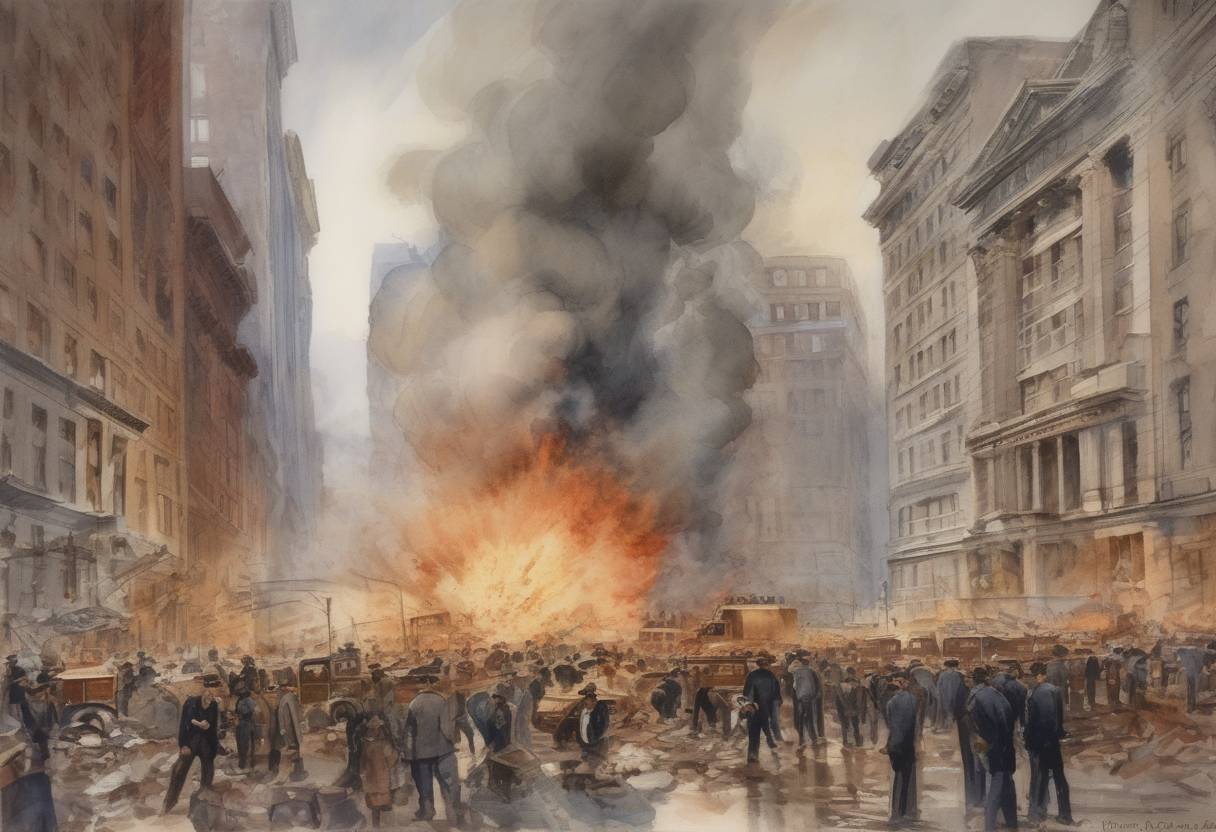
Wall Street Bombing - September 16, 1920
On September 16, 1920, a devastating explosion occurred on Wall Street in New York City, marking one of the deadliest acts of terrorism on U.S. soil at the time. This tragic event resulted in the deaths of 38 people and injured hundreds more, leaving a profound impact on the nation.
Context and Background
- Location: The bombing took place at the intersection of Wall Street and Broad Street, directly in front of the J.P. Morgan & Co. building, a symbol of American financial power.
- Time: The explosion occurred at 12:01 PM, during the bustling lunch hour when the streets were crowded with workers and pedestrians.
The Event
- The Explosion: A horse-drawn wagon, loaded with 100 pounds of dynamite and 500 pounds of heavy, cast-iron sash weights, was detonated. The wagon was parked on the street, and the explosion sent shrapnel flying, causing immediate chaos and destruction.
- Casualties: The blast killed 38 people and injured over 400. Many of the victims were young clerks and stenographers working in the financial district.
Investigation and Aftermath
- Immediate Response: The explosion caused significant damage to the surrounding buildings, shattering windows and causing structural harm. Emergency services responded quickly, but the scene was one of devastation.
- Investigation: Despite an extensive investigation by the Bureau of Investigation (the precursor to the FBI), the perpetrators were never identified. The lack of conclusive evidence left the case unsolved.
- Suspected Motives: At the time, suspicion fell on anarchists and communists, as the U.S. was experiencing a period of political unrest and fear of radical movements, known as the Red Scare. However, no group claimed responsibility, and no arrests were made.
Broader Historical Significance
- Impact on Security: The bombing highlighted vulnerabilities in urban security and led to increased measures to protect public spaces and financial institutions.
- Cultural and Political Climate: The event intensified the atmosphere of fear and suspicion during the early 20th century, contributing to the broader context of anti-immigrant sentiment and political paranoia.
- Legacy: The Wall Street bombing remains a significant event in American history, illustrating the impact of domestic terrorism and the challenges of ensuring public safety in a rapidly modernizing society.
The Wall Street bombing of 1920 stands as a stark reminder of the potential for violence in times of social and political upheaval, and its unresolved nature continues to intrigue historians and scholars to this day.