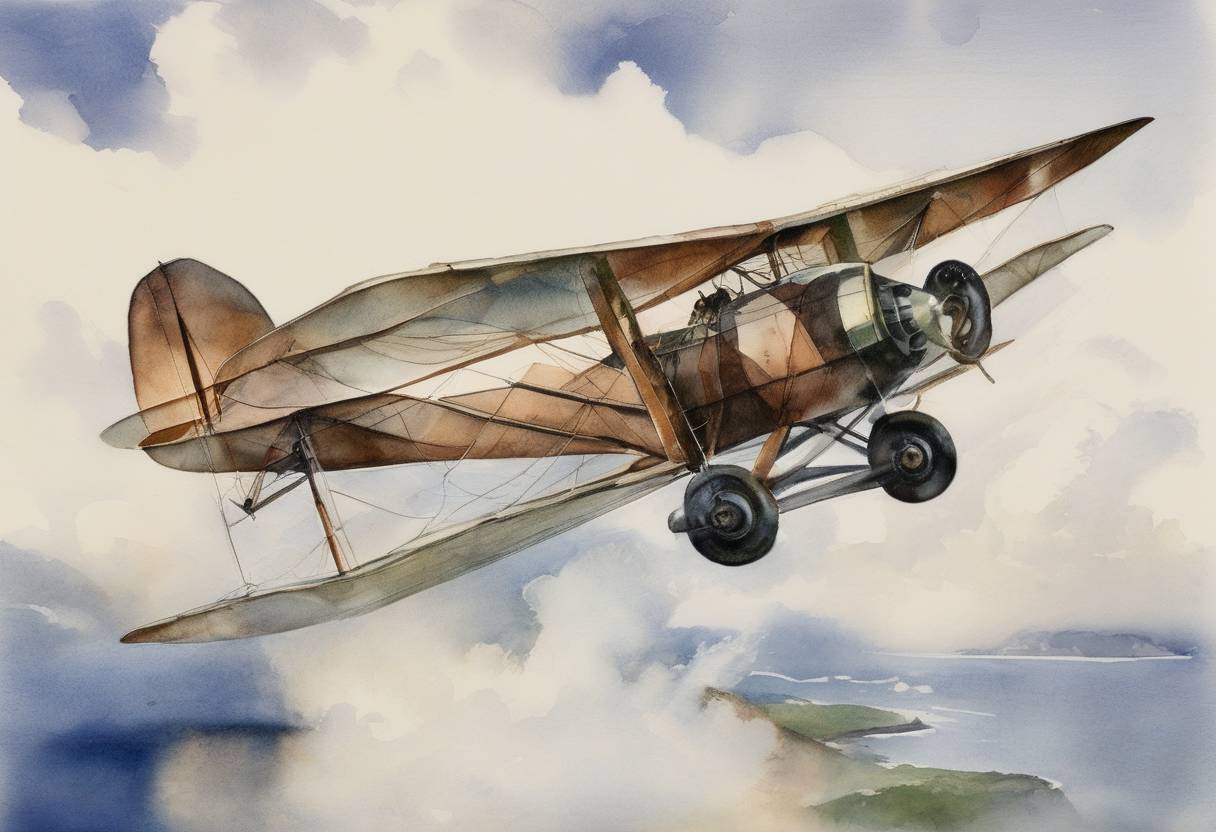
Amelia Earhart’s Historic Solo Transatlantic Flight
On May 20, 1932, Amelia Earhart embarked on a groundbreaking solo flight across the Atlantic Ocean, becoming the first woman to achieve this remarkable feat. This event marked a significant milestone in aviation history and further cemented Earhart’s legacy as a pioneering aviator.
Context and Background
Amelia Earhart had already gained fame as a pioneering female aviator. In 1928, she became the first woman to fly across the Atlantic as a passenger, which sparked her ambition to complete the journey solo. Earhart was inspired by Charles Lindbergh’s solo transatlantic flight in 1927 and was determined to make her own mark in aviation history.
The Flight
- Date and Location: Earhart took off on May 20, 1932, from Harbour Grace, Newfoundland, Canada.
- Aircraft: She piloted a Lockheed Vega 5B, a single-engine monoplane known for its reliability and performance.
- Challenges: The flight was fraught with difficulties, including strong winds, icy conditions, and mechanical problems. Despite these challenges, Earhart demonstrated exceptional skill and determination.
Accomplishment
- Landing: After approximately 15 hours of flight, Earhart landed in a pasture near Londonderry, Northern Ireland, on May 21, 1932.
- Recognition: Her successful flight made her the first woman to fly solo nonstop across the Atlantic Ocean. This achievement was celebrated worldwide and earned her the Distinguished Flying Cross from the United States Congress, making her the first woman to receive this honor.
Significance and Legacy
Amelia Earhart’s solo transatlantic flight was a landmark achievement in the history of aviation. It not only broke gender barriers but also inspired countless women to pursue careers in aviation and other fields traditionally dominated by men. Earhart’s courage and determination continue to be celebrated, and her legacy endures as a symbol of perseverance and pioneering spirit.
Aftermath
Following her transatlantic flight, Earhart continued to set records and advocate for women’s rights and opportunities in aviation. Her mysterious disappearance in 1937 during an attempt to circumnavigate the globe remains one of the most enduring mysteries in aviation history.
Amelia Earhart’s 1932 solo flight across the Atlantic remains a testament to her extraordinary skill and adventurous spirit, and it continues to inspire generations of aviators and adventurers around the world.