State of the Union Address - January 28, 2003
2003 · Washington, D.C., United States
President George W. Bush delivers the State of the Union Address, where he makes the case for the Iraq War, citing the threat of weapons of mass destruction.
January 30, 2002
The State of the Union Address by President George W. Bush introduces the term 'Axis of Evil,' referring to governments that he accused of helping terrorism and seeking weapons of mass destruction, specifically Iran, Iraq, and North Korea.
Washington, D.C., United States | United States Government
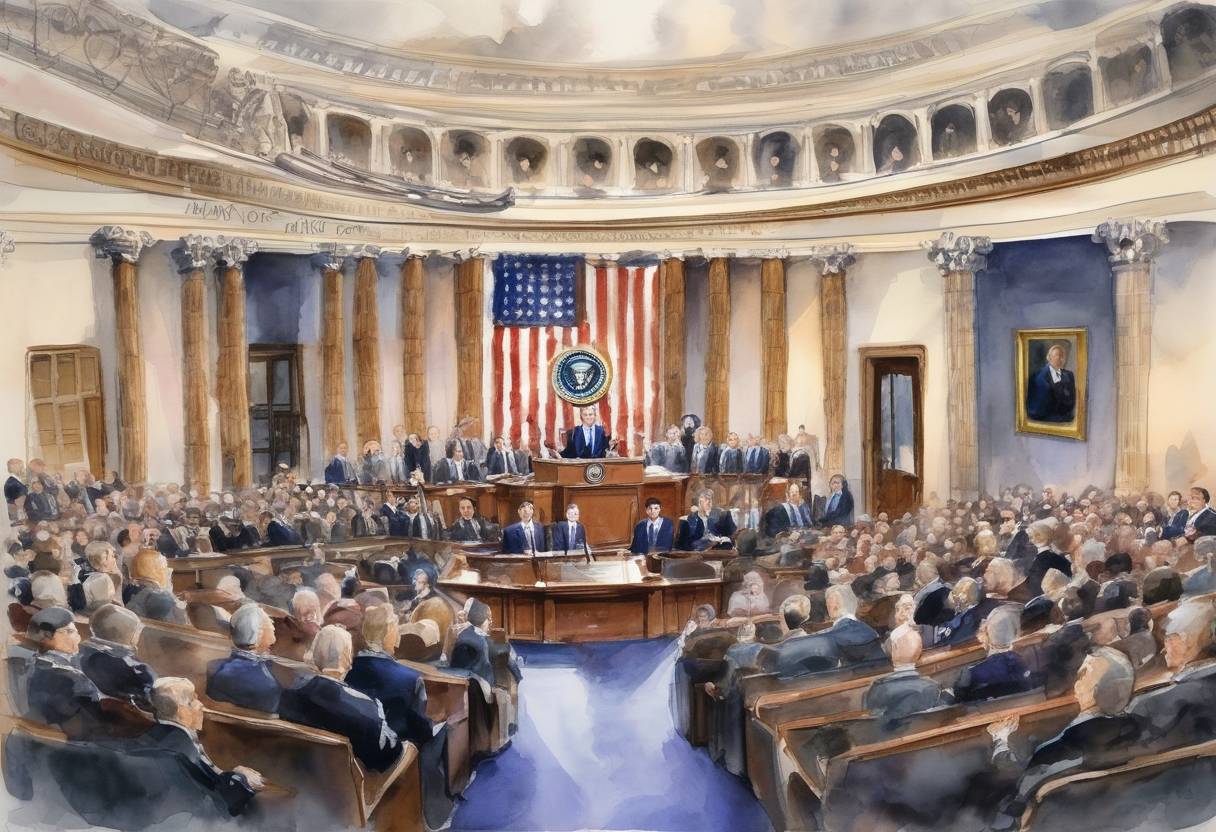
On January 30, 2002, President George W. Bush delivered his State of the Union Address to the United States Congress. This speech is particularly notable for introducing the term “Axis of Evil,” which referred to specific nations that President Bush accused of sponsoring terrorism and pursuing weapons of mass destruction. The countries identified were Iran, Iraq, and North Korea.
The address came in the aftermath of the September 11, 2001, terrorist attacks, a period marked by heightened security concerns and a global focus on combating terrorism. The U.S. had already initiated military action in Afghanistan to dismantle the Taliban regime and disrupt al-Qaeda operations. The Bush administration was now turning its attention to other perceived threats.
Axis of Evil: President Bush’s use of the term “Axis of Evil” was intended to highlight the threat posed by regimes that were believed to be pursuing weapons of mass destruction and supporting terrorism. This phrase drew a parallel to the Axis powers of World War II, underscoring the perceived danger these nations posed to global security.
Iran: Bush accused Iran of aggressively pursuing nuclear weapons and supporting terrorist organizations, which he argued threatened peace in the Middle East and beyond.
Iraq: The address reiterated concerns about Iraq under Saddam Hussein, focusing on its alleged development of weapons of mass destruction and defiance of United Nations resolutions.
North Korea: North Korea was included due to its missile programs and suspected nuclear ambitions, which were seen as destabilizing factors in East Asia.
Policy Implications: The “Axis of Evil” speech set the stage for the Bush administration’s foreign policy, which emphasized preemptive action against perceived threats. It laid the groundwork for the 2003 invasion of Iraq, justified by the alleged presence of weapons of mass destruction, although such weapons were never found.
International Reactions: The speech drew mixed reactions globally. Some allies supported the U.S. stance, while others criticized it for potentially escalating tensions and undermining diplomatic efforts.
Long-term Impact: The rhetoric of the “Axis of Evil” has had lasting effects on U.S. foreign policy, influencing how subsequent administrations approached relations with these countries. It also contributed to the broader discourse on the global war on terror.
In summary, President Bush’s 2002 State of the Union Address was a pivotal moment in early 21st-century geopolitics, shaping U.S. foreign policy and international relations in the years that followed.
Source: www.c-span.org