Execution of Antoine Lavoisier: May 8, 1794
1794 · Paris, France
Antoine Lavoisier, the 'father of modern chemistry,' is executed by guillotine during the French Revolution.
October 31, 1793
Execution of the Girondists: Twenty-one leaders of the Girondin political faction are executed during the French Revolution.
Paris, France | Revolutionary Tribunal
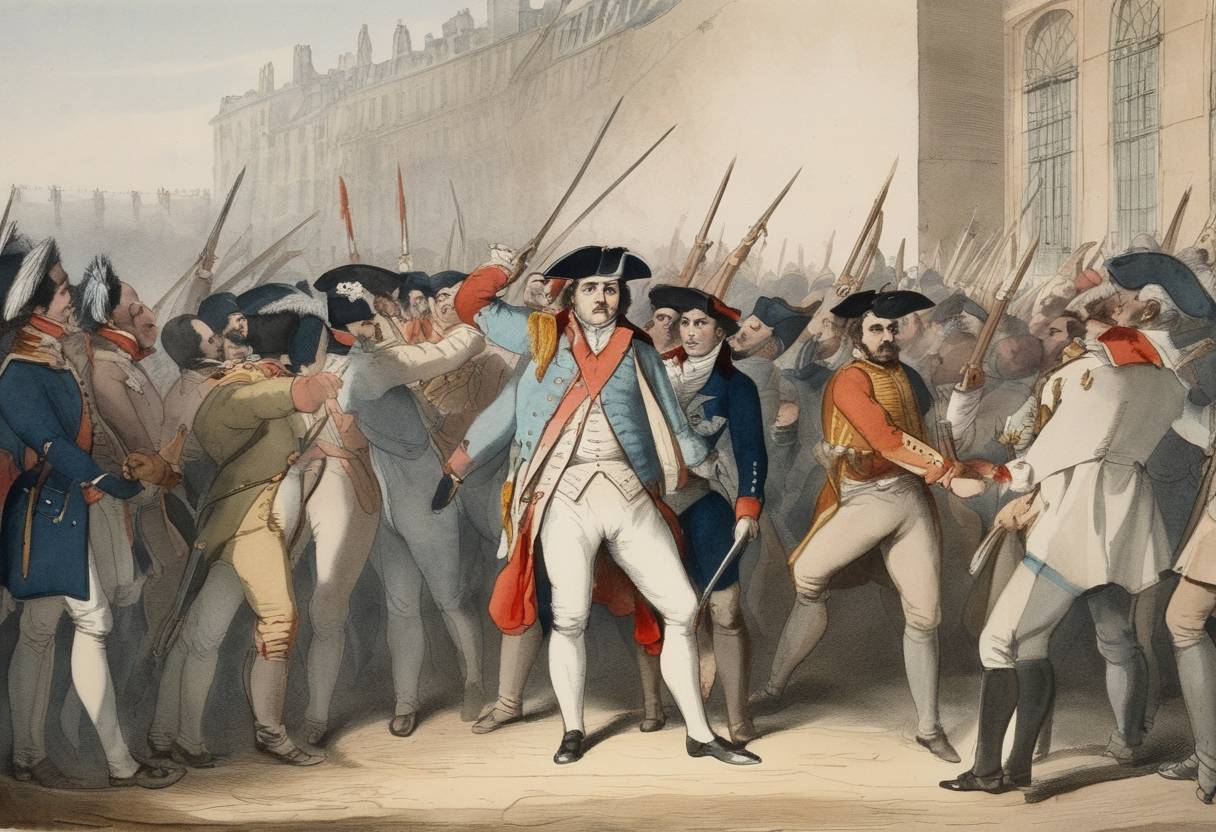
On October 31, 1793, twenty-one leaders of the Girondin political faction were executed during the height of the French Revolution. This event marked a pivotal moment in the revolution, symbolizing the intensifying internal conflicts and the supremacy of radical revolutionary forces.
The Girondists, also known as Girondins, were a political faction within the French Revolution that initially emerged as part of the Jacobin movement. Named after the Gironde department in southwestern France, these leaders advocated for a constitutional government, the end of monarchical rule, and moderate reforms. They gained prominence in the Legislative Assembly and were significant supporters of the war against Austria and Prussia.
Tensions between the Girondists and the more radical Montagnards, led by figures such as Maximilien Robespierre, intensified as the revolution progressed. The Montagnards, based largely in the urban and more radical areas like Paris, accused the Girondists of being reactionaries and counter-revolutionaries, largely due to their opposition to the drastic measures designed to control revolutionary France, including the extensive centralization of power.
The conflict between these two factions reached a critical point with the fall of the Girondist influence in June 1793. The arrest of several Girondist leaders followed an uprising by the sans-culottes, who were allied with the Montagnards. This insurrection was spurred by the Girondists’ resistance to the economic and social demands of the poorer classes in Paris.
The Girondists’ fall from power led to a brutal crackdown. They were accused of inciting a federalist revolt against the centralized government, exacerbating internal divisions, and betraying the revolution. Several Girondist leaders fled Paris, but many were captured and imprisoned.
Twenty-one leading Girondists were brought to trial before the Revolutionary Tribunal in Paris. Among the prominent figures were Jacques-Pierre Brissot, Jean-Marie Roland, and Pierre Victurnien Vergniaud. The trial was swift, conducted with little regard for conventional legal processes, characteristic of Revolutionary justice during the Reign of Terror.
Convicted of conspiracy against the revolution and conspiring with foreign powers, the Girondists were sentenced to death. On October 31, 1793, they were executed by guillotine at the Place de la Révolution in Paris. Their execution was marked by stoicism, with some accounts noting that Vergniaud and others sang the revolutionary hymn “La Marseillaise” as they went to their deaths.
The execution of the Girondists represented the increasing radicalization and factionalism within the revolution. It demonstrated the deadly consequences of political rivalry and set a precedent for the Reign of Terror, during which thousands of perceived enemies of the state were executed.
This event helped solidify the dominance of the Montagnards and radical Jacobins, but it also contributed to a climate of fear and paranoia that would ultimately consume many of its orchestrators. The ever-escalating cycle of violence would eventually alarm even staunchly radical revolutionaries, leading to Robespierre’s downfall and the end of the Reign of Terror in 1794.
The Girondists’ execution underscores the complexity and internal strife that marked the French Revolution, highlighting the perils of political extremism and intolerance. Their legacy is a somber reminder of the revolution’s transformative and tumultuous nature, reflecting the challenges in balancing ideals with the harsh realities of political power and survival.
Source: en.wikipedia.org