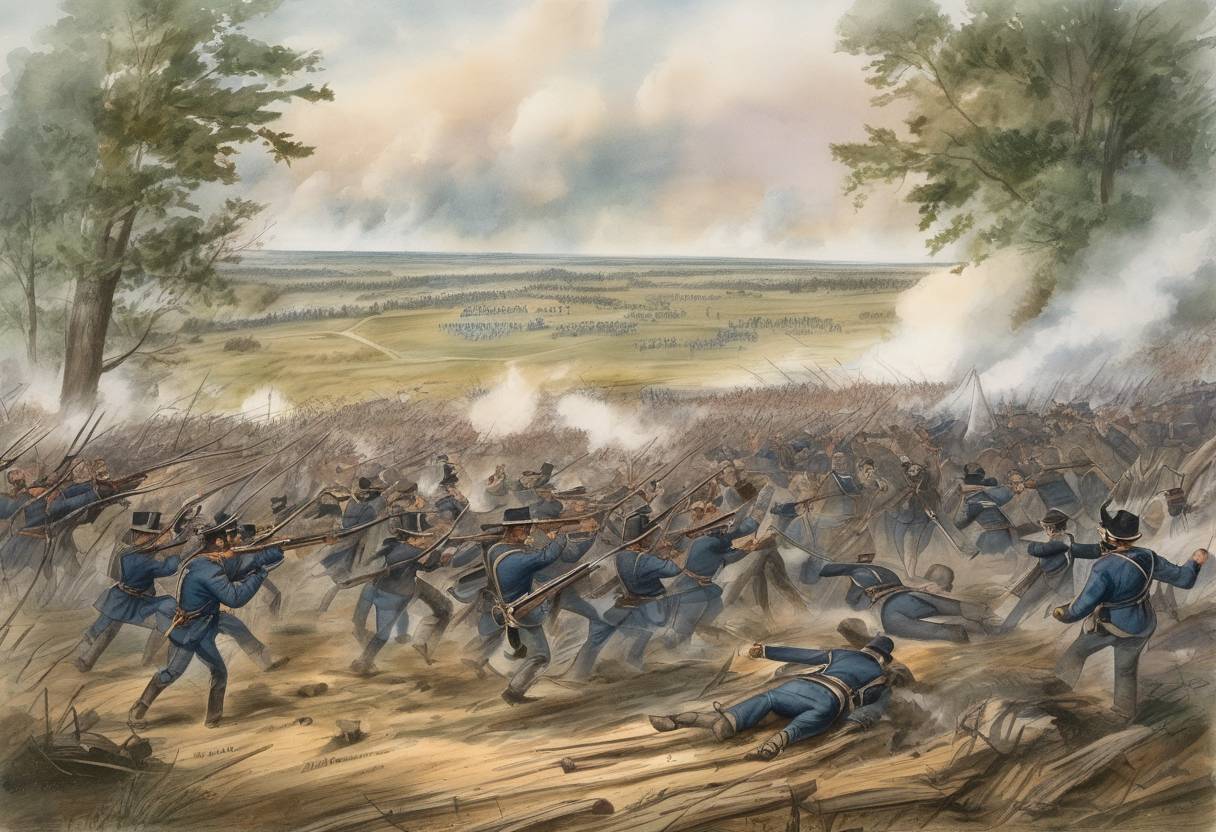
The Second Battle of Bull Run (Second Manassas)
Overview
The Second Battle of Bull Run, also known as the Second Battle of Manassas, concluded on August 30, 1862, with a decisive victory for the Confederate Army. This significant engagement of the American Civil War took place in Prince William County, Virginia, and was a pivotal moment in the Eastern Theater of the conflict.
Context
The battle was part of the Northern Virginia Campaign, which was orchestrated by Confederate General Robert E. Lee. Following the Union’s defeat at the First Battle of Bull Run in 1861, both sides had regrouped and re-strategized. By mid-1862, Union forces under Major General John Pope were tasked with protecting Washington, D.C., and launching an offensive into Virginia.
Key Events Leading Up to the Battle
- Union Strategy: Major General John Pope aimed to consolidate Union forces and launch an offensive against Confederate positions in Virginia, hoping to draw Confederate forces away from Richmond.
- Confederate Movements: General Robert E. Lee, seeking to capitalize on Union disarray, dispatched Major General Thomas “Stonewall” Jackson to engage Pope’s forces. Jackson’s maneuvers were designed to disrupt Union supply lines and communications.
The Battle
- Initial Engagements: The battle began on August 28, 1862, with Jackson’s forces engaging Union troops at Brawner’s Farm. This initial clash set the stage for the larger confrontation.
- Main Battle: On August 29, Union forces launched a series of assaults against Jackson’s well-entrenched positions. Despite heavy fighting, the Union attacks were repelled.
- Decisive Confederate Victory: On August 30, General Lee, having arrived with reinforcements under Major General James Longstreet, launched a massive counterattack. Longstreet’s assault on the Union left flank was devastating, forcing Pope’s army into a chaotic retreat.
Aftermath
- Union Retreat: The Union Army retreated towards Washington, D.C., suffering significant casualties and loss of morale.
- Confederate Momentum: The victory bolstered Confederate morale and solidified Lee’s reputation as a formidable military leader. It also paved the way for the Confederate invasion of the North, leading to the Maryland Campaign and the Battle of Antietam.
- Strategic Implications: The defeat prompted President Abraham Lincoln to reconsider Union military leadership, eventually leading to the appointment of Major General George McClellan to reorganize the Army of the Potomac.
Historical Significance
The Second Battle of Bull Run was a testament to the tactical prowess of Confederate leadership and highlighted the challenges faced by Union forces in the Eastern Theater. It underscored the importance of effective communication, coordination, and leadership in military operations and had lasting implications for the conduct of the Civil War.