The Exchange of Francis Gary Powers and Rudolf Abel on February 10, 1962
1962 · Berlin, Germany
American U-2 pilot Francis Gary Powers is exchanged for Soviet spy Rudolf Abel in Berlin, during the Cold War.
July 8, 1960
Francis Gary Powers was charged with espionage by the Soviet Union after his U-2 spy plane was shot down over Soviet airspace.
Moscow, Soviet Union | Soviet Union
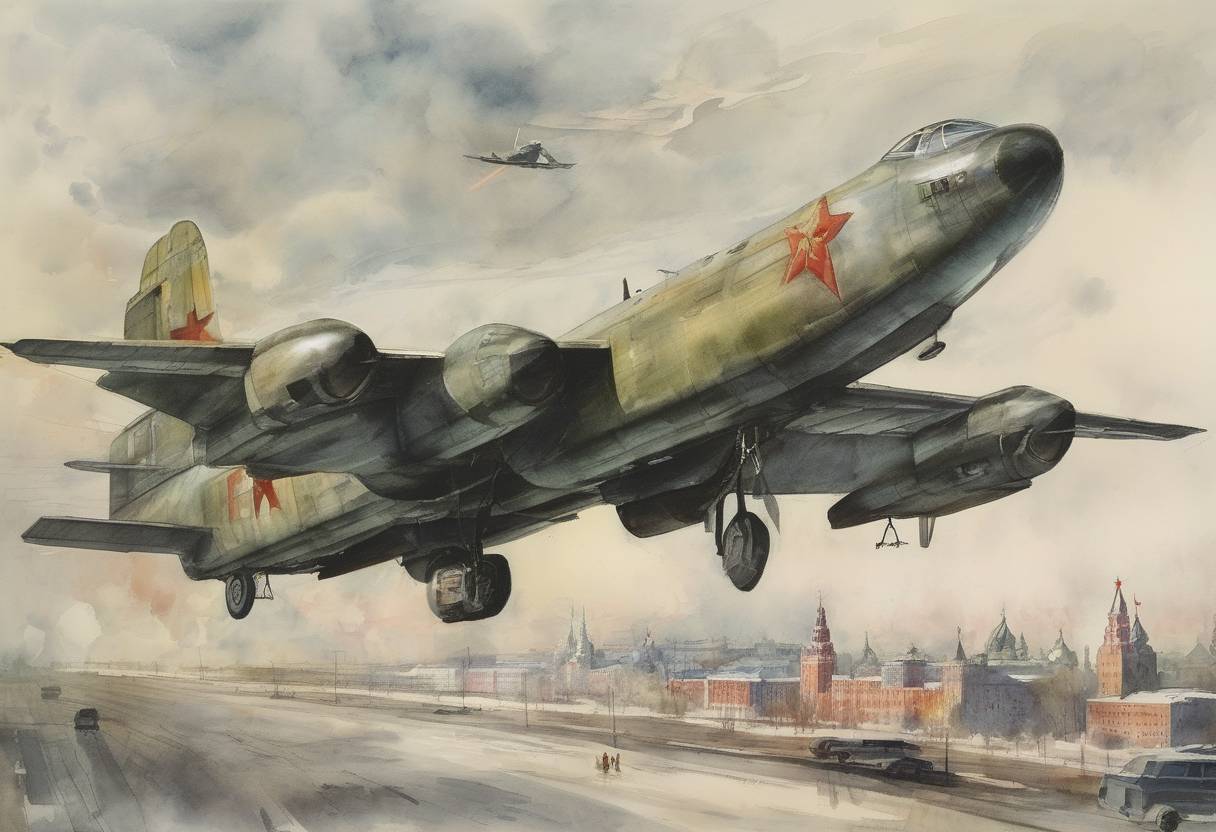
On July 8, 1960, Francis Gary Powers, an American pilot, was formally charged with espionage by the Soviet Union. This event was a significant moment in the Cold War, highlighting the intense espionage activities between the United States and the Soviet Union.
Francis Gary Powers was a pilot for the Central Intelligence Agency (CIA), flying U-2 reconnaissance missions. The U-2 aircraft were designed for high-altitude surveillance, capable of capturing detailed images of Soviet military installations. On May 1, 1960, Powers was on a mission over Soviet airspace when his plane was shot down by a Soviet surface-to-air missile near Sverdlovsk (now Yekaterinburg).
Powers ejected from the aircraft and was captured by Soviet forces. Initially, the United States government attempted to cover up the mission, claiming it was a weather research flight. However, the Soviet Union produced evidence, including Powers himself and the wreckage of the U-2 plane, forcing the U.S. to admit the true nature of the mission.
On July 8, 1960, Powers was charged with espionage, a serious offense during the Cold War era. His trial began on August 17, 1960, and was widely publicized. Powers was convicted and sentenced to ten years of imprisonment, which included seven years of hard labor.
The U-2 incident had several significant consequences:
Diplomatic Tensions: The incident exacerbated tensions between the U.S. and the Soviet Union, leading to the collapse of a planned summit between President Dwight D. Eisenhower and Soviet Premier Nikita Khrushchev.
Espionage Awareness: It brought global attention to the espionage activities conducted by both superpowers, highlighting the risks and stakes involved in intelligence gathering during the Cold War.
Prisoner Exchange: Powers served less than two years of his sentence. On February 10, 1962, he was exchanged for Soviet spy Rudolf Abel in a well-publicized spy swap on the Glienicke Bridge between East and West Berlin.
Francis Gary Powers’ capture and trial remain a pivotal moment in Cold War history, illustrating the high-stakes espionage that characterized the era. The incident underscored the delicate balance of power and the ever-present threat of conflict between the United States and the Soviet Union. Powers’ story has been recounted in various books and films, serving as a reminder of the complexities of international relations during the mid-20th century.
Source: en.wikipedia.org