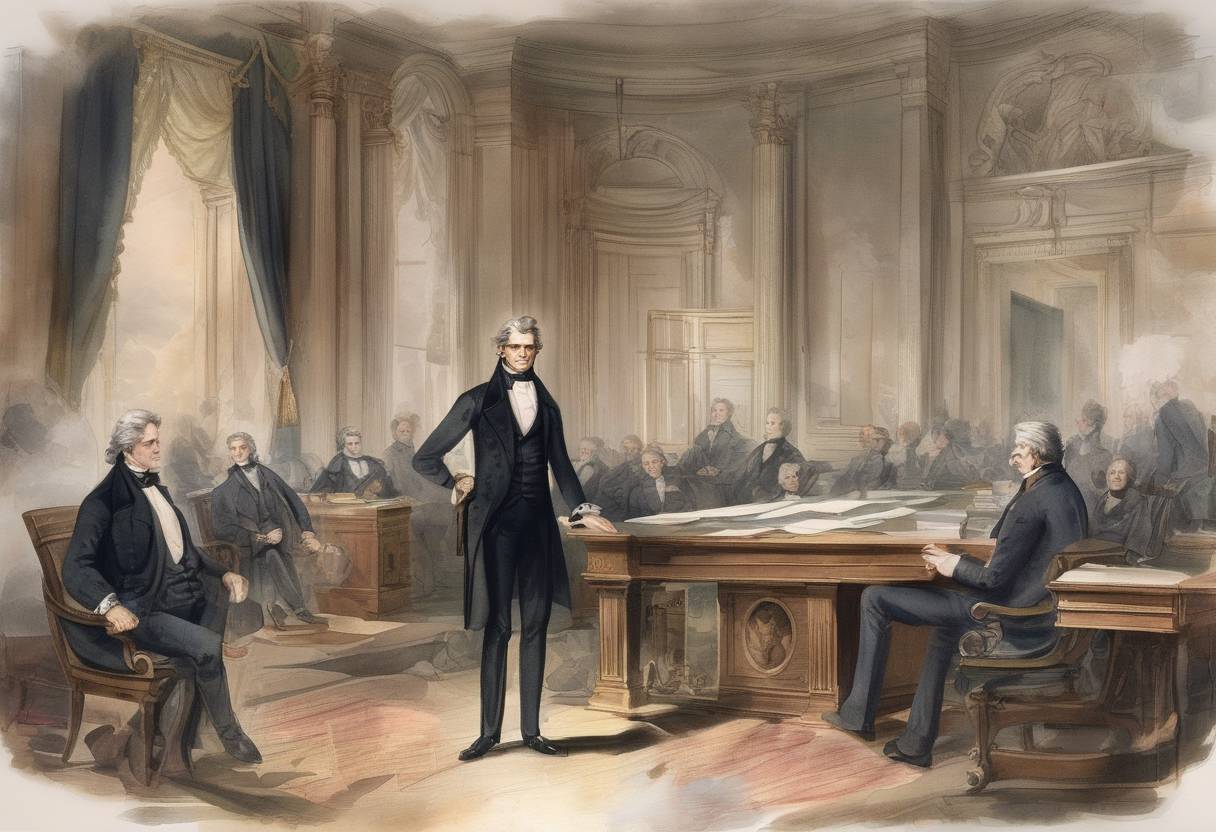
John C. Calhoun’s Resignation as Vice President
On December 28, 1832, John C. Calhoun became the first Vice President of the United States to resign from office. His resignation marked a significant moment in American political history, reflecting deep-seated political and ideological differences with President Andrew Jackson.
Background
John C. Calhoun, a prominent political figure from South Carolina, served as Vice President under two different presidents: John Quincy Adams (1825-1829) and Andrew Jackson (1829-1832). Initially, Calhoun and Jackson were political allies, but their relationship deteriorated over time due to several contentious issues.
Key Issues Leading to Resignation
Nullification Crisis: The most significant issue that drove a wedge between Calhoun and Jackson was the Nullification Crisis. Calhoun was a staunch advocate of states’ rights and believed that states had the right to nullify federal laws deemed unconstitutional. This belief was particularly relevant in the context of the “Tariff of Abominations” (Tariff of 1828), which Calhoun and many in South Carolina opposed, arguing it unfairly favored Northern industries at the expense of Southern economies.
The Eaton Affair: Social tensions within Jackson’s cabinet, particularly involving the wives of cabinet members and the ostracization of Peggy Eaton, the wife of Secretary of War John Eaton, also contributed to the rift. Calhoun’s wife, Floride, was a leading figure in the social snubbing of Peggy Eaton, which further strained relations between Calhoun and Jackson.
Political Ambitions and Philosophical Differences: Calhoun’s political ambitions and his philosophical differences with Jackson on the role of the federal government also played a role. Calhoun’s vision of a decentralized federal system clashed with Jackson’s more nationalist approach.
The Resignation
Calhoun’s resignation was a calculated political move. By stepping down, he was able to take a more active role in the Senate, where he was elected as a Senator from South Carolina shortly after his resignation. This position allowed him to more effectively champion his states’ rights agenda and oppose Jackson’s policies.
Aftermath and Historical Significance
Calhoun’s resignation underscored the growing sectional tensions in the United States, which would eventually lead to the Civil War. His advocacy for states’ rights and nullification would continue to influence American politics, particularly in the South.
Calhoun’s departure from the vice presidency also set a precedent, highlighting the potential for significant ideological conflicts within the executive branch. His resignation remains a notable example of how deeply held political beliefs can lead to dramatic shifts in political alliances and positions.
In summary, John C. Calhoun’s resignation as Vice President was a pivotal event that reflected the intense political and ideological divisions of the era, with lasting implications for the future of the United States.