Henry Ford Patents a Plastic Automobile - January 13, 1942
1942 · Dearborn, United States
Henry Ford patents a plastic automobile, which is 30% lighter than a regular car.
December 23, 1947
The transistor was first demonstrated at Bell Laboratories, revolutionizing electronics and paving the way for modern computing.
Murray Hill, United States | Bell Laboratories
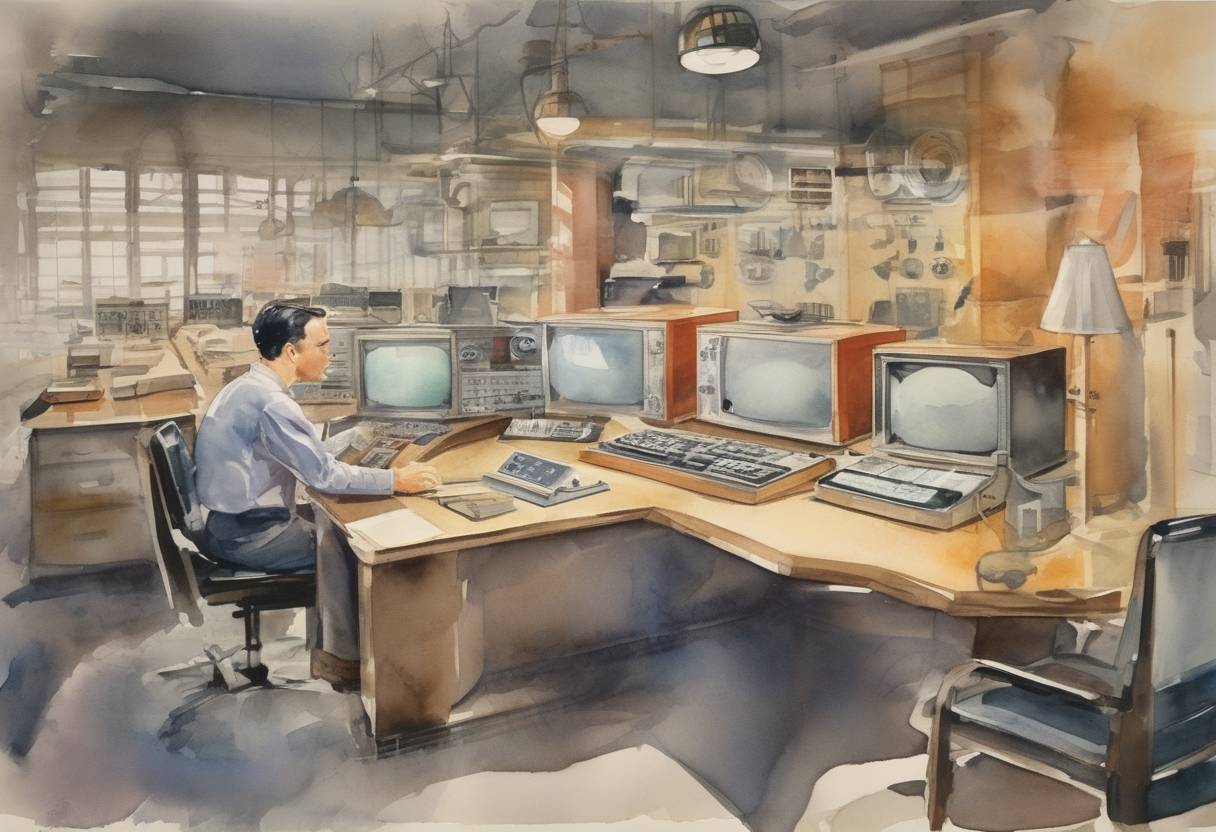
On December 23, 1947, a pivotal moment in the history of technology occurred at Bell Laboratories in Murray Hill, New Jersey. Physicists John Bardeen and Walter Brattain, under the leadership of William Shockley, successfully demonstrated the first working transistor. This invention marked the beginning of a new era in electronics and computing.
Before the advent of the transistor, electronic devices relied heavily on vacuum tubes. While vacuum tubes were effective for amplification and switching, they were bulky, consumed a lot of power, and were prone to frequent failures. The need for a more reliable and efficient alternative was pressing, especially as the demand for more advanced communication and computing technologies grew.
The transistor developed by Bardeen and Brattain was a point-contact transistor, which consisted of a germanium semiconductor with two closely spaced gold contacts. This device could amplify electrical signals, a function that was crucial for the development of more compact and efficient electronic circuits.
The demonstration of the transistor was a groundbreaking achievement that revolutionized the field of electronics. It paved the way for the miniaturization of electronic components, leading to the development of modern computers, smartphones, and a myriad of other digital devices.
In 1956, John Bardeen, Walter Brattain, and William Shockley were awarded the Nobel Prize in Physics for their research on semiconductors and their discovery of the transistor effect.
The demonstration of the transistor at Bell Laboratories on December 23, 1947, was a landmark event that laid the foundation for the digital age. It transformed the landscape of technology and continues to influence the development of electronic devices and systems to this day.
Source: www.britannica.com