Creation of the Territory of Nevada
1861 · , United States
The Territory of Nevada is created by the U.S. Congress.
June 11, 1859
The Comstock Lode, the first major U.S. discovery of silver ore, was discovered by Henry Comstock in Nevada.
Virginia City, United States
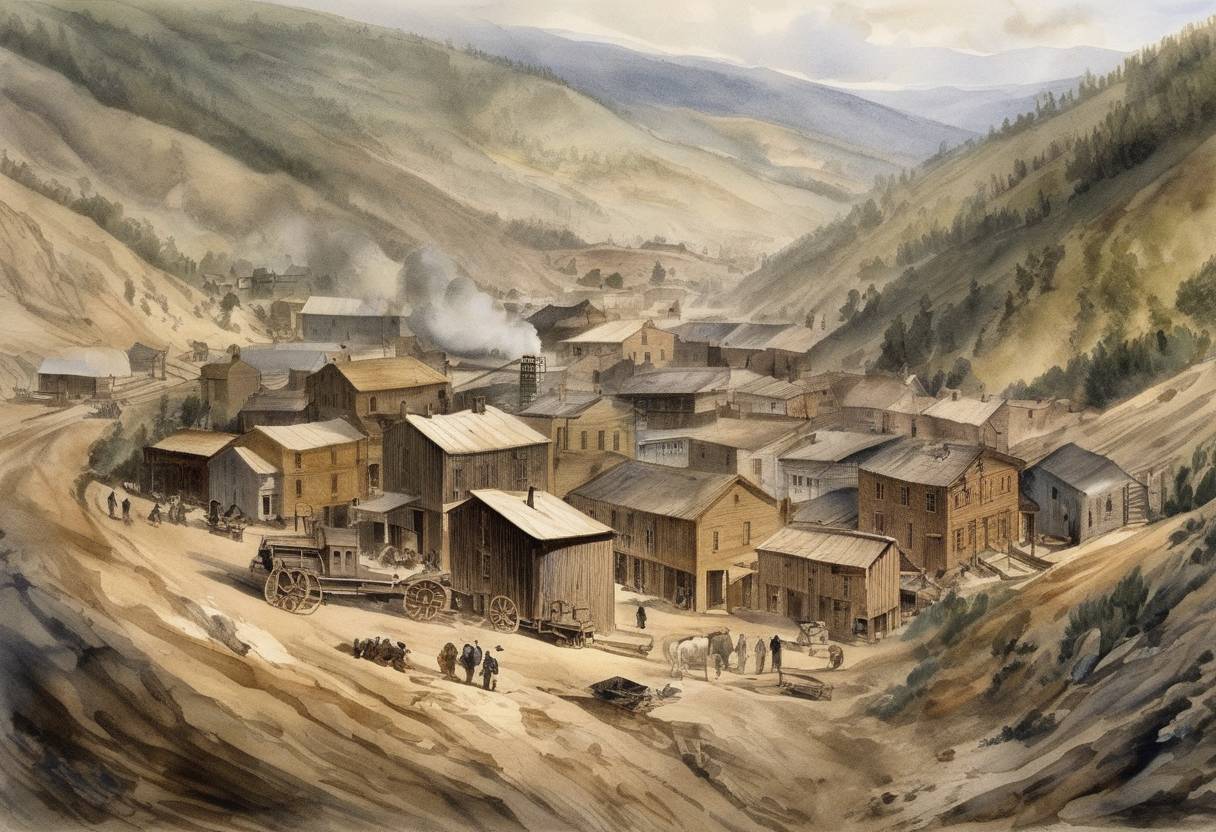
The Comstock Lode, the first major discovery of silver ore in the United States, stands as a pivotal event in American mining history. Unearthed on June 11, 1859, in the Virginia Range in Nevada, this discovery brought an influx of prospectors to the region and marked the beginning of a significant silver rush.
Before 1859, the area that would eventually become the bustling town of Virginia City, Nevada, was sparsely populated and primarily known for minor placer gold mining. The rush of miners to Nevada was originally driven by gold discoveries in California, with many miners drifting to Nevada in the hope of striking it rich. However, their primary interest was not immediately focused on silver.
The silver lode was discovered by a team of prospectors working claims in the area. Henry Comstock, whom the lode is named after, was not the original discoverer. It was actually discovered by brothers Ethan Allen Grosh and Hosea Ballou Grosh in 1857. However, they died before having the opportunity to develop their claims. The initial silver-rich ore was further explored by Patrick McLaughlin and Peter O’Riley, who teamed up with Comstock.
The significance of the Comstock Lode was quickly realized as miners determined the richness of the silver ore. This led to the rapid development of the mining camp into a thriving town. Approximately 10,000 miners and settlers flooded to Virginia City and the surrounding area, creating one of the richest mining districts in the world.
The vast wealth extracted from the Comstock Lode financed much of the American economy during this period, supporting industries beyond mining. It strengthened the U.S. economy by providing capital for investment in industrial growth and infrastructure during and after the Civil War.
The challenges posed by deep rock mining led to technological innovations, such as the invention of the square set timbering system by engineer Phillip Deidesheimer, which prevented the collapse of underground workings. The wealth and population boom eventually necessitated advancements in transportation, communication, and the legal system in Nevada.
The boom brought notable cultural and societal changes, contributing to Nevada’s rapid statehood in 1864. The area remained productive into the early 20th century and left a lasting legacy on the mining industry and American history.
The Comstock Lode’s discovery not only altered Nevada’s trajectory but also profoundly impacted the United States, illustrating the transformative power of mineral discovery on national development and expansion.
Source: en.wikipedia.org