The First New Year's Eve Celebration in Times Square: December 31, 1907
1907 · New York City, United States
The first New Year's Eve celebration was held in Times Square, New York City, marking the beginning of a long-standing tradition.
February 2, 1887
The first Groundhog Day was observed in Punxsutawney, Pennsylvania.
Punxsutawney, United States | Punxsutawney Groundhog Club
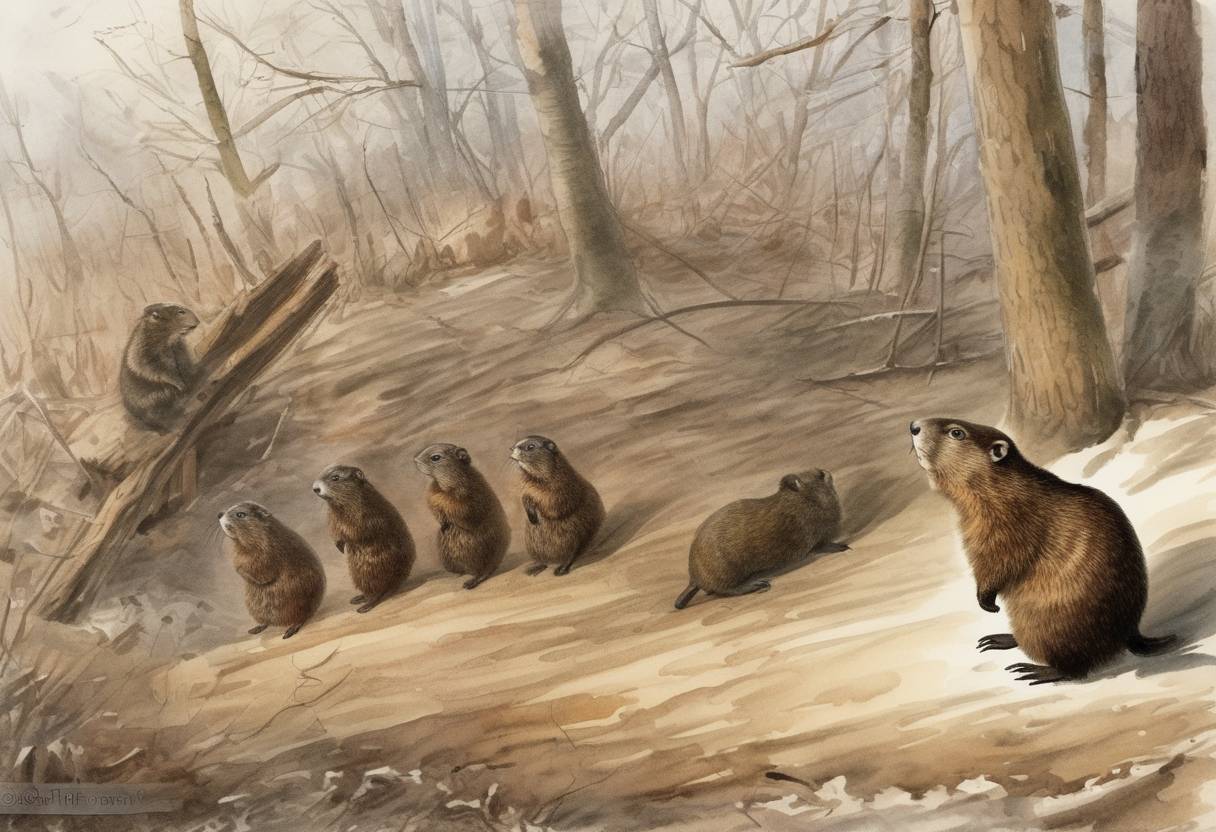
Groundhog Day, a popular tradition in the United States and Canada, was first observed on February 2, 1887, in Punxsutawney, Pennsylvania. This event has its roots in ancient European weather lore, where a badger or sacred bear was used to predict the weather. German immigrants brought the tradition to Pennsylvania, substituting the groundhog, a native animal, for the European creatures.
Candlemas Day: Groundhog Day is linked to Candlemas Day, a Christian holiday celebrated on February 2nd. According to folklore, if the weather was clear on Candlemas, it meant a longer winter. This belief was encapsulated in the rhyme:
“If Candlemas Day be fair and bright,
Winter will have another flight;
If Candlemas Day brings cloud and rain,
Winter is gone and will not come again.”
German Influence: German settlers in Pennsylvania adapted this tradition, choosing the groundhog as the weather predictor. The groundhog, also known as a woodchuck, was more common in the region than the European badger.
Punxsutawney, Pennsylvania: The first official Groundhog Day celebration took place in Punxsutawney, organized by the Punxsutawney Groundhog Club. The event was held at Gobbler’s Knob, a small hill just outside of town.
Punxsutawney Phil: The groundhog used for the prediction was named Punxsutawney Phil. According to tradition, if Phil sees his shadow, there will be six more weeks of winter; if not, spring will arrive early.
Cultural Impact: Groundhog Day has grown into a significant cultural event, attracting thousands of visitors to Punxsutawney each year. The tradition has been popularized by media coverage and the 1993 film “Groundhog Day,” starring Bill Murray.
Meteorological Accuracy: While the accuracy of Phil’s predictions is often debated, the event remains a beloved tradition, symbolizing the anticipation of spring.
Community and Tourism: The celebration has become a vital part of Punxsutawney’s identity, contributing to local tourism and community spirit.
Groundhog Day continues to be a whimsical and enduring tradition, reflecting the blend of cultural heritage and local folklore that characterizes much of American cultural history.
Source: en.wikipedia.org