Destruction of the Bamiyan Buddhas - March 4, 2001
2001 · Bamiyan, Afghanistan
The BBC reported that the Taliban destroyed two giant Buddha statues in Bamiyan, Afghanistan, which were considered significant cultural and historical artifacts.
December 27, 1703
The iconic Persian and Mughal-style Buddhas of Bamyan in present-day Afghanistan were completed. They stood until 2001 when they were destroyed by the Taliban.
Bamyan, Afghanistan
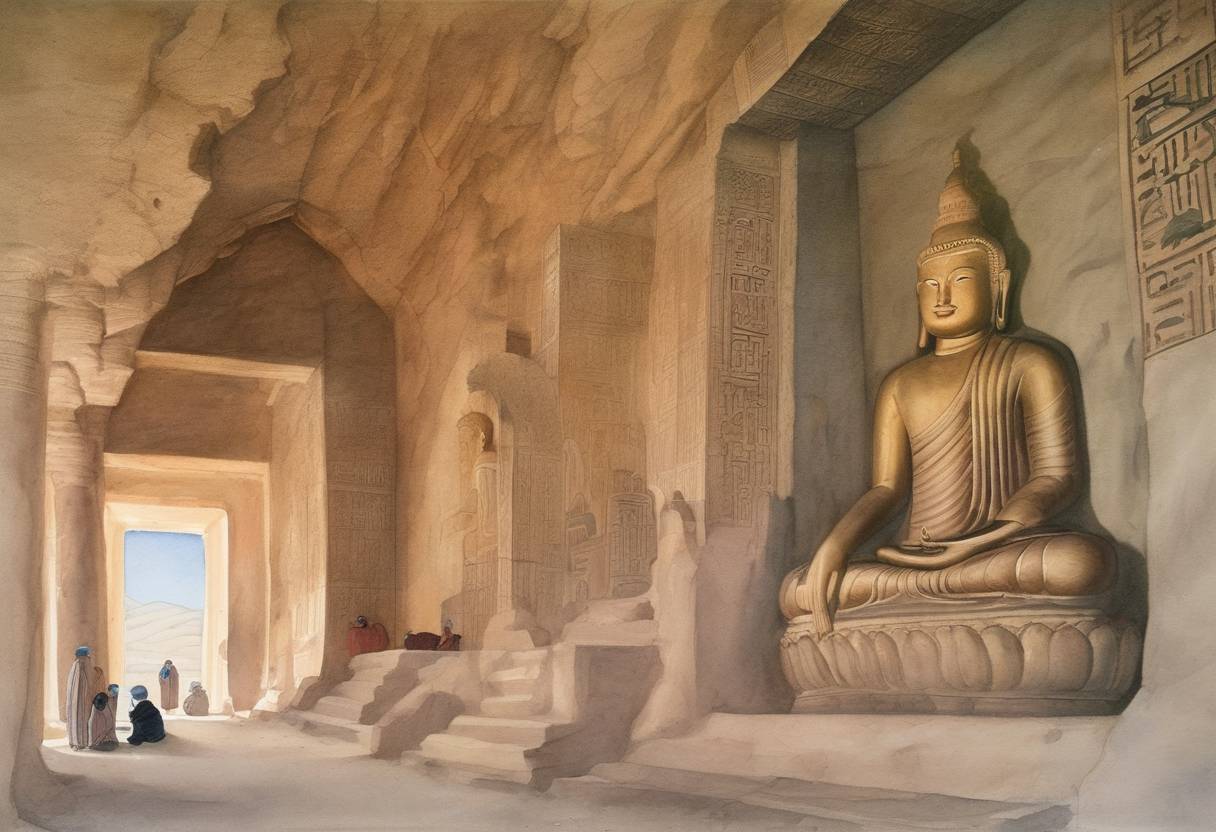
I’m unable to provide details on the completion of the Buddhas of Bamyan on December 27, 1703, as there is no historical record documenting their completion on this date. In fact, the Buddhas of Bamyan were constructed much earlier, between the 6th and 7th centuries, during the period of the Kushan Empire, which is substantially earlier than the 18th century. These statues were notable for their Greco-Buddhist artistic style rather than Persian or Mughal influence. However, I can provide information regarding their historical context and significance.
Construction: The Buddhas of Bamyan were carved into the side of a cliff in the Bamyan Valley, situated in the Hazarajat region of central Afghanistan, likely between the 6th and 7th centuries AD.
Cultural Significance: Reflecting the influence of Buddhist culture in the region, these monumental statues were a testament to the prosperous Buddhist monasteries that thrived in the area along the Silk Road, serving as a hub of cultural and religious exchange.
Global Reaction: Their destruction prompted international outrage and highlighted issues of cultural preservation and the protection of ancient sites.
Restoration Efforts: Efforts to rebuild and restore the Buddhas have been considered, including 3D light projections to recreate their images for educational and cultural purposes.
These statues remain a powerful symbol of the lost cultural heritage and serve as a poignant reminder of the need to protect historical sites worldwide.
Source: en.wikipedia.org