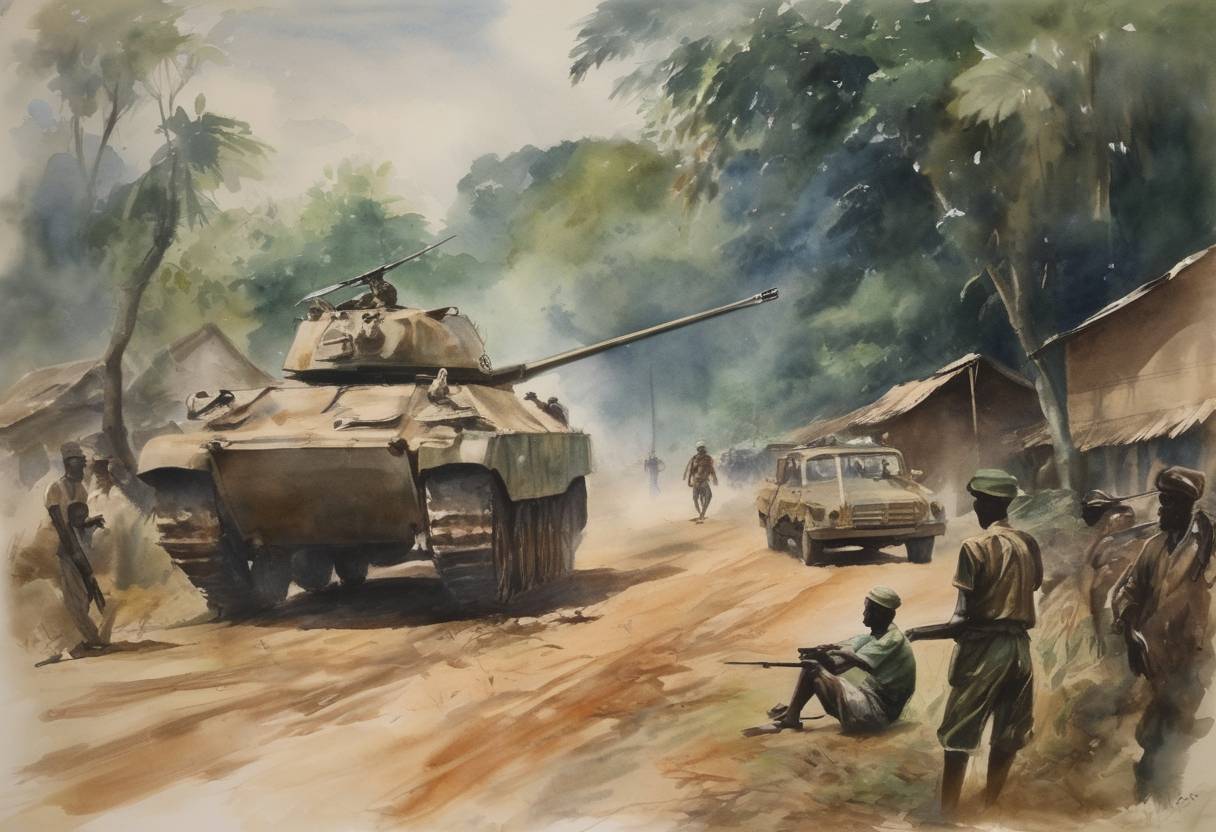
The Democratic Republic of Congo Appeals for UN Aid During Civil War
On August 24, 1960, amidst the tumultuous early months following its independence from Belgium, the Democratic Republic of Congo (DRC) made a significant appeal to the United Nations for financial assistance. This request for aid was a critical step as internal strife and civil war threatened to destabilize the newly independent nation.
Background to the Conflict
The Democratic Republic of Congo gained independence on June 30, 1960. However, the transition from colonial rule to autonomy was fraught with challenges. The lack of an experienced political class and cohesive national identity, coupled with the presence of various ethnic factions, led to significant instability. Just days after independence, a mutiny erupted within the army, stemming from disagreements about the role of Belgian officers and demands for African leadership.
The Political Crisis
This period was marked by the secession of the mineral-rich province of Katanga under Moïse Tshombe. Katanga’s secession, backed by Belgian interests, further exacerbated the nation’s instability. Additionally, political tensions between Prime Minister Patrice Lumumba and President Joseph Kasa-Vubu contributed to the turmoil, culminating in Lumumba seeking assistance from the Soviet Union, which intensified Cold War dynamics in the region.
The UN’s Role
In response to the escalating crisis, the United Nations deployed the United Nations Operation in the Congo (ONUC) in July 1960, aimed at stabilizing the situation and facilitating the withdrawal of Belgian troops. However, the financial and logistical demands of the intervention strained the Congolese government and necessitated further support.
On August 24, 1960, Congo’s request for UN financial aid represented a call for increased international involvement to address the humanitarian and administrative crises. The appeal highlighted the severe economic challenges facing the government, underscored by the need to restore order and governance amidst mounting chaos.
Impact and Aftermath
The Congo Crisis remained a focal point of international attention throughout the early 1960s. The appeal for aid was a recognition of the importance of international support in stabilizing post-colonial Africa. Despite UN efforts, struggles continued, including the tragic assassination of Patrice Lumumba in January 1961, which emphasized the complexities of Congolese politics and the deep-seated challenges of Cold War geopolitics intertwined with post-independence African governance.
In retrospect, this period underscored the vital role of international institutions in peacekeeping and the economic reconstruction of war-torn regions, although it also revealed the limitations of external interventions in resolving deeply rooted political conflicts.