Eritrea Gains Independence from Ethiopia: May 24, 1993
1993 · Asmara, Eritrea
Eritrea gains independence from Ethiopia after a 30-year war.
July 12, 1975
São Tomé and Príncipe gained independence from Portugal, becoming an independent nation.
São Tomé, São Tomé and Príncipe | Portuguese Empire
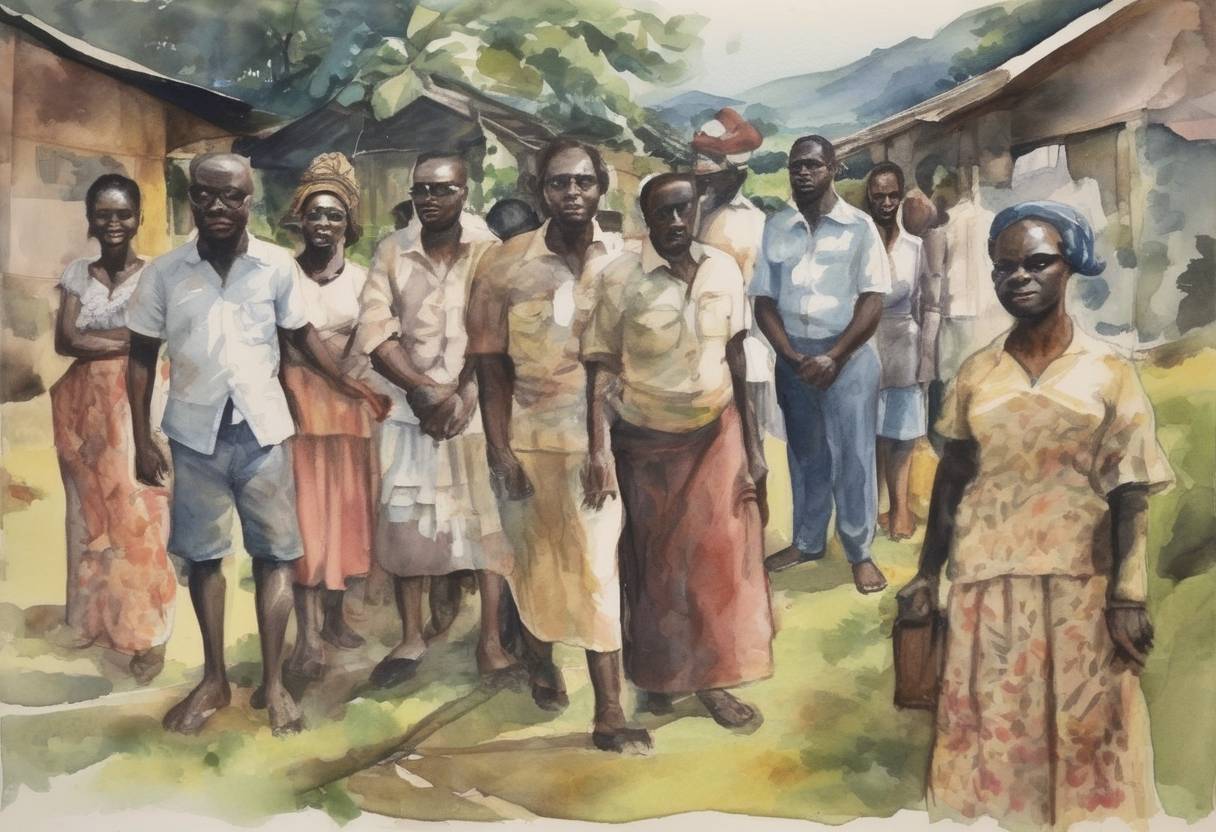
On July 12, 1975, São Tomé and Príncipe officially gained independence from Portugal, marking a significant milestone in the history of the small island nation located in the Gulf of Guinea, off the western coast of Central Africa.
Portuguese Discovery and Colonization: The islands of São Tomé and Príncipe were discovered by Portuguese explorers in the late 15th century. São Tomé was discovered in 1470, followed by Príncipe in 1471. The islands were uninhabited at the time of discovery and were soon colonized by the Portuguese.
Economic Development: The islands became important centers for sugar production in the 16th century, utilizing enslaved African labor. Over time, the economy shifted towards cocoa and coffee, making São Tomé and Príncipe one of the world’s largest cocoa producers by the early 20th century.
Global Decolonization Movement: The mid-20th century was marked by a wave of decolonization across Africa and Asia. This movement was fueled by the weakening of European colonial powers after World War II and the rise of nationalist movements within the colonies.
Local Nationalism: In São Tomé and Príncipe, the struggle for independence was led by the Movement for the Liberation of São Tomé and Príncipe (MLSTP), founded in 1960. The MLSTP sought to end Portuguese colonial rule and establish an independent state.
Carnation Revolution: The Carnation Revolution in Portugal on April 25, 1974, was a peaceful coup that overthrew the Estado Novo regime. This revolution led to significant political changes in Portugal, including a shift towards decolonization.
Negotiations and Transition: Following the Carnation Revolution, Portugal began negotiating the independence of its colonies. Talks between the Portuguese government and the MLSTP led to an agreement on the transfer of power.
Proclamation of Independence: On July 12, 1975, São Tomé and Príncipe declared its independence, with Manuel Pinto da Costa becoming the first President of the newly independent nation.
Political Developments: The early years of independence were marked by a one-party socialist state under the leadership of the MLSTP. Political reforms in the late 1980s and early 1990s led to the introduction of a multi-party system.
Economic Challenges: Despite its rich natural resources, São Tomé and Príncipe has faced economic challenges, including reliance on cocoa exports and the need for economic diversification.
International Relations: São Tomé and Príncipe has maintained peaceful relations with its neighbors and has been a member of various international organizations, including the United Nations and the African Union.
The independence of São Tomé and Príncipe is a testament to the broader decolonization movement of the 20th century and represents the resilience and determination of its people to achieve self-governance and national sovereignty.
Source: en.wikipedia.org