The Great Baltimore Fire of 1904
1904 · Baltimore, United States
The Great Baltimore Fire began, lasting for over 30 hours and destroying over 1,500 buildings in Baltimore, Maryland.
November 9, 1872
The Great Boston Fire of 1872 began, destroying about 65 acres of downtown Boston, Massachusetts.
Boston, United States | Boston Fire Department
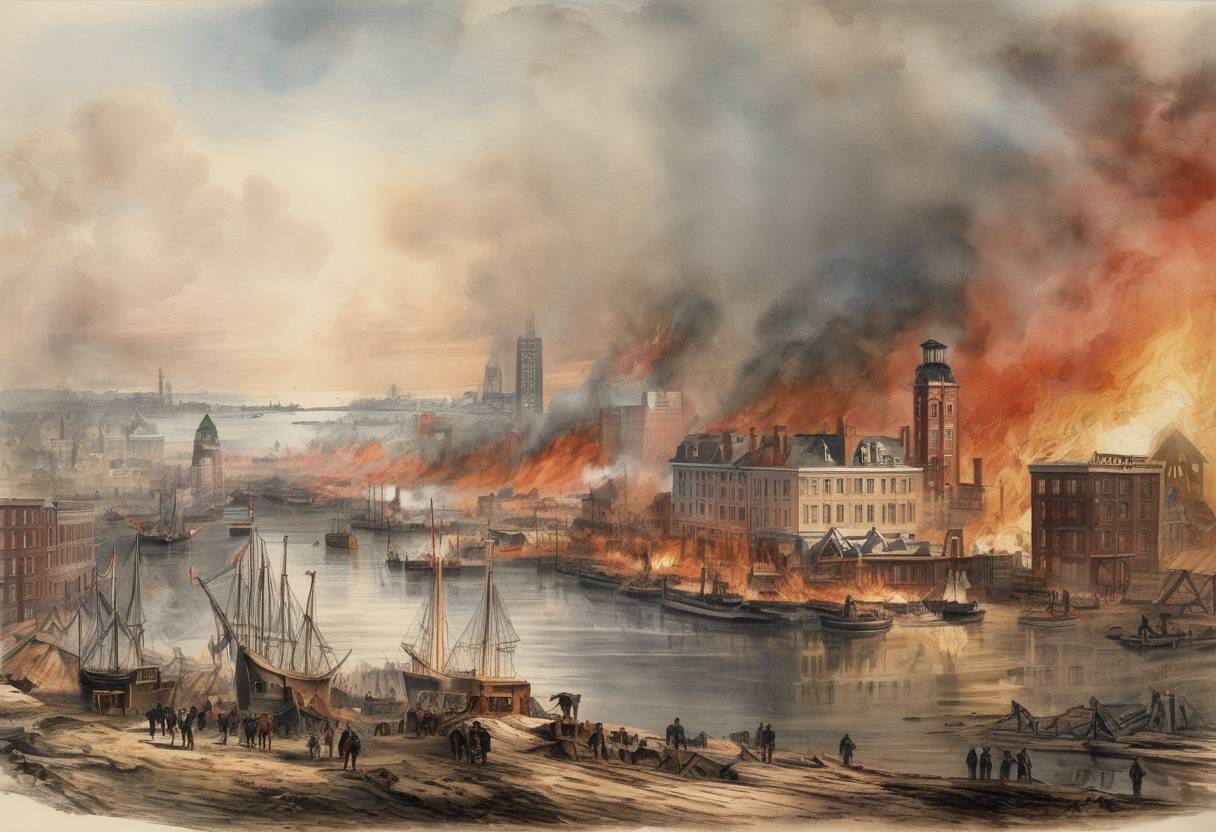
On November 9, 1872, a devastating fire broke out in Boston, Massachusetts, leading to one of the most destructive urban fires in American history. The Great Boston Fire of 1872 ravaged approximately 65 acres of the city’s downtown area, causing significant damage to property and infrastructure.
Urban Growth and Construction: In the years leading up to the fire, Boston experienced rapid urban growth. The downtown area was densely packed with commercial buildings, many of which were constructed with wood and other flammable materials.
Inadequate Firefighting Infrastructure: At the time, Boston’s firefighting capabilities were limited. The city’s water supply system was insufficient for combating large-scale fires, and the fire department was understaffed and under-equipped.
Outbreak: The fire began around 7:20 PM on November 9, 1872, in the basement of a commercial warehouse on Summer Street. The exact cause of the fire remains unknown, but it quickly spread due to strong winds and the close proximity of wooden structures.
Spread and Destruction: Fueled by high winds and the abundance of flammable materials, the fire spread rapidly through the downtown area. It consumed numerous commercial buildings, warehouses, and offices, causing extensive damage.
Efforts to Contain the Fire: Firefighters from Boston and surrounding areas worked tirelessly to contain the blaze. However, their efforts were hampered by inadequate water pressure and the sheer intensity of the fire.
Extent of Damage: The fire destroyed approximately 776 buildings, resulting in an estimated \(73.5 million in damages (equivalent to over \)1.5 billion today). Remarkably, despite the scale of destruction, only about 20 people lost their lives.
Rebuilding and Reforms: In the aftermath, Boston underwent significant rebuilding efforts. The disaster prompted reforms in building codes, leading to the construction of more fire-resistant structures. Additionally, improvements were made to the city’s firefighting infrastructure and water supply systems.
Economic Impact: The fire had a profound economic impact on Boston, disrupting businesses and livelihoods. However, the city’s resilience and determination facilitated a relatively swift recovery.
The Great Boston Fire of 1872 highlighted the vulnerabilities of rapidly growing urban centers in the 19th century. It underscored the importance of effective urban planning, fire safety regulations, and adequate emergency response systems. The lessons learned from this disaster contributed to advancements in fire prevention and urban development practices in the United States.
The event remains a pivotal moment in Boston’s history, illustrating both the destructive power of urban fires and the resilience of communities in the face of adversity.
Source: en.wikipedia.org