The Legislative Union of Great Britain and Ireland: Formation of the United Kingdom
1801 · London, United Kingdom
The legislative union of Great Britain and Ireland is completed to form the United Kingdom of Great Britain and Ireland.
February 17, 1753
The British Museum is established by an Act of Parliament.
London, United Kingdom | British Parliament
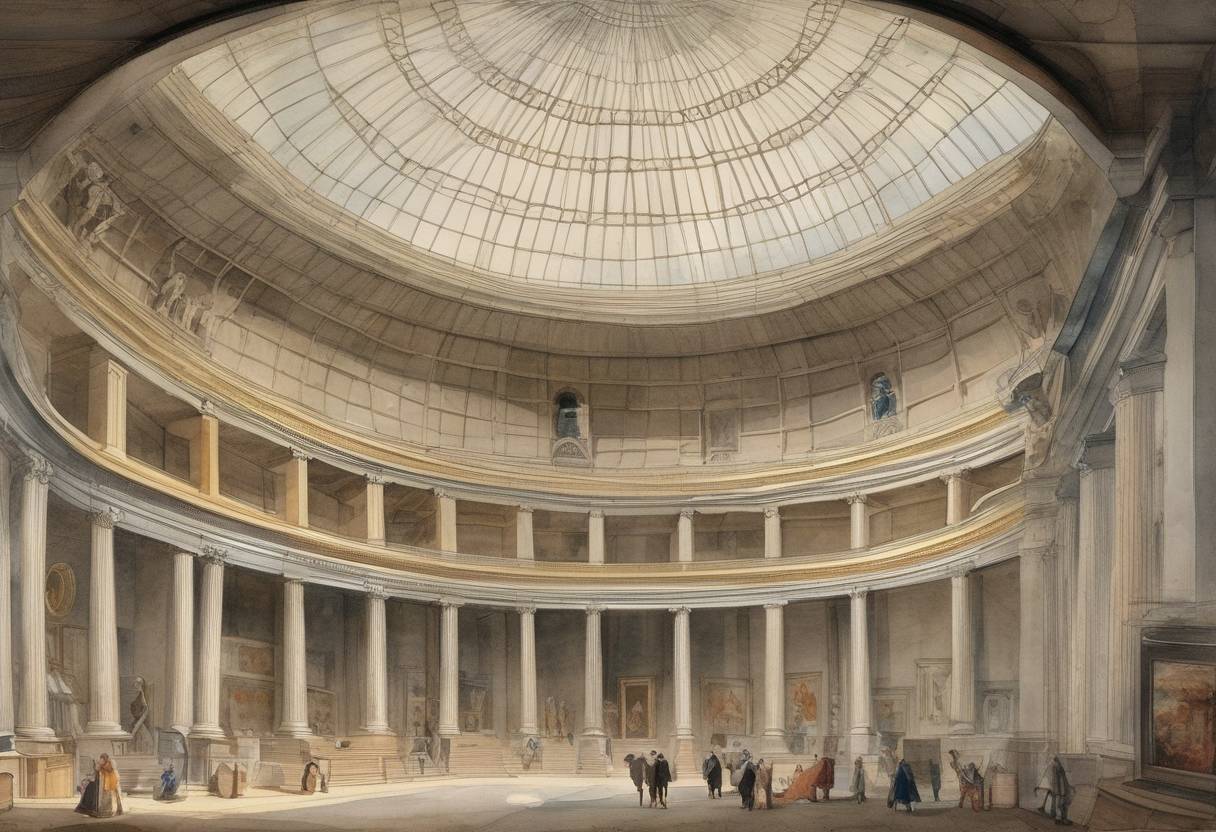
On February 17, 1753, the British Museum was established by an Act of Parliament, marking a significant moment in the history of public museums. This event laid the foundation for what would become one of the world’s most renowned institutions dedicated to human history, art, and culture.
The establishment of the British Museum was largely driven by the bequest of Sir Hans Sloane, a physician and collector whose extensive collection of curiosities, artifacts, and natural specimens formed the core of the museum’s initial holdings. Upon his death in 1753, Sloane offered his collection to King George II for the nation, provided that Parliament would pay his heirs £20,000, a sum significantly lower than the collection’s estimated value.
The Act of Parliament, formally known as the British Museum Act 1753, was passed to accept Sloane’s offer and to establish a public museum. The Act outlined the creation of a board of trustees to oversee the museum’s operations and ensured that the museum would be free to the public, a revolutionary concept at the time. This move was intended to promote knowledge and education among the general populace.
The British Museum officially opened its doors to the public on January 15, 1759, housed in Montagu House in Bloomsbury, London. Initially, the museum’s collection included not only Sloane’s artifacts but also the Cottonian Library and the Harleian Library, which were significant collections of manuscripts and books.
The establishment of the British Museum was a landmark event in the history of museums, setting a precedent for public access to cultural and historical artifacts. It reflected the Enlightenment ideals of the time, emphasizing education, knowledge, and the sharing of resources for the public good.
Over the centuries, the British Museum has grown exponentially, now housing millions of works spanning various cultures and historical periods. It remains a vital institution for research, education, and cultural exchange, attracting millions of visitors from around the world each year.
The British Museum’s founding on February 17, 1753, represents a pivotal moment in the democratization of knowledge and the preservation of human history. Its establishment by an Act of Parliament underscores the importance of public access to cultural heritage and continues to influence the development of museums globally.
Source: en.wikipedia.org