The Cuban Missile Crisis Begins: October 14, 1962
1962 · Cuba, Cuba
The Cuban Missile Crisis began when a U.S. reconnaissance plane photographed Soviet missile bases under construction in Cuba.
October 28, 1962
The Cuban Missile Crisis ends as Soviet leader Nikita Khrushchev announces the removal of Soviet missiles from Cuba.
Havana, Cuba | Soviet Union
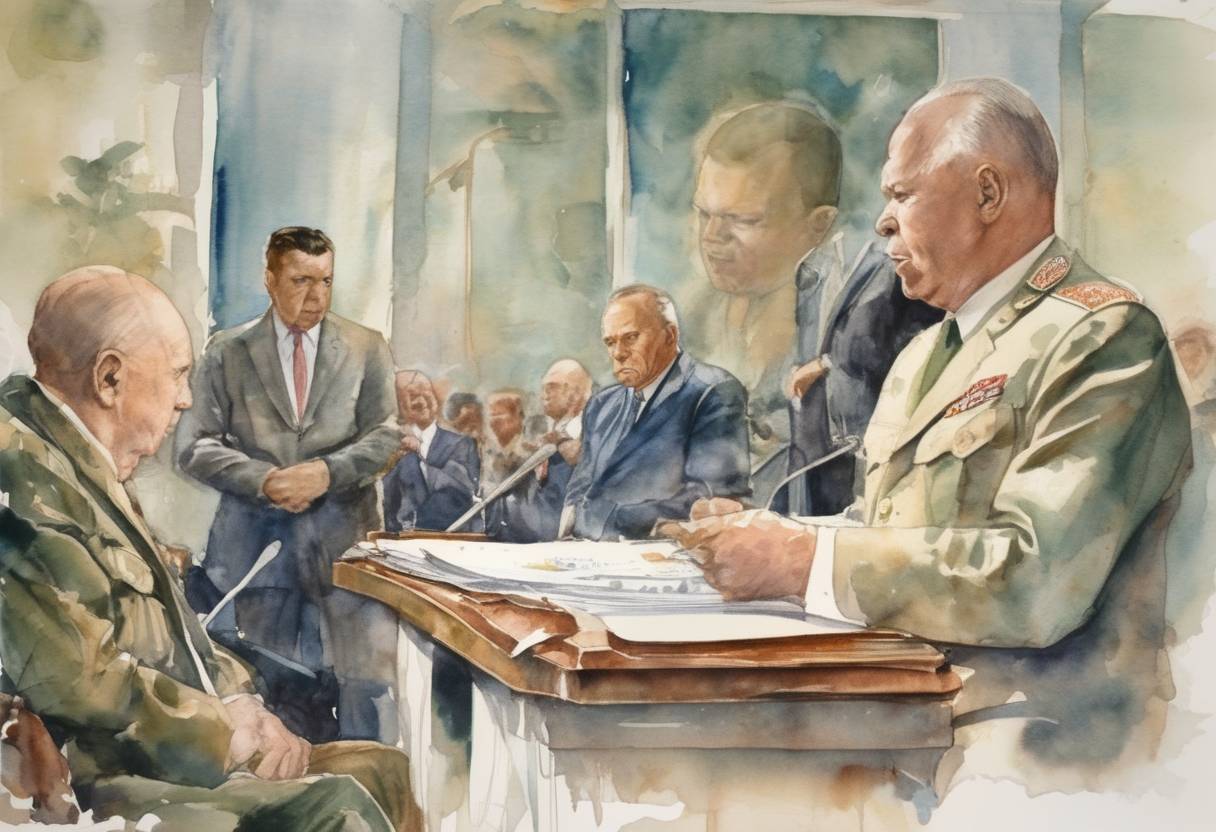
On October 28, 1962, the Cuban Missile Crisis reached a resolution when Soviet Premier Nikita Khrushchev announced the removal of Soviet missiles from Cuba. This event marked the culmination of a tense 13-day confrontation between the United States and the Soviet Union, which had brought the world to the brink of nuclear war.
The Cuban Missile Crisis was rooted in the Cold War tensions between the United States and the Soviet Union. In 1962, the Soviet Union, under Khrushchev, secretly installed nuclear missiles in Cuba, just 90 miles off the coast of Florida. This move was partly in response to the U.S. deployment of Jupiter missiles in Turkey and Italy, which were within striking distance of the Soviet Union.
The crisis began on October 14, 1962, when an American U-2 spy plane captured photographic evidence of the missile installations in Cuba. President John F. Kennedy was informed of the situation on October 16, and after days of intense deliberation with his advisors, he decided to impose a naval blockade, termed a “quarantine,” on Cuba to prevent further Soviet shipments of military equipment.
October 22, 1962: President Kennedy addressed the nation, revealing the presence of Soviet missiles in Cuba and announcing the naval blockade. He demanded the removal of the missiles and warned that any missile launched from Cuba would be regarded as an attack by the Soviet Union on the United States.
October 24, 1962: The blockade went into effect. Soviet ships en route to Cuba were stopped or turned back, escalating tensions.
October 26-27, 1962: The crisis reached its peak. On October 26, Khrushchev sent a private letter to Kennedy proposing the removal of the missiles in exchange for a U.S. pledge not to invade Cuba. The following day, a second letter from Khrushchev demanded the removal of U.S. missiles from Turkey as part of the deal. Meanwhile, an American U-2 plane was shot down over Cuba, further heightening the crisis.
On October 28, 1962, Khrushchev publicly announced that the Soviet Union would dismantle and remove the missiles from Cuba in exchange for a U.S. promise not to invade Cuba. Additionally, although not part of the public agreement, the U.S. secretly agreed to remove its Jupiter missiles from Turkey at a later date.
The resolution of the Cuban Missile Crisis was a pivotal moment in Cold War history. It marked a significant de-escalation of nuclear tensions and led to a period of improved communication between the superpowers. In its aftermath, both nations established a direct communication link, known as the “Hotline,” to prevent future crises. The crisis also underscored the importance of diplomacy and negotiation in resolving international conflicts, setting a precedent for future arms control agreements.
The Cuban Missile Crisis remains a critical study in crisis management and international relations, illustrating the potential consequences of nuclear brinkmanship and the necessity of careful, calculated diplomacy.
Source: en.wikipedia.org