Mars Observer Launch on September 25, 1992
1992 · Cape Canaveral, United States
NASA launches Mars Observer to study the Martian surface, atmosphere, and climate. Unfortunately, contact with the spacecraft was lost in 1993.
August 20, 1975
NASA launches Viking 1, the first spacecraft to successfully land on Mars.
Cape Canaveral, USA | NASA
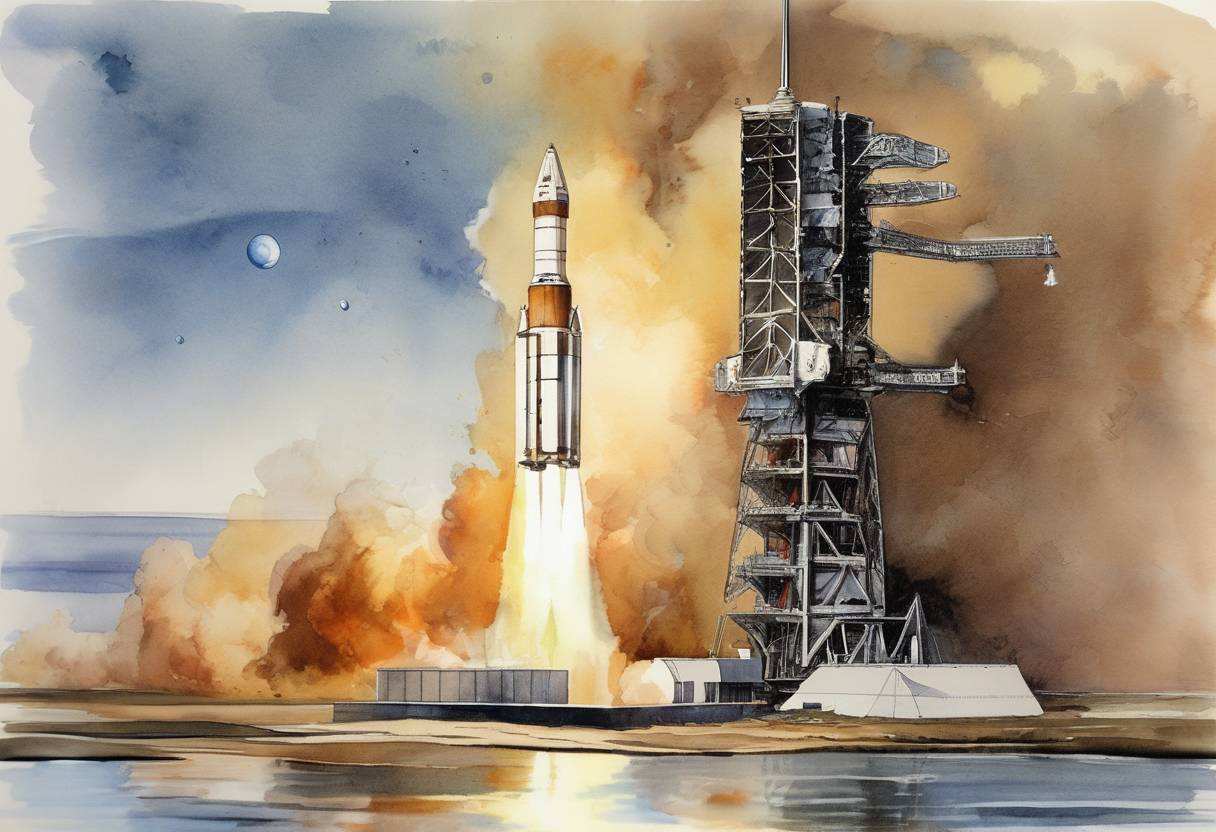
On August 20, 1975, NASA launched Viking 1, marking a significant milestone in space exploration as it became the first spacecraft to successfully land on Mars. This mission was part of NASA’s Viking program, which aimed to explore the Martian surface and atmosphere, and search for signs of life.
The Viking program was conceived during the 1960s, a period marked by intense interest in planetary exploration. Following the success of the Mariner missions, which provided the first close-up images of Mars, NASA sought to build on this knowledge by sending landers to the Martian surface. The Viking program consisted of two spacecraft, Viking 1 and Viking 2, each comprising an orbiter and a lander.
The launch of Viking 1 was executed flawlessly, setting the spacecraft on a trajectory towards Mars. The mission was designed to take advantage of a favorable alignment between Earth and Mars, which occurs approximately every 26 months.
Viking 1 traveled through space for nearly 11 months before reaching its destination. The spacecraft was equipped with a suite of scientific instruments designed to study the Martian environment, including cameras, a seismometer, and a biology experiment package.
After entering orbit around Mars, Viking 1 conducted a series of observations to select a suitable landing site. The chosen site was Chryse Planitia, a large plain in the northern hemisphere of Mars. On July 20, 1976, the Viking 1 lander successfully touched down on the Martian surface, becoming the first spacecraft to do so.
The Viking 1 mission provided a wealth of scientific data, including:
The success of Viking 1 represented a major achievement in planetary exploration, paving the way for future missions to Mars. It demonstrated the feasibility of landing and operating scientific instruments on another planet, significantly advancing our understanding of Mars and its potential for supporting life.
The Viking program’s legacy continues to influence Mars exploration, inspiring subsequent missions such as the Mars Pathfinder, the Mars Exploration Rovers, and the Mars Science Laboratory.
In conclusion, the launch of Viking 1 on August 20, 1975, was a pivotal moment in the history of space exploration, marking humanity’s first successful attempt to explore the surface of another planet.
Source: en.wikipedia.org