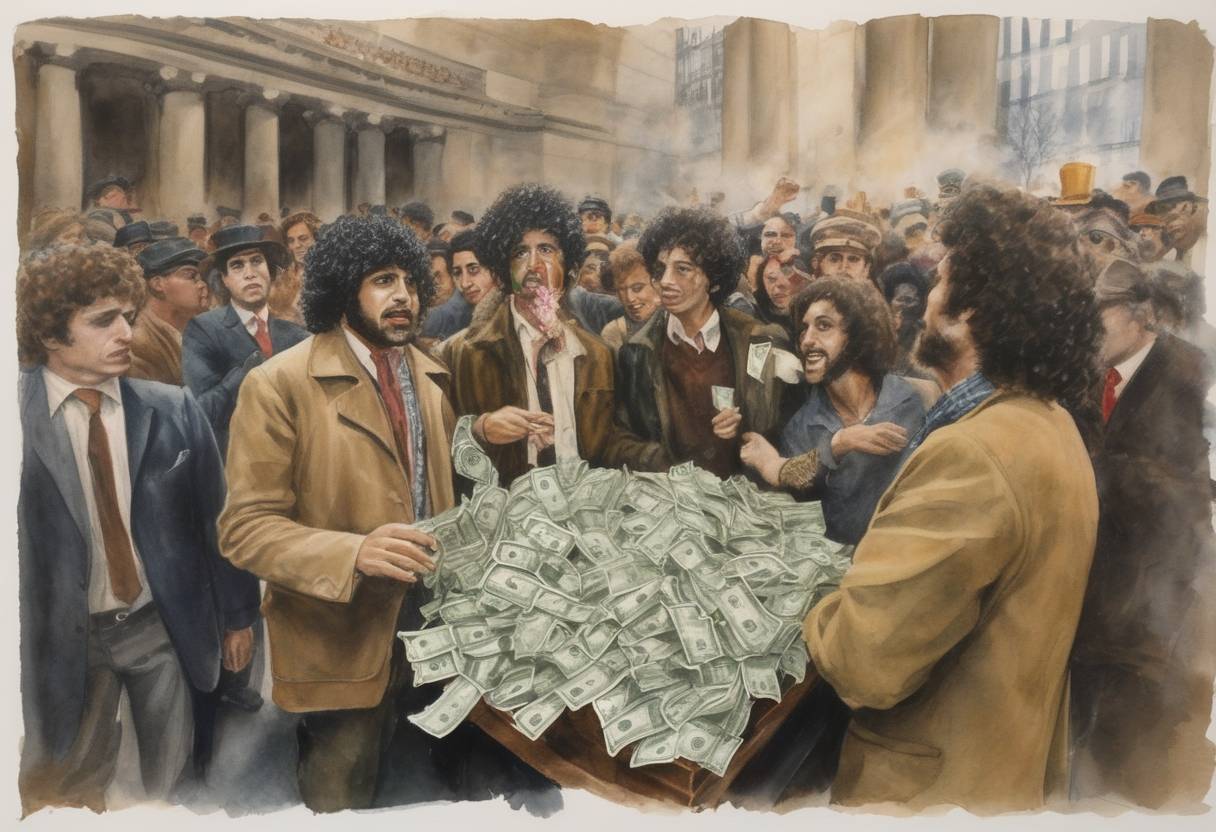
Disruption of the New York Stock Exchange by the Yippies on August 24, 1967
On August 24, 1967, the Youth International Party, commonly known as the Yippies, led a symbolic protest against capitalism at the New York Stock Exchange (NYSE). This protest was orchestrated by Abbie Hoffman, a prominent counterculture figure, and aimed to critique the economic system amid a time of significant socio-political unrest in the United States.
Background
The late 1960s was a period marked by widespread dissent, driven by the Vietnam War, civil rights movements, and growing skepticism towards traditional establishments. The Yippies emerged as a radical group within the wider counterculture movement, blending theatrical protests with anarchic elements to challenge the status quo.
The Protest
Hoffman and other Yippies gained access to the visitors’ gallery of the New York Stock Exchange. Once inside, they began throwing dollar bills onto the trading floor below. This unexpected action caused a temporary disruption as traders scrambled to gather the money, which highlighted the perceived greed and materialism of the capitalist system. While the amount of money involved was minimal, the action drew significant media attention and sparked conversations about the values underpinning financial markets.
Significance
This protest was emblematic of the Yippies’ strategy of using humor and dramatic public demonstrations to convey their message. It underscored growing tensions between mainstream American values and the burgeoning counterculture, which sought to address issues such as wealth inequality and the morality of capitalism. The NYSE incident became a hallmark of the Yippies’ innovative protest methods, contributing to their notoriety and influence in the broader anti-establishment movement of the 1960s.
Aftermath
The NYSE quickly instituted new measures to prevent future disturbances, such as installing glass barriers to close off the visitors’ gallery. The protest did not lead to direct policy changes but succeeded in capturing public imagination and media attention, furthering discussions on economic and social reforms. It remains a vivid example of the power of symbolic protest and the impact of the 1960s counterculture on American society.