January 31, 2022: Accusations Against Russia
2022 · Washington, D.C., United States
The United States and its allies formally accuse Russia of planning to fabricate a pretext for invading Ukraine, escalating tensions in the region.
April 28, 2014
The United States imposes new sanctions on Russia in response to the annexation of Crimea and the ongoing crisis in Ukraine.
Washington, D.C., United States | United States Government
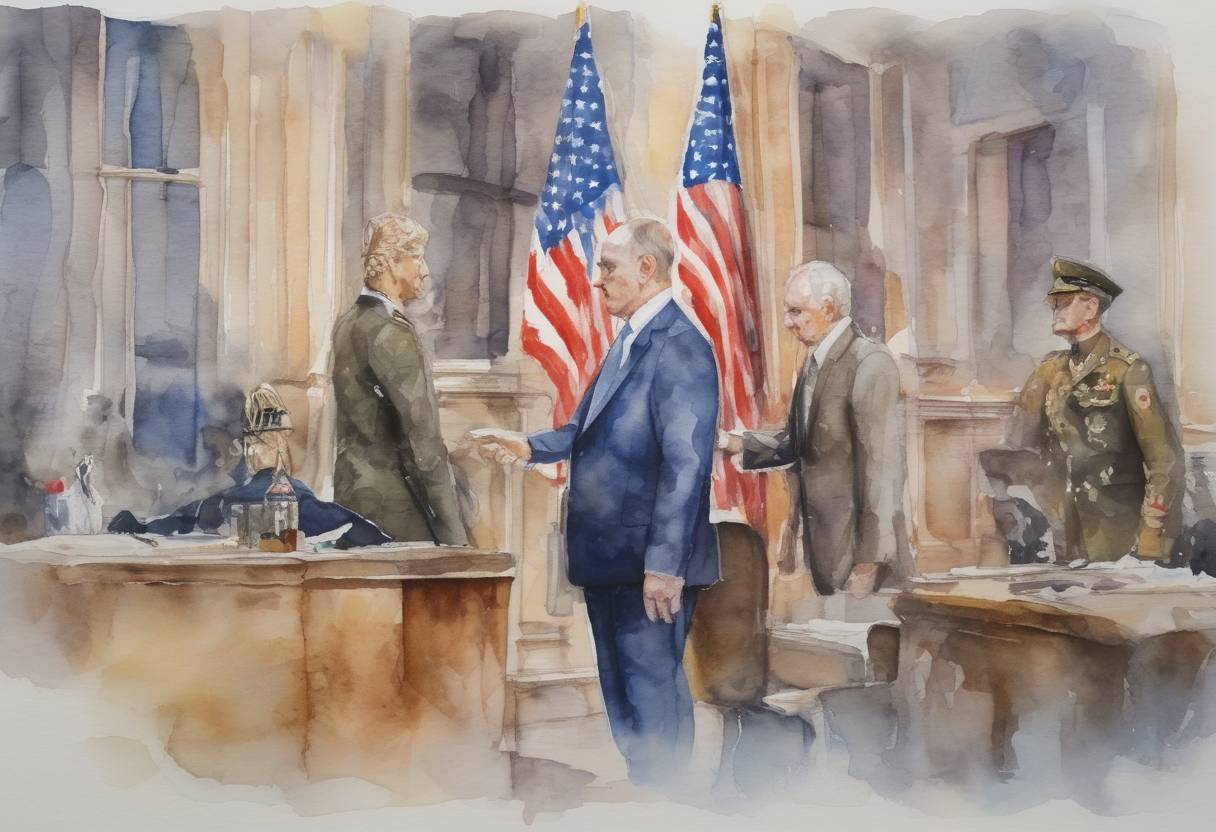
On April 28, 2014, the United States announced a new round of sanctions against Russia in response to its annexation of Crimea and the ongoing crisis in Ukraine. This move was part of a broader international effort to pressure Russia to de-escalate tensions and respect Ukraine’s sovereignty.
Annexation of Crimea: In February 2014, following political unrest in Ukraine and the ousting of President Viktor Yanukovych, Russia moved to annex Crimea. This action was widely condemned by the international community as a violation of international law and Ukraine’s territorial integrity.
Escalating Tensions: The annexation was followed by increased unrest in Eastern Ukraine, where pro-Russian separatists began seizing government buildings and declaring independence from Ukraine. The situation rapidly escalated into a broader conflict.
Targeted Individuals and Entities: The sanctions targeted seven Russian government officials and 17 companies linked to President Vladimir Putin’s inner circle. The measures included asset freezes and travel bans.
Sectoral Impact: The sanctions were designed to impact key sectors of the Russian economy, including energy, finance, and defense, aiming to increase economic pressure on Russia.
International Coordination: These sanctions were part of a coordinated effort with the European Union, which also imposed similar measures. The goal was to present a united front against Russia’s actions in Ukraine.
Impact on Russia: The sanctions contributed to a significant economic downturn in Russia, exacerbating existing economic challenges and leading to a depreciation of the Russian ruble.
Geopolitical Tensions: The sanctions marked a significant point in post-Cold War relations between Russia and the West, leading to increased geopolitical tensions and a deterioration of diplomatic relations.
Ongoing Conflict: Despite international pressure, the conflict in Eastern Ukraine continued, eventually leading to the Minsk agreements aimed at ceasing hostilities, though with limited success.
Long-term Sanctions: The sanctions regime against Russia has remained in place, with periodic updates and expansions in response to ongoing developments in Ukraine and other geopolitical issues.
Continued Diplomatic Efforts: The situation in Ukraine has remained a focal point of international diplomacy, with ongoing efforts to find a peaceful resolution to the conflict.
The sanctions of April 28, 2014, were a critical component of the international response to Russia’s actions in Ukraine, highlighting the complexities of modern geopolitical conflicts and the use of economic measures as tools of foreign policy.
Source: www.reuters.com