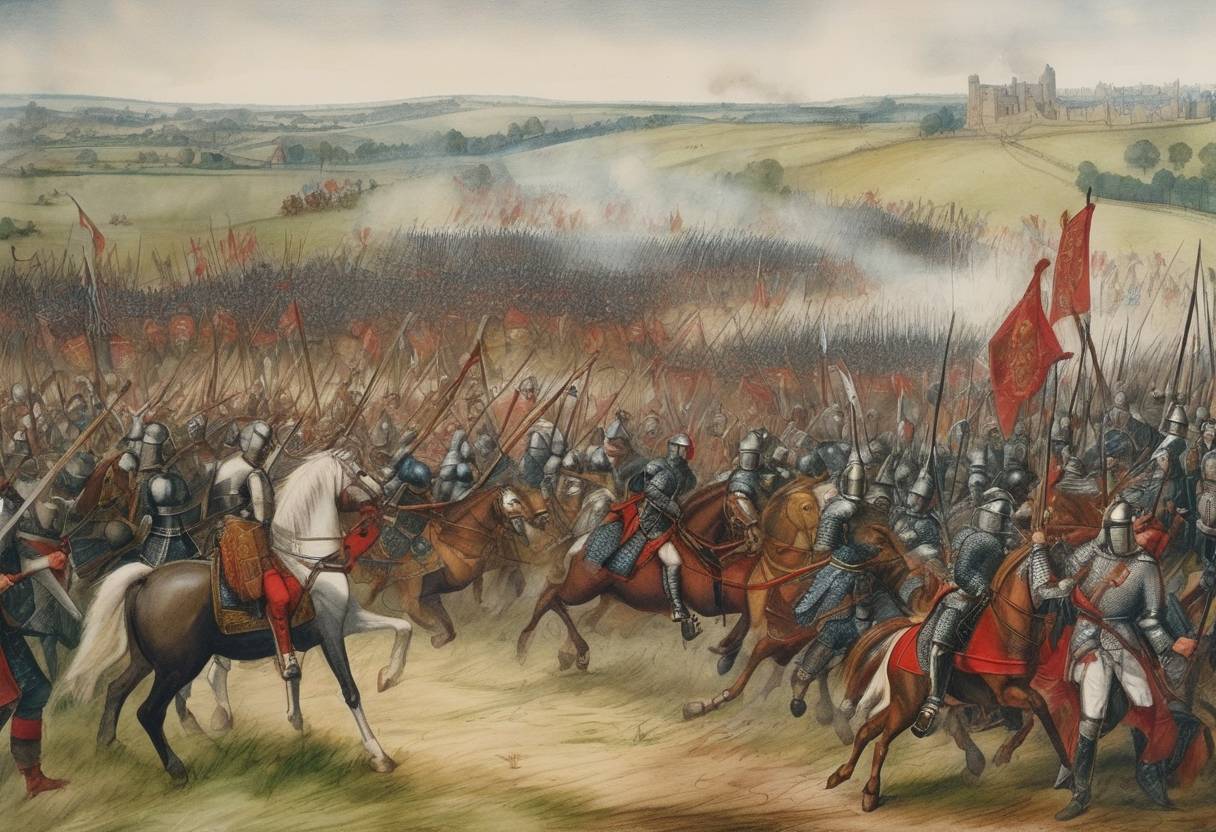
The Battle of Northampton (July 10, 1460)
The Battle of Northampton, fought on July 10, 1460, was a pivotal engagement during the Wars of the Roses, a dynastic struggle between the houses of Lancaster and York over control of the English throne. This battle marked a significant turning point in favor of the Yorkists.
Background
The Wars of the Roses began due to political instability and factional struggles within the English court. King Henry VI’s bouts of mental illness exacerbated these issues, allowing influential nobility to vie for power and influence. The Yorkist faction, led by Richard, Duke of York, challenged the Lancastrian hold on power, bolstered by supporters such as Richard Neville, the 16th Earl of Warwick.
Tensions escalated when the Yorkists were excluded from a council meeting in Coventry and the Lancastrians prepared to confront them militarily. In response, Warwick and the Yorkists advanced on London and subsequently moved north to confront the Lancastrian forces at their defensive position near Northampton.
The Battle
The Lancastrian forces, led by King Henry VI’s close allies, including the Duke of Buckingham, fortified themselves in a position protected by ditches and stakes. However, their preparations were undermined by internal dissensions. On the Yorkists’ side, Warwick demonstrated strategic acumen, bolstered by an army reportedly comprising both infantry and seasoned fighters.
Before the battle, Warwick sought to parley with the Lancastrians, but these overtures were rejected. The Yorkists then launched a decisive assault. A significant defection within the Lancastrian ranks, led by Lord Grey of Ruthin, who switched allegiance mid-battle, allowed the Yorkists to overcome the defenses swiftly. The Lancastrian lines collapsed under the Yorkist attack.
Aftermath and Consequences
The Yorkist victory at Northampton was not only a significant military triumph but also had considerable political ramifications. King Henry VI was captured during the battle, effectively bolstering the Yorkists’ claim to power. This victory facilitated the subsequent political maneuvers by Richard, Duke of York, though it would not be long-lasting due to the complex and shifting alliances in the conflict. The battle set the stage for further confrontations in the Wars of the Roses, including the pivotal Battle of Towton the following year.
Significance
The capture of King Henry VI underscored the fragile nature of his rule and emphasized the potency of the Yorkist challenge. The Battle of Northampton demonstrated the effectiveness of tactical maneuvering and the impact of enemy defections. It highlighted the period’s volatility, where allegiances were fluid, and fortunes could change rapidly, shaping the course of English history.