Salvador Allende's Inauguration as President of Chile
1970 · Santiago, Chile
Salvador Allende is inaugurated as president of Chile, becoming the first Marxist to be elected president in a country with a significant democratic history.
January 6, 2014
President Michelle Bachelet of Chile won the second round of the presidential election, returning to office for a non-consecutive term.
Santiago, Chile | Government of Chile
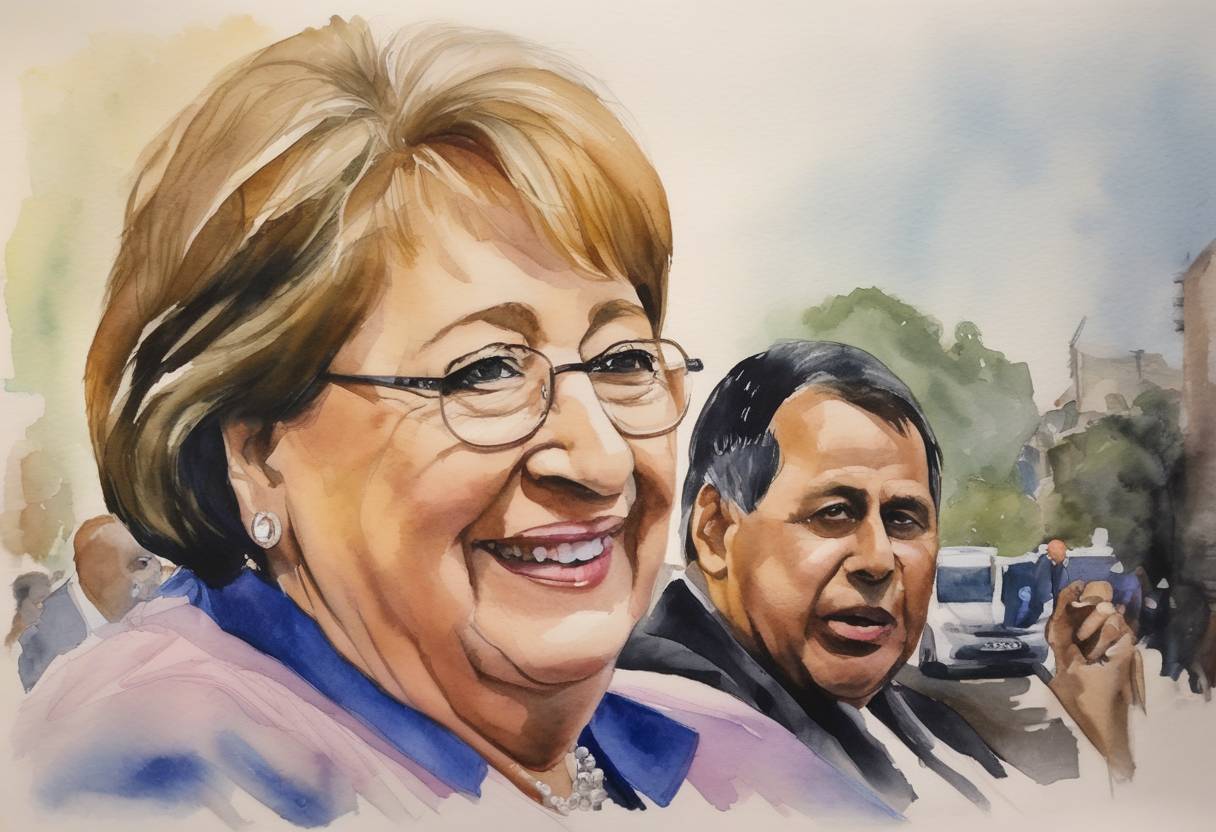
On January 6, 2014, Michelle Bachelet officially returned to office as President of Chile, marking the beginning of her second non-consecutive term following a decisive victory in the presidential election. The election outcome was determined in a runoff held on December 15, 2013, since no candidate secured the required absolute majority in the first round.
Michelle Bachelet previously served as Chile’s first female president from 2006 to 2010, representing the Socialist Party. Her initial tenure was characterized by policies aimed at reducing inequality and improving social welfare, as well as her leadership during the aftermath of the significant 2010 earthquake in Chile.
After her first presidency, Bachelet led the United Nations Entity for Gender Equality and the Empowerment of Women (UN Women), enhancing her international profile before returning to Chilean politics.
Bachelet ran as the candidate for the New Majority coalition (Nueva Mayoría), an alliance that included her own Socialist Party, the Christian Democratic Party, and other left-wing groups. Her main opponent in the election was Evelyn Matthei, a candidate from the Independent Democratic Union and a representative of the right-leaning incumbent Coalition for Change.
In the first round of voting on November 17, 2013, Bachelet emerged as the front-runner but did not achieve the necessary 50% to win outright, requiring a second-round runoff.
On December 15, 2013, Bachelet won the runoff with approximately 62% of the vote, the largest margin of victory in a Chilean presidential election since the return to democracy in 1990. Her campaign focused on education reform, tax policy changes to reduce inequality, and constitutional amendments to replace the existing constitution drafted during Augusto Pinochet’s military dictatorship.
Bachelet’s return to the presidency reflected a broader regional trend in South America towards leftist and progressive policies, coinciding with the presidencies of leaders like Luiz Inácio Lula da Silva in Brazil and Cristina Fernández de Kirchner in Argentina.
Her victory emphasized significant public support for her proposed social and economic reforms, aiming to address longstanding issues of social inequality in Chile. Bachelet’s second term (2014–2018) faced various challenges, including navigating Chile’s economic slowdown and increasingly polarized politics.
Bachelet’s administration succeeded in enacting some transformative legislation, including educational reforms designed to offer free tertiary education and the advancement of labor rights. However, not all her proposed reforms were fully realized, and her term faced several political and corruption scandals affecting public perception.
This electoral victory solidified Michelle Bachelet’s position as an influential figure in Chilean and regional politics, highlighting her enduring legacy in promoting social equity and advocating for gender equality both domestically and internationally.
Source: www.nytimes.com