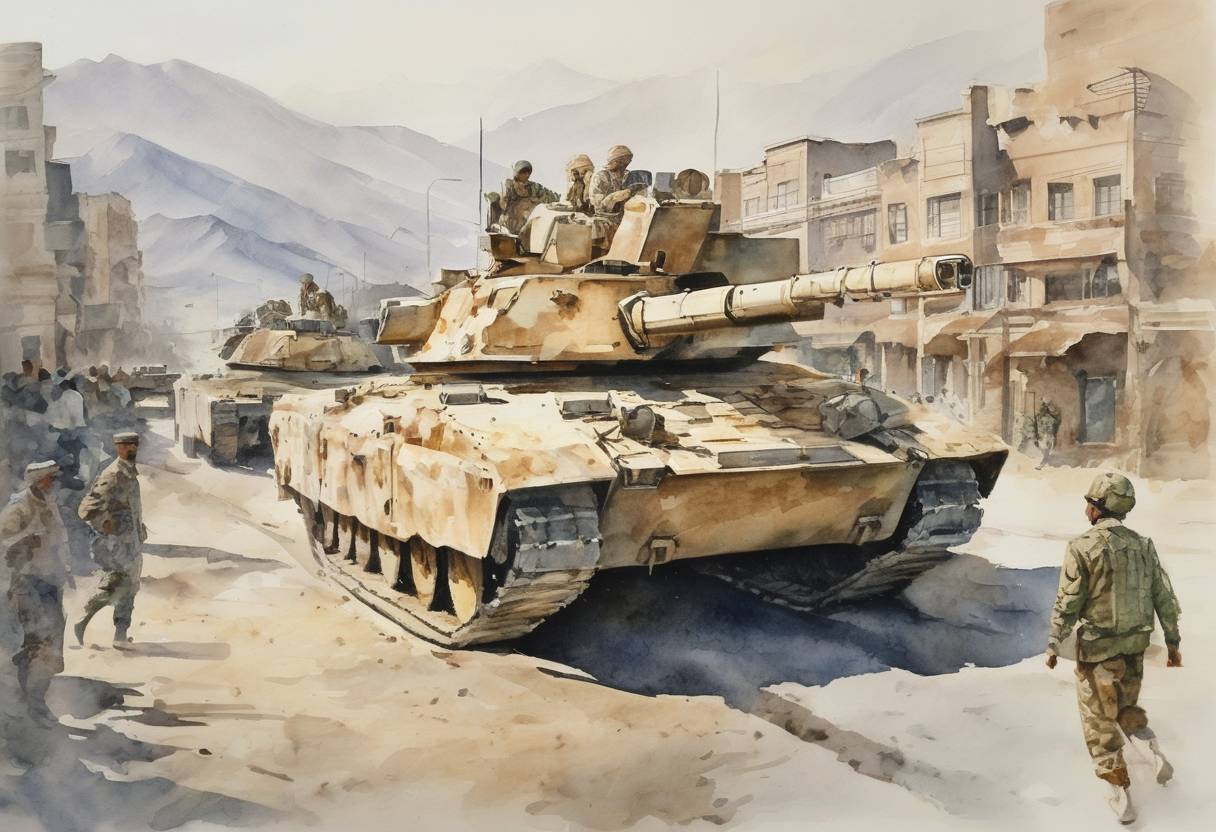
The Last Soviet Armored Column Leaves Kabul: February 2, 1989
On February 2, 1989, a significant chapter in Cold War history came to a close as the last Soviet armored column departed from Kabul, Afghanistan. This marked the end of a nine-year military occupation that had profound implications for both Afghanistan and the Soviet Union.
Background
The Soviet Union’s involvement in Afghanistan began on December 24, 1979, when Soviet troops invaded the country to support the struggling communist government of the People’s Democratic Party of Afghanistan (PDPA) against insurgent groups known as the Mujahideen. The intervention was part of the broader Cold War context, with the Soviet Union aiming to maintain influence in the region and counteract perceived threats from Western-aligned forces.
The Occupation
During the occupation, the Soviet military faced fierce resistance from the Mujahideen, who were supported by the United States, Pakistan, China, and several other countries. The conflict was characterized by guerrilla warfare, with the Mujahideen employing hit-and-run tactics and leveraging Afghanistan’s rugged terrain to their advantage. The war took a heavy toll on both sides, with significant casualties and widespread destruction.
Withdrawal
The decision to withdraw was influenced by several factors:
- Domestic Pressure: The Soviet Union faced mounting domestic pressure due to the high cost of the war, both in terms of human lives and economic resources.
- International Condemnation: The invasion was widely condemned internationally, straining the Soviet Union’s diplomatic relations.
- Gorbachev’s Reforms: Mikhail Gorbachev, who became the General Secretary of the Communist Party of the Soviet Union in 1985, sought to implement reforms and reduce military expenditures. He recognized the unsustainable nature of the Afghan conflict.
The withdrawal process began in May 1988, following the Geneva Accords, which were agreements signed by Afghanistan and Pakistan, with the United States and the Soviet Union serving as guarantors. The accords outlined the framework for the withdrawal of Soviet troops and the non-interference in Afghanistan’s internal affairs.
Aftermath
The departure of the last Soviet armored column from Kabul on February 2, 1989, symbolized the end of direct Soviet military involvement in Afghanistan. However, the conflict in Afghanistan continued, as the Mujahideen factions turned against each other and the PDPA government, leading to a prolonged civil war.
For the Soviet Union, the withdrawal marked a significant retreat in its global influence and foreshadowed the eventual dissolution of the Soviet state in 1991. The war in Afghanistan is often cited as a contributing factor to the weakening of the Soviet Union, both economically and politically.
Historical Significance
The Soviet-Afghan War had lasting impacts:
- Regional Instability: The conflict contributed to ongoing instability in Afghanistan, with repercussions that are still felt today.
- Rise of Extremism: The war facilitated the rise of extremist groups, including the Taliban, who would later seize control of Afghanistan.
- Cold War Dynamics: The withdrawal highlighted the limits of Soviet power and contributed to the shifting dynamics of the Cold War.
The end of the Soviet occupation of Afghanistan remains a pivotal moment in history, illustrating the complexities of international intervention and the enduring consequences of geopolitical conflicts.