The Siege of Antioch: October 20, 1097
1097 · Antioch, Turkey
The First Crusade: Crusaders led by Godfrey of Bouillon began the Siege of Antioch, a pivotal event in the First Crusade aimed at capturing the city from the Seljuk Turks.
June 3, 1098
The Siege of Antioch during the First Crusade ends as Crusader forces capture the city from the Seljuk Turks.
Antioch, modern-day Turkey | Crusaders
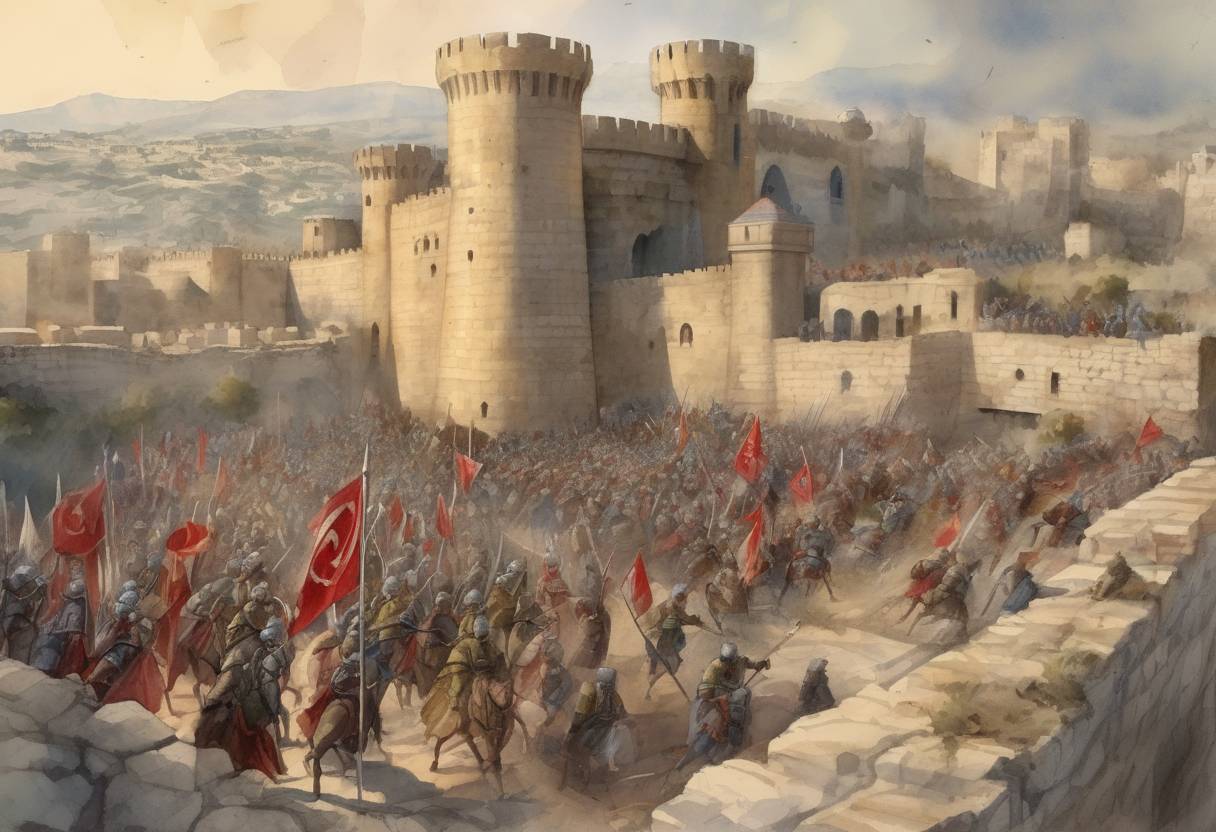
The Siege of Antioch was a pivotal event during the First Crusade, marking a significant victory for the Crusader forces. The siege lasted from October 21, 1097, to June 3, 1098, culminating in the capture of the city from the Seljuk Turks. This event was crucial in the Crusaders’ quest to reclaim the Holy Land.
The First Crusade was initiated in 1095 by Pope Urban II, aiming to reclaim Jerusalem and other holy sites from Muslim control. Antioch, a strategically important city located in modern-day Turkey, was a key target due to its location on the route to Jerusalem and its historical and religious significance.
Start of the Siege: The Crusaders, led by prominent figures such as Bohemond of Taranto, Godfrey of Bouillon, and Raymond IV of Toulouse, began the siege in October 1097. The city was heavily fortified, with strong walls and a sizeable garrison under the command of Yaghi-Siyan, the Seljuk governor.
Challenges: The Crusaders faced numerous challenges, including a lack of supplies, harsh winter conditions, and internal disputes among their leaders. The besieged city also received reinforcements, further complicating the Crusaders’ efforts.
Breakthrough: The turning point came when Bohemond negotiated with an Armenian guard named Firouz, who agreed to betray the city. On the night of June 2, 1098, Firouz allowed a contingent of Crusaders to enter Antioch through a less-defended section of the walls.
Entry and Capture: On June 3, 1098, the Crusaders launched a surprise attack from within the city, overwhelming the Seljuk defenders. The capture of Antioch was brutal, with significant loss of life among the city’s Muslim and Christian inhabitants.
Aftermath: The victory at Antioch was a major morale booster for the Crusaders, but their position remained precarious. Shortly after capturing the city, they found themselves besieged by a large Muslim relief army led by Kerbogha of Mosul. However, the Crusaders managed to repel this force in late June 1098, securing their hold on Antioch.
The capture of Antioch was a critical milestone in the First Crusade. It demonstrated the Crusaders’ resilience and tactical ingenuity, despite the odds against them. The victory also paved the way for the eventual capture of Jerusalem in 1099. Antioch itself became a Crusader state, known as the Principality of Antioch, which lasted until 1268.
The siege highlighted the complex interplay of military strategy, diplomacy, and betrayal that characterized the Crusades. It also underscored the deep religious and cultural divides of the era, which would continue to influence the region for centuries.
Source: en.wikipedia.org