The Laying of the White House Cornerstone: October 13, 1792
1792 · Washington, D.C., United States
The cornerstone of the White House was laid in Washington, D.C., beginning the construction of the residence of the President of the United States.
September 18, 1793
The cornerstone of the United States Capitol is laid by George Washington.
Washington, D.C., United States | United States Government
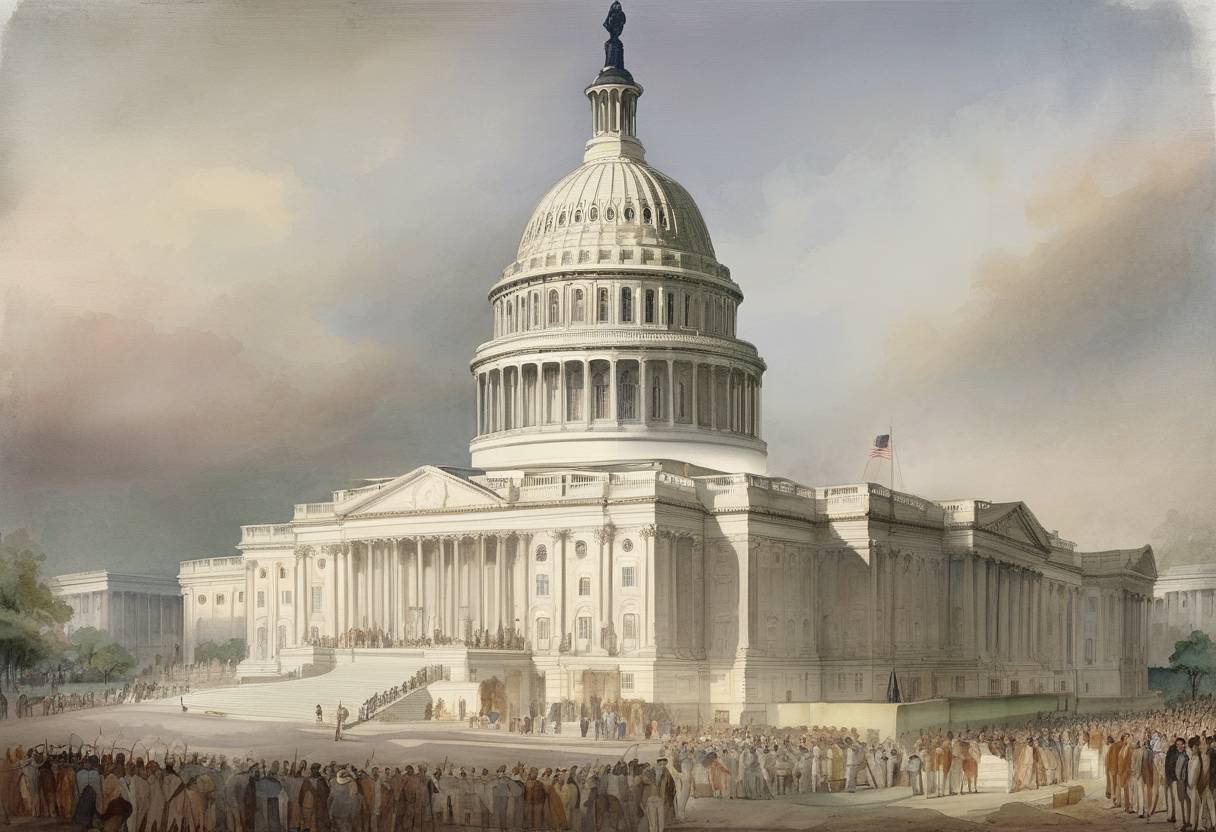
On September 18, 1793, a significant event in American history took place: the laying of the cornerstone of the United States Capitol. This event marked a foundational moment in the construction of one of the most iconic buildings in the United States, symbolizing the nation’s democratic ideals and governance.
The Residence Act of 1790: This act established the location of the United States capital along the Potomac River, which would later become Washington, D.C. The decision was part of a compromise to appease both Northern and Southern states.
Design and Planning: The Capitol’s design was the result of a competition won by Dr. William Thornton, whose neoclassical design was selected for its grandeur and symbolic representation of democracy.
George Washington’s Role: As the first President of the United States, George Washington played a crucial role in the planning and development of the new capital city. His involvement in laying the cornerstone underscored the importance of the Capitol as the seat of the legislative branch of the U.S. government.
Masonic Influence: The ceremony was conducted with Masonic rites, reflecting George Washington’s membership in the Freemasons. The event was organized by the Grand Lodge of Maryland, and Washington, dressed in Masonic regalia, presided over the ceremony.
Symbolic Acts: During the ceremony, Washington used a silver trowel to lay the cornerstone, a symbolic act representing the beginning of the Capitol’s construction. The event included a parade, music, and a feast, highlighting its significance.
Architectural Symbol: The Capitol building has since become a symbol of the American government and its democratic principles. It houses the United States Congress and is a central location for legislative activities.
Construction Challenges: The construction of the Capitol faced numerous challenges, including budget constraints, design changes, and the War of 1812, during which the building was partially burned by British forces. Reconstruction and expansion continued throughout the 19th and 20th centuries.
Legacy: Today, the United States Capitol stands as a testament to the nation’s history and resilience. It is not only a functional space for government but also a monument visited by millions each year.
The laying of the cornerstone by George Washington on September 18, 1793, remains a pivotal moment in the architectural and political history of the United States, symbolizing the enduring foundation of American democracy.
Source: en.wikipedia.org