Malaysia Airlines Flight MH370 Disappearance
2014 · Kuala Lumpur, Malaysia
Malaysia Airlines Flight MH370, which disappeared on March 8, 2014, was officially declared missing, leading to one of the largest search operations in aviation history.
March 12, 2014
The search for Malaysia Airlines Flight MH370, which disappeared on March 8, 2014, continued with international efforts focusing on the southern Indian Ocean.
Kuala Lumpur, Malaysia | Malaysia Airlines
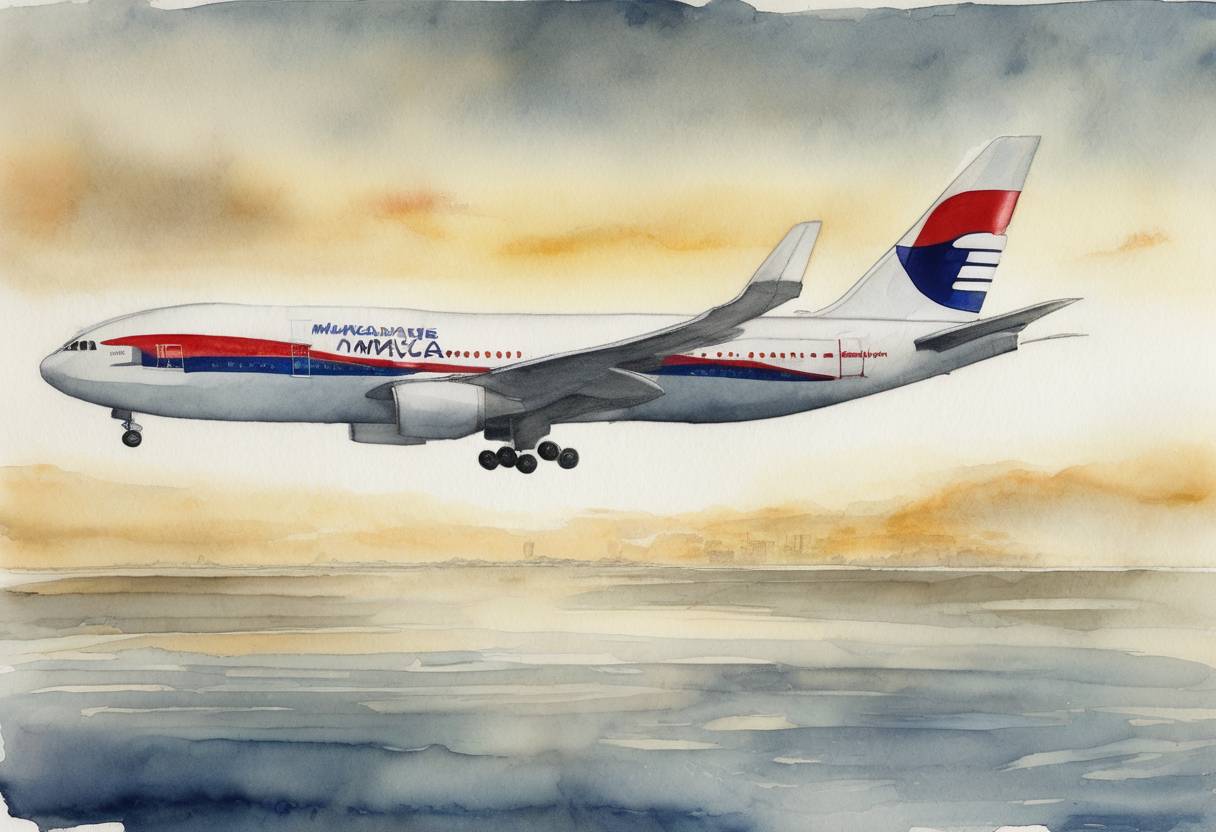
On March 12, 2014, the search for Malaysia Airlines Flight MH370 intensified as international efforts concentrated on the southern Indian Ocean. The flight, which disappeared on March 8, 2014, while en route from Kuala Lumpur to Beijing, carried 239 passengers and crew members. The disappearance of the Boeing 777-200ER sparked one of the largest and most complex search operations in aviation history.
Disappearance: Flight MH370 lost contact with air traffic control less than an hour after takeoff. Initial search efforts focused on the South China Sea, where the aircraft was last detected by radar.
International Collaboration: As days passed without any trace of the aircraft, the search expanded to include multiple countries, with resources and expertise pooled from around the world. The search area was broadened to include the Strait of Malacca and the Andaman Sea.
Satellite Data: Analysis of satellite communications data suggested that the aircraft had continued flying for several hours after losing radar contact, leading investigators to consider the possibility that it had veered off course towards the southern Indian Ocean.
Search Area Shift: Based on the new satellite data, search efforts began to shift focus towards the southern Indian Ocean. This area was vast and remote, presenting significant challenges for search and rescue operations.
International Involvement: Countries such as Australia, China, the United States, and others contributed ships, aircraft, and technical expertise to aid in the search. The Australian Maritime Safety Authority (AMSA) took a leading role in coordinating the search efforts in the southern Indian Ocean.
Challenges: The search area was characterized by rough seas and deep waters, complicating efforts to locate any debris or wreckage. The vastness of the ocean and the lack of precise data on the aircraft’s final location made the search particularly daunting.
The disappearance of MH370 remains one of aviation’s greatest mysteries. It prompted widespread changes in international aviation safety protocols, including improvements in aircraft tracking and communication systems. The incident highlighted the need for better coordination and technology in global search and rescue operations.
Despite extensive search efforts, the main wreckage of MH370 has never been found. In July 2015, a flaperon from the aircraft was discovered on Réunion Island, confirming that the plane had crashed into the Indian Ocean. Subsequent searches have yet to locate the main debris field or provide conclusive answers about the flight’s final moments.
The search for MH370 has had a lasting impact on the families of those on board, the aviation industry, and international cooperation in search and rescue missions. It remains a poignant reminder of the challenges and uncertainties inherent in modern aviation.
Source: www.bbc.com