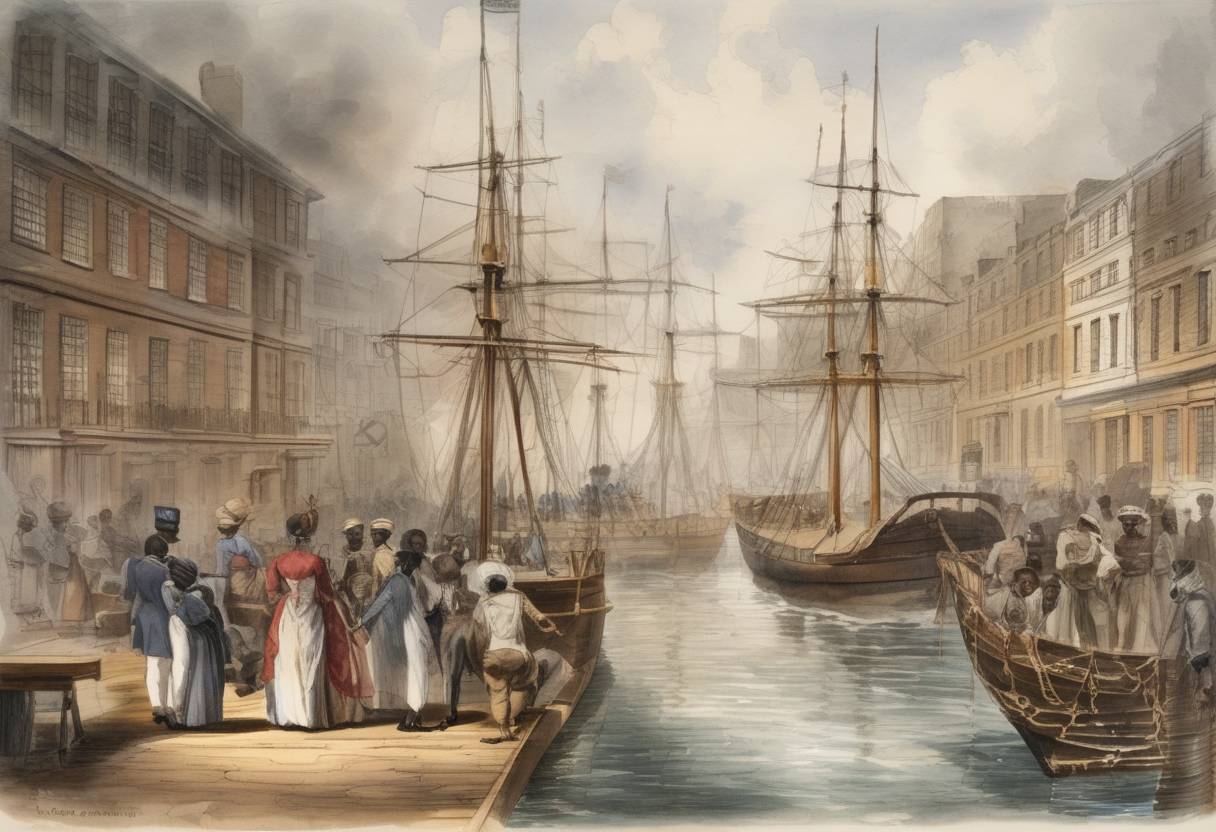
Abolition of Slavery in the British Empire: The Slavery Abolition Act 1833
On August 1, 1834, the Slavery Abolition Act 1833 came into effect, marking a significant turning point in the history of the British Empire. This legislation was a monumental step in the long struggle against slavery, resulting in the emancipation of enslaved individuals across most of the British colonies.
Background
The movement to abolish slavery in the British Empire gained momentum in the late 18th and early 19th centuries, driven by a combination of moral, economic, and political factors. Key figures such as William Wilberforce, Thomas Clarkson, and Olaudah Equiano played crucial roles in advocating for abolition. The abolitionist movement was supported by widespread public campaigns, including petitions, pamphlets, and rallies.
The British Parliament had previously passed the Slave Trade Act in 1807, which prohibited the transatlantic slave trade. However, this did not address the status of those already enslaved within the empire. The continued existence of slavery was increasingly seen as incompatible with the values of a modern, moral society.
The Slavery Abolition Act 1833
The Slavery Abolition Act was passed by the British Parliament on August 28, 1833, and received Royal Assent on the same day. The Act provided for the gradual abolition of slavery in most parts of the British Empire, with the exception of territories controlled by the East India Company, Ceylon (now Sri Lanka), and Saint Helena, where slavery was abolished later.
Key Provisions
Emancipation: The Act declared that all enslaved people in the British Empire were to be freed. However, it introduced a system of “apprenticeship” for former slaves, requiring them to work for their former owners for a period of four to six years as a transitional phase.
Compensation: The Act allocated £20 million (a substantial sum at the time) to compensate slave owners for the loss of their “property.” This was a controversial aspect, as it prioritized the financial interests of slave owners over the rights of the enslaved.
Implementation: The Act came into effect on August 1, 1834, known as Emancipation Day, when approximately 800,000 enslaved Africans in the Caribbean, South Africa, and Canada were legally freed.
Aftermath and Significance
The implementation of the Slavery Abolition Act was met with mixed reactions. While it was a significant victory for abolitionists and a crucial step towards human rights, the apprenticeship system was criticized for perpetuating exploitation. Full freedom was eventually granted in 1838, when the apprenticeship system was abolished.
The abolition of slavery in the British Empire had profound implications. It set a precedent for other nations and colonies, contributing to the global movement against slavery. It also highlighted the complexities of transitioning from a slave-based economy to one based on free labor.
The legacy of the Act is commemorated in various ways, including Emancipation Day celebrations in former British colonies. It remains a pivotal moment in the history of human rights and the ongoing struggle for equality and justice.