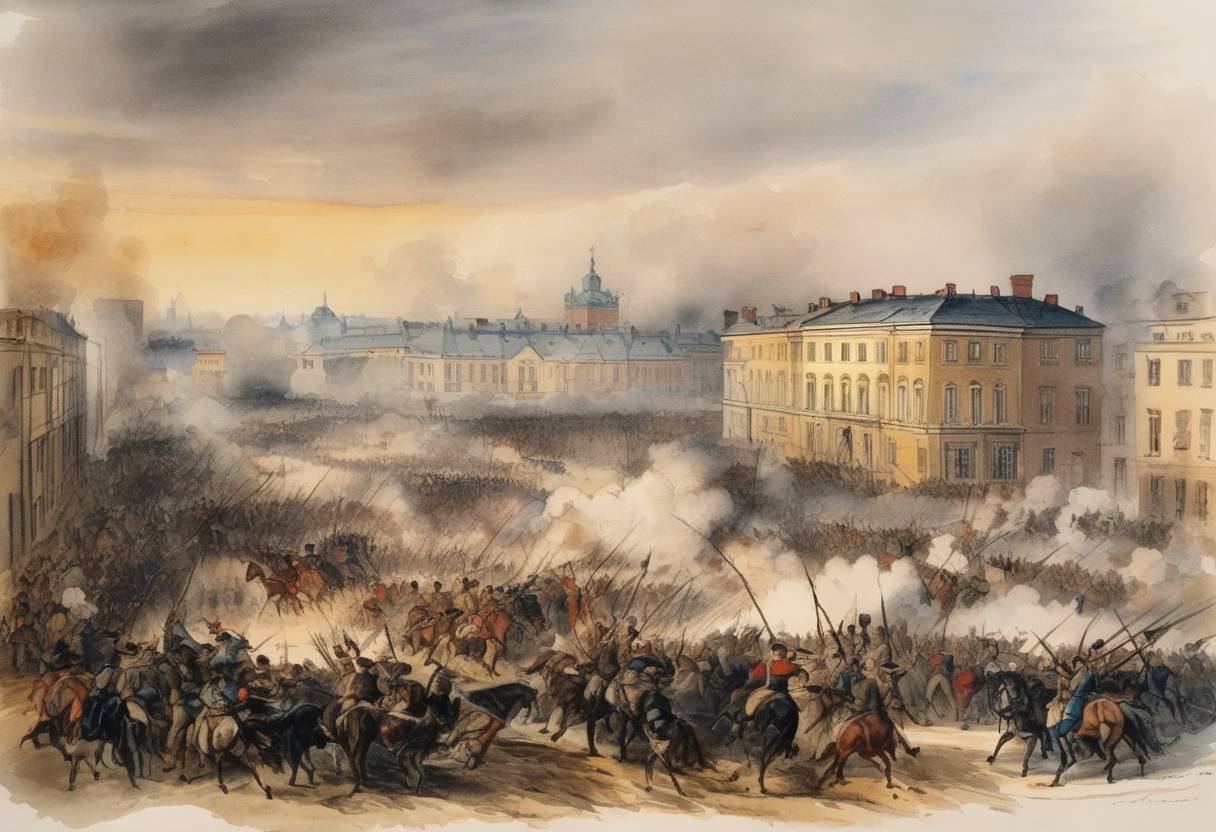
The November Uprising Begins: November 29, 1830
Context and Background
The November Uprising, also known as the Cadet Revolution, was a pivotal insurrection against the Russian Empire, which had exerted control over the Polish-Lithuanian territory following the Partitions of Poland. By 1830, the Kingdom of Poland existed as a semi-autonomous entity under Russian oversight, governed by a constitution granted by Tsar Alexander I in 1815. However, increasing political repression and the influence of post-Napoleonic nationalist sentiment fueled discontent among Poles eager to reclaim independence.
Key Events Leading Up to the Uprising
The early 19th century was marked by rising tensions between the Polish patriots and the Russian authorities. The Polish army, created under the constitutional provisions, faced severe restrictions, causing dissatisfaction among military officers. Additionally, the encroachments on Polish constitutional freedoms, censorship, and widespread corruption eroded trust in Russian authority.
In 1828, a secret Polish independence movement known as the Polish National Committee (KNP) formed in Warsaw. This organization consisted mainly of students and army cadets, who began clandestine preparations for a national uprising.
The Outbreak of the Uprising
On the night of November 29, 1830, determined Polish conspirators initiated the uprising with a daring attack on the Belweder Palace, the residence of Grand Duke Constantine, the de facto ruler of Poland. The assault aimed to seize Constantine, a pivotal symbol of Russian authority. Although the initial attempt to capture him failed, the attack set off a series of confrontations throughout Warsaw.
As news of the potential for rebellion spread, sections of the Polish army stationed in the city rallied to the cause, and civilians joined in the uprising. By morning, the insurgents had gained control over most of Warsaw. This night marked the official start of the November Uprising, and the rebellion quickly escalated into a national struggle.
Consequences and Significance
The uprising continued for nearly a year, with varying degrees of success. Though initially able to resist Russian forces, the Polish insurgents faced difficulties due to a lack of international support and internal divisions. Ultimately, the insurrection was suppressed by the numerically and technologically superior Russian army by October 1831.
The November Uprising significantly impacted Polish society and the broader quest for independence in Central Europe. It symbolized the resilient Polish spirit and nationalism, inspiring future generations. Despite its failure, the uprising became a crucial chapter in Poland’s long struggle for sovereignty, leaving a legacy that influenced subsequent uprisings in 1846 and 1863.
Conclusion
The attack on the Belweder Palace on November 29, 1830, marked the beginning of the November Uprising, an important yet tragic chapter in Polish history. The insurrection, though ultimately unsuccessful, underscored the persistent Polish resistance to foreign domination and contributed to the broader narrative of nationalism and self-determination in 19th-century Europe.