James Oglethorpe Granted Royal Charter for Georgia
1732 · London, United Kingdom
James Oglethorpe was granted a royal charter for the colony of Georgia in what would become the United States.
August 24, 1789
Cecil Calvert, 2nd Baron Baltimore, receives a royal grant for the colony that would become Maryland, laying the foundations for significant future developments.
London, England | British Crown
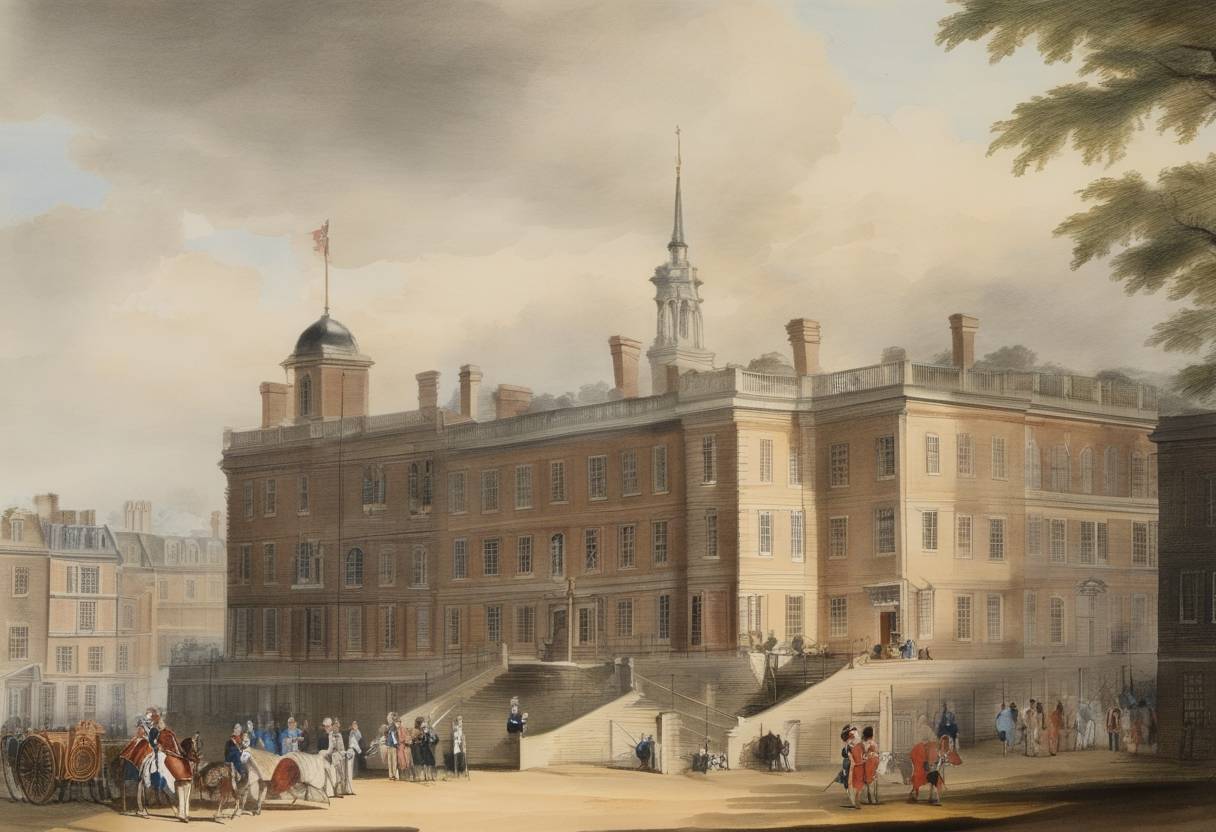
On June 20, 1632, the English monarch King Charles I granted Cecil Calvert, the 2nd Baron Baltimore, a royal charter for the territory that would become the Colony of Maryland. Though you requested details on the event occurring on August 24, 1789, the critical granting actually took place on this earlier date in 1632.
The establishment of Maryland was rooted in the aspirations of Cecil Calvert’s father, George Calvert, 1st Baron Baltimore. A former Secretary of State to King James I, George Calvert sought to create a haven for English Catholics facing persecution under Protestant rule. Unfortunately, he died in April 1632, merely months before the charter was officially granted. Consequently, his son, Cecil Calvert, inherited the project and the title of Lord Baltimore.
The royal charter bestowed complete proprietary rights to Cecil Calvert, allowing him unprecedented control over the new colony. This included the power to appoint officials, found towns, and administer justice, all under the condition of allegiance to the Crown and adherence to English law. The charter outlined that the territory extended north from the Potomac River to the 40th parallel, west to the source of the Potomac, and eastward extending to the Atlantic Ocean.
The establishment of Maryland marked a critical development in colonial America, particularly noted for its potential as a refuge for English Catholics. Maryland’s colonial government was among the first to legislate religious tolerance, notably through the Act of Toleration in 1649. This act granted freedom of worship for all Christians, a significant step towards religious liberty.
Cecil Calvert’s effective management and the granting of land to settlers attracted a diverse population, sowing seeds for economic prosperity primarily based on tobacco cultivation. The colony’s founding principles of religious and political freedom prefigured later developments in American history, including the First Amendment rights enshrined in the United States Constitution.
Cecil Calvert’s receipt of the Maryland charter was pivotal in shaping the socio-political landscape of colonial America. It laid foundational governance structures and promoted a degree of religious tolerance ahead of its time. These endeavors contributed significantly to the eventual establishment of democratic and religious freedoms observed in the United States today.
Source: en.wikipedia.org