United Nations Security Council Resolution 2253
2015 · New York City, United States
The United Nations Security Council unanimously adopted Resolution 2253, aimed at cutting off funding to ISIL and other terrorist groups.
November 16, 2002
The United Nations Security Council unanimously adopted Resolution 1441, giving Iraq a final opportunity to comply with disarmament obligations and threatening serious consequences for any further violations.
New York City, United States | United Nations
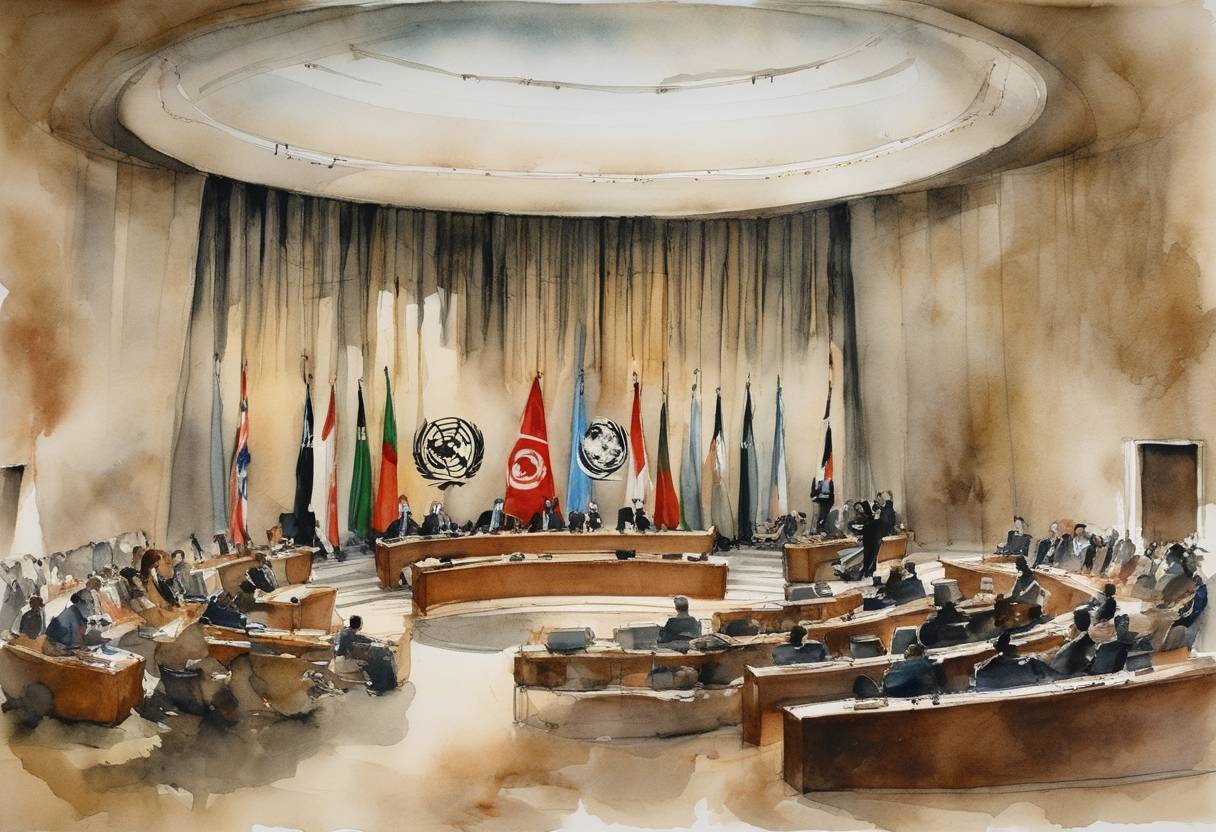
On November 16, 2002, the United Nations Security Council unanimously adopted Resolution 1441. This resolution was a pivotal moment in the lead-up to the Iraq War, aimed at compelling Iraq to comply with previous UN resolutions regarding its weapons of mass destruction (WMD) programs.
Resolution 1441 followed a long history of Iraq’s non-compliance with UN disarmament obligations post-Gulf War. Throughout the 1990s, Iraq had evaded complete transparency regarding its chemical, biological, and nuclear weapons programs, leading to repeated standoffs with UN weapons inspectors.
The resolution granted Iraq a “final opportunity” to meet its disarmament requirements as outlined in earlier resolutions. It demanded Iraq provide an accurate, full, and complete declaration of all aspects of its WMD programs, infrastructure, and related activities within 30 days.
Resolution 1441 also called for the return of UN and International Atomic Energy Agency (IAEA) weapons inspectors to Iraq, allowing them full access without hindrance to verify compliance. The resolution underscored that Iraq’s failure to comply would result in “serious consequences,” implicitly hinting at potential military action, though it stopped short of authorizing such force outright, leaving room for further Security Council deliberations if Iraq failed to comply.
Iraq agreed to the return of inspectors in an effort to avoid military confrontation. UN inspection teams, under Hans Blix and Mohammed ElBaradei, resumed their investigations in late November 2002. Despite their return, disagreements persisted over Iraq’s level of cooperation and the completeness of disclosure.
Resolution 1441 is often seen as a vital precursor to the 2003 United States-led invasion of Iraq. The dispute over whether Iraq had fully complied with the resolution’s terms and the legitimacy of further military intervention without explicit UN approval led to deep international divisions.
While the resolution aimed to provide a diplomatic solution to the disarmament issue, it ultimately set the stage for the intensified debates and eventual conflict that followed.
Source: www.un.org