The Opening of The Metropolitan Opera House
1883 · New York City, United States
The Metropolitan Opera House in New York City opened with a performance of Gounod's 'Faust'.
January 13, 1910
The first public radio broadcast takes place; a live performance of the operas Cavalleria rusticana and Pagliacci is sent out over the airwaves from the Metropolitan Opera House in New York City.
New York City, United States | Metropolitan Opera
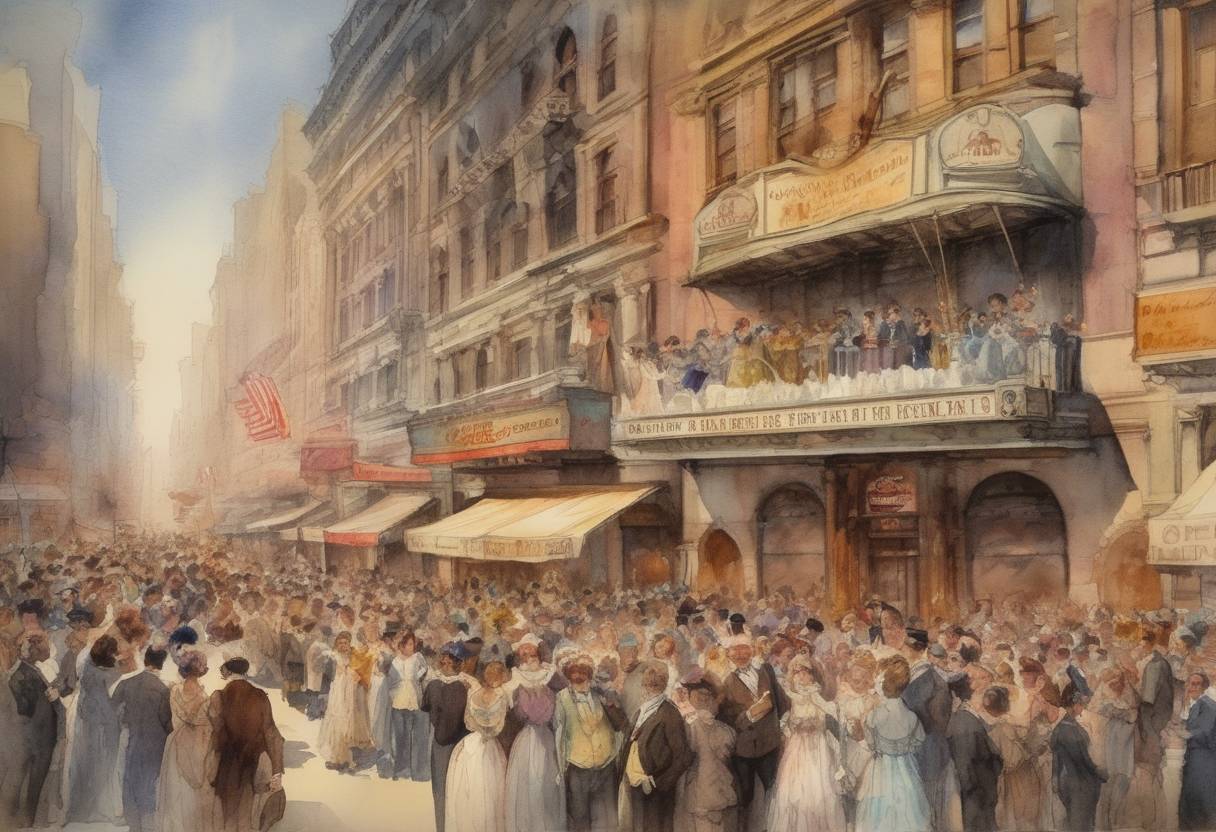
On January 13, 1910, a groundbreaking event in the history of communication took place: the first public radio broadcast. This historic broadcast featured a live performance of the operas Cavalleria Rusticana by Pietro Mascagni and Pagliacci by Ruggero Leoncavallo, transmitted from the Metropolitan Opera House in New York City.
Early Radio Technology: At the turn of the 20th century, radio technology was still in its infancy. Pioneers like Guglielmo Marconi had demonstrated the potential of wireless communication, but it was primarily used for point-to-point communication, such as ship-to-shore messages.
Lee De Forest: The broadcast was made possible by the innovations of Lee De Forest, an American inventor and a key figure in the development of radio technology. De Forest had invented the Audion tube, a vacuum tube that could amplify weak radio signals, making it feasible to transmit audio over the airwaves.
Location and Setup: The broadcast took place at the Metropolitan Opera House in New York City. De Forest set up a transmitter in a nearby building and used a microphone to capture the live performance.
Content: The operas Cavalleria Rusticana and Pagliacci were chosen for this historic event. These operas were popular at the time and featured dramatic music that was well-suited to showcase the capabilities of radio broadcasting.
Audience: The broadcast was received by a small audience of radio enthusiasts and engineers equipped with the necessary receiving equipment. While the audience was limited, the event demonstrated the potential of radio to reach a wide audience.
Pioneering Moment: This broadcast marked the first time that a live performance was transmitted to the public via radio, setting the stage for the future of broadcasting.
Impact on Media: The success of this broadcast paved the way for the development of radio as a mass medium. Over the next few decades, radio would become a dominant form of entertainment and information dissemination, transforming how people consumed media.
Technological Advancements: The event highlighted the importance of technological advancements in communication. The use of the Audion tube was a critical step in the evolution of radio technology, leading to further innovations in broadcasting.
In conclusion, the first public radio broadcast on January 13, 1910, was a seminal moment in the history of communication. It showcased the potential of radio to bring live performances into homes and laid the groundwork for the future of broadcasting as a powerful medium for entertainment and information.
Source: en.wikipedia.org