The Passage of the Thirteenth Amendment
1865 · Washington D.C., United States
The United States Congress passes the Thirteenth Amendment to the Constitution, abolishing slavery in the United States.
December 18, 1865
The Thirteenth Amendment to the United States Constitution is declared ratified, abolishing slavery.
Washington D.C., United States | United States Congress
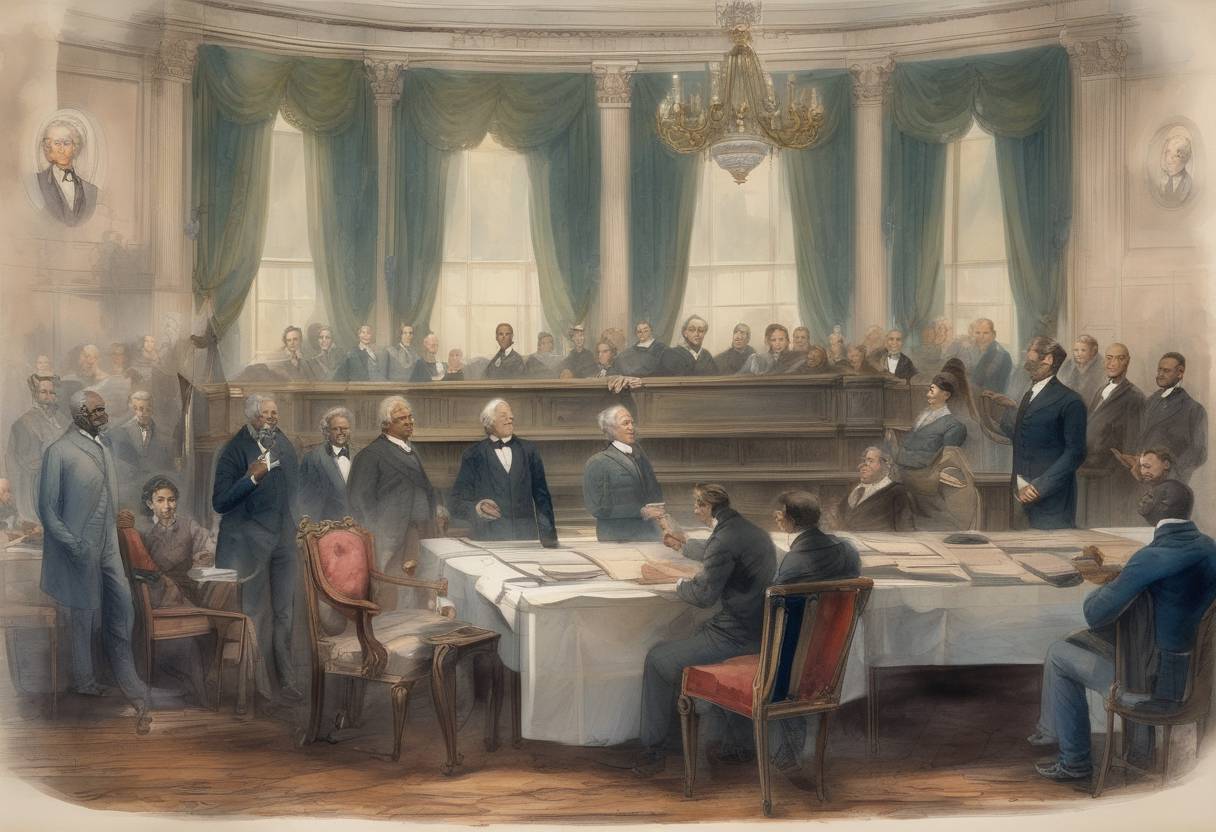
On December 18, 1865, the Thirteenth Amendment to the United States Constitution was officially declared ratified, marking a pivotal moment in American history as it abolished slavery throughout the United States. This amendment was a significant step in the long struggle for civil rights and equality in the nation.
The Thirteenth Amendment was introduced in the aftermath of the American Civil War, a conflict fundamentally rooted in the issues of slavery and states’ rights. The war, which lasted from 1861 to 1865, resulted in the defeat of the Confederate States and the preservation of the Union. President Abraham Lincoln, who had issued the Emancipation Proclamation in 1863, recognized the need for a constitutional amendment to ensure the permanent abolition of slavery.
Proposal and Passage: The amendment was first proposed by Congress on January 31, 1865. It passed the Senate in April 1864 but initially failed in the House of Representatives. After intense lobbying and political maneuvering, it was passed by the House on January 31, 1865, with a vote of 119 to 56.
Ratification Process: Following its passage in Congress, the amendment required ratification by three-fourths of the states. The process was swift, with Illinois being the first state to ratify it on February 1, 1865. By December 6, 1865, the necessary 27 out of 36 states had ratified the amendment.
The amendment consists of two sections:
Section 1: “Neither slavery nor involuntary servitude, except as a punishment for crime whereof the party shall have been duly convicted, shall exist within the United States, or any place subject to their jurisdiction.”
Section 2: “Congress shall have power to enforce this article by appropriate legislation.”
Abolition of Slavery: The ratification of the Thirteenth Amendment legally abolished slavery in the United States, liberating millions of African Americans who had been enslaved.
Foundation for Future Legislation: The amendment laid the groundwork for subsequent civil rights advancements, including the Fourteenth and Fifteenth Amendments, which addressed citizenship rights and voting rights, respectively.
Social and Economic Impact: While the amendment ended the institution of slavery, it did not immediately resolve the social and economic challenges faced by formerly enslaved individuals. The Reconstruction era that followed sought to address these issues, though it was met with significant resistance and led to the rise of discriminatory Jim Crow laws in the South.
The ratification of the Thirteenth Amendment was a landmark achievement in American history, symbolizing a commitment to human rights and equality. It marked the beginning of a long and ongoing journey toward racial justice and equality in the United States, influencing civil rights movements and legislation for generations to come.
Source: en.wikipedia.org