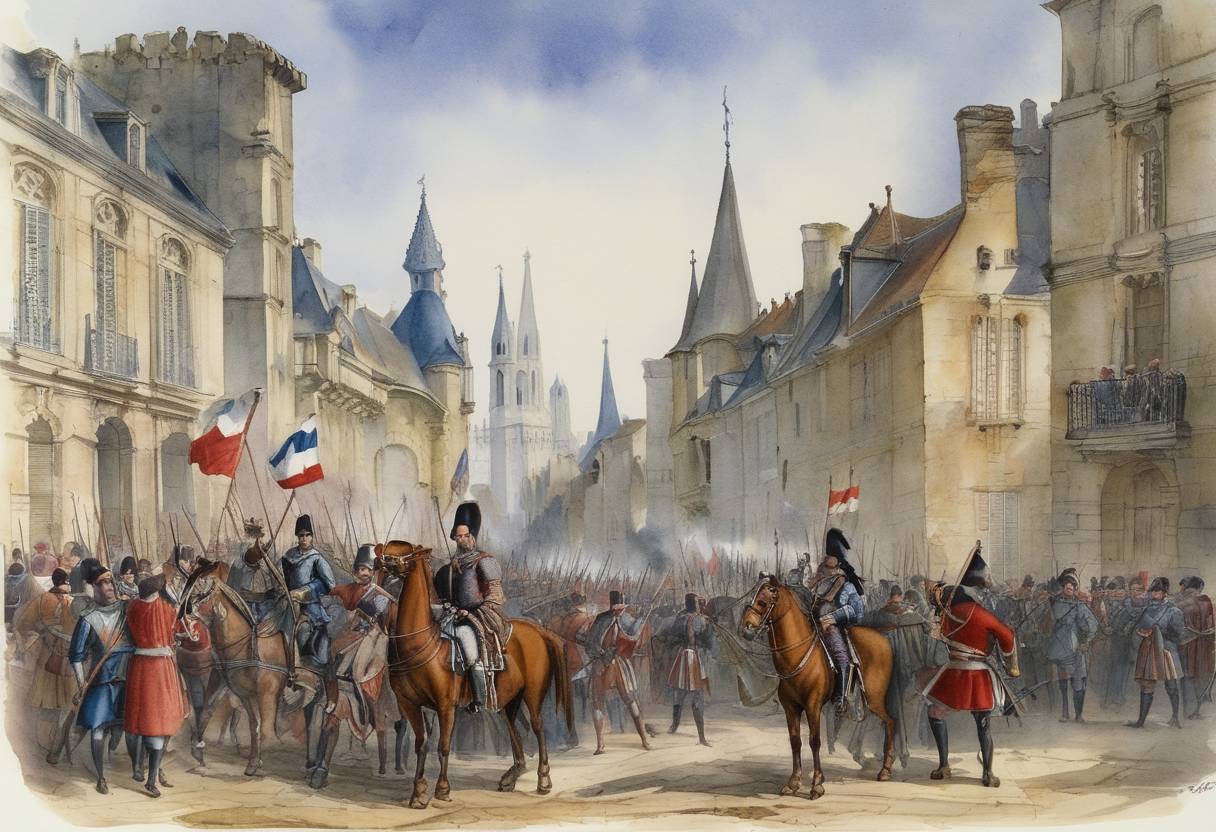
The Recapture of Bordeaux: Ending the Hundred Years’ War
On October 19, 1453, the city of Bordeaux in southwestern France surrendered to French forces, marking the conclusive end of the Hundred Years’ War. This series of conflicts, which spanned from 1337 to 1453, was primarily fought between the Kingdom of England and the Kingdom of France. The conflict was primarily over the legitimate succession to the French throne and control of territories.
Context
The Hundred Years’ War began in 1337 when King Edward III of England claimed the French crown following the death of Charles IV of France, who died without a direct male heir. The war was characterized by a series of battles, treaties, and intermittent periods of peace, punctuated by famous engagements such as the Battle of Crécy, the Siege of Orléans, and the Battle of Agincourt.
Key Events Leading Up to the Recapture
During the late stages of the war, momentum swung in favor of the French. The pivotal turning point came with the leadership of Charles VII of France and the military campaigns initiated by notable figures like Joan of Arc, who revitalized French spirits and led to the lifting of the Siege of Orléans in 1429.
In 1451, Bordeaux had been initially captured by the French forces under Charles VII. Yet, English forces briefly regained control in 1452, led by John Talbot, 1st Earl of Shrewsbury. However, this recapture was short-lived.
The Fall of Bordeaux
The recapture of Bordeaux by the French in 1453 was the result of a concentrated military effort by the French under the command of Jean Bureau, an expert in artillery warfare, and Charles VII’s strategic planning. After a series of engagements, the English forces in Bordeaux, significantly outnumbered and faced with dwindling resources, capitulated. On October 19, 1453, Bordeaux officially surrendered to the French.
Aftermath and Significance
The surrender of Bordeaux effectively ended English territorial ambitions in France, leading to the loss of Gascony, which had been under English control for nearly three centuries. The end of the Hundred Years’ War played a crucial role in shaping the national identities of both England and France. For France, it marked the reconsolidation of territories and considerable strengthening of the monarchy. For England, it signaled the beginning of internal strife, eventually contributing to the Wars of the Roses.
The end of the war brought about significant socio-political changes, with the French monarchy emerging stronger and the focus shifting towards internal development and centralization of power.