Wang Yaping's Historic Spacewalk on November 12, 2021
2021 · Tianhe Space Module, China
Astronaut Wang Yaping becomes the first Chinese woman to conduct a spacewalk, during the Shenzhou 13 mission to the Chinese space station module Tianhe.
October 15, 2003
China launched its first manned space mission, Shenzhou 5, making it the third country to send humans into space independently.
Jiuquan, China | China National Space Administration
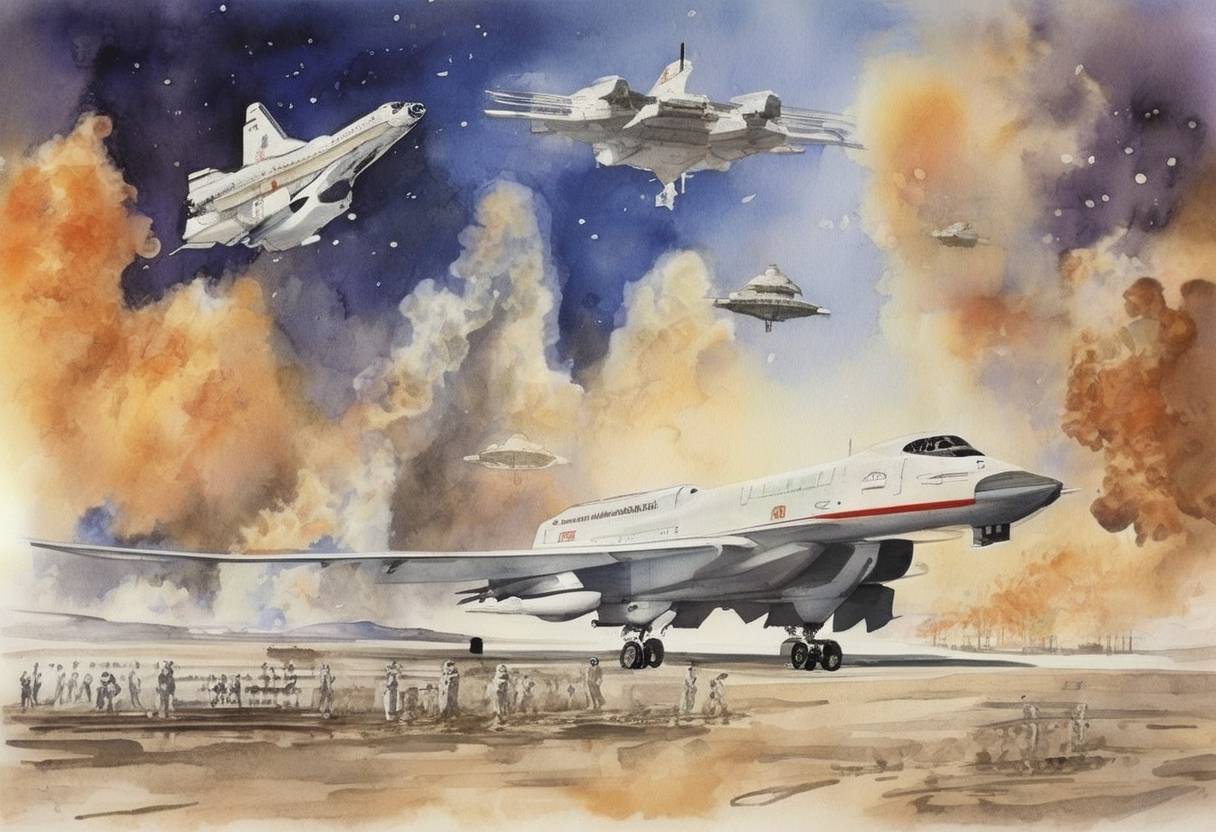
On October 15, 2003, China launched its first manned space mission, Shenzhou 5, marking a significant milestone in the nation’s space exploration efforts. This achievement made China the third country, after the Soviet Union (now Russia) and the United States, to independently send humans into space.
China’s journey to manned spaceflight began in the 1990s with the development of the Shenzhou program, which means “Divine Vessel” in Chinese. The program aimed to establish China as a major player in space exploration and to demonstrate its technological capabilities. Prior to Shenzhou 5, China conducted four unmanned test flights to ensure the reliability and safety of the spacecraft.
Following the success of Shenzhou 5, China continued to expand its space program with subsequent manned missions, spacewalks, and the development of its own space station, Tiangong. The mission laid the groundwork for China’s long-term goals in space, including lunar exploration and potential Mars missions.
Shenzhou 5 remains a pivotal moment in China’s space history, symbolizing the nation’s entry into the exclusive club of countries capable of independent human spaceflight.
Source: en.wikipedia.org