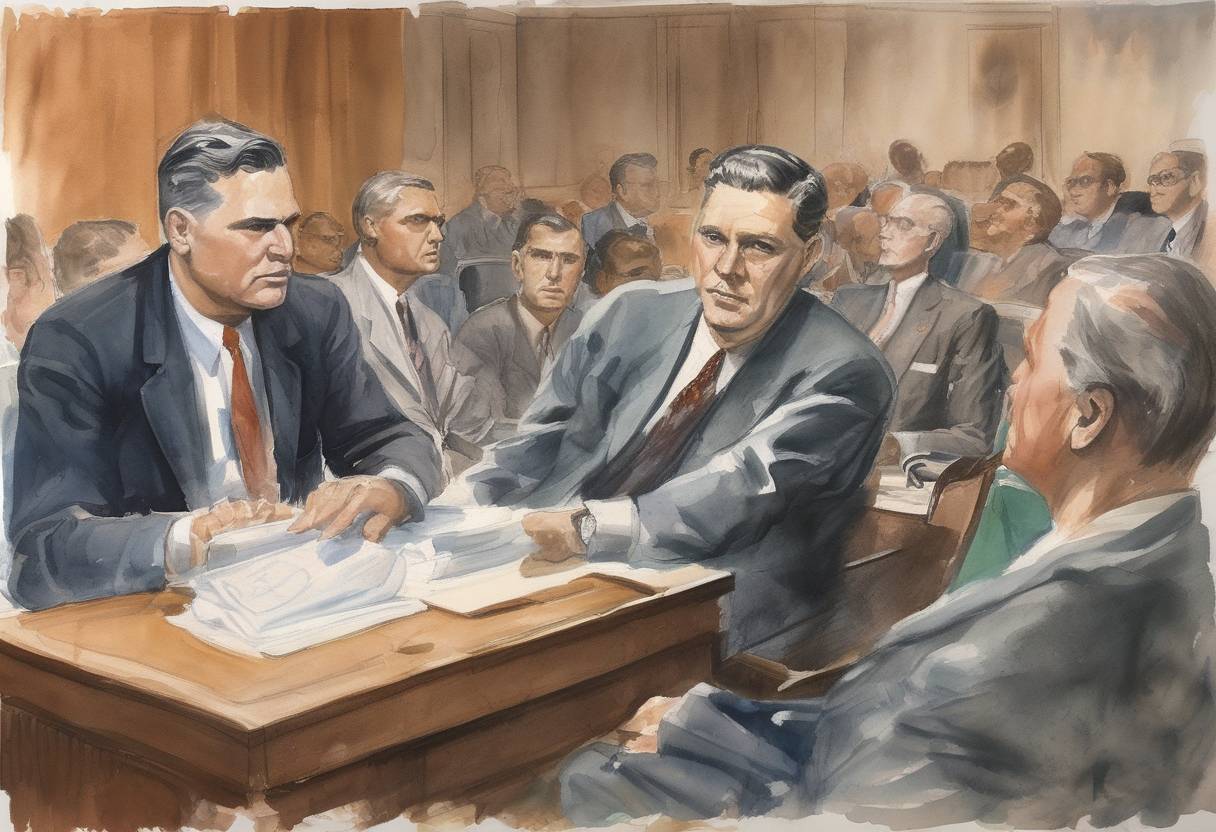
Whittaker Chambers Accuses Alger Hiss: August 3, 1948
On August 3, 1948, a pivotal moment in American history unfolded when Whittaker Chambers, a former Communist Party member and senior editor at Time magazine, testified before the House Un-American Activities Committee (HUAC). Chambers accused Alger Hiss, a prominent government official, of being a communist and a spy for the Soviet Union. This accusation set off a chain of events that would lead to one of the most famous trials of the Cold War era.
Background
- Alger Hiss: A well-respected lawyer and government official, Hiss had served in several significant roles, including as an advisor at the Yalta Conference and as a key figure in the establishment of the United Nations.
- Whittaker Chambers: Once a member of the Communist Party, Chambers had renounced communism and became an outspoken critic. His insider knowledge of communist activities in the U.S. made his testimony particularly impactful.
The Testimony
During his testimony, Chambers claimed that Hiss had been part of an underground communist network operating within the U.S. government during the 1930s. He alleged that Hiss had passed classified documents to the Soviet Union, compromising national security.
The Fallout
- Public Reaction: The accusations against Hiss, a high-profile figure, shocked the nation and garnered significant media attention. The case became a symbol of the growing fear of communist infiltration in the United States.
- Legal Proceedings: Hiss vehemently denied the allegations, leading to a series of legal battles. He was initially charged with perjury, as the statute of limitations for espionage had expired.
The Trials
- First Trial (1949): The first trial ended in a hung jury, unable to reach a unanimous verdict.
- Second Trial (1950): In a subsequent trial, Hiss was convicted of perjury for denying under oath that he had passed documents to Chambers. He was sentenced to five years in prison, serving three and a half years.
Aftermath and Historical Significance
- Impact on American Politics: The Hiss case intensified the Red Scare and fueled anti-communist sentiment in the United States. It also played a role in the rise of Richard Nixon, who was a member of HUAC and instrumental in pursuing the case against Hiss.
- Legacy: The case remains controversial, with debates over Hiss’s guilt persisting among historians. It highlighted the tensions of the Cold War and the pervasive fear of communist influence in American society.
The events of August 3, 1948, and the subsequent trials of Alger Hiss underscore the complexities of the Cold War era, reflecting the deep-seated anxieties and political dynamics of the time.