The Siege of Masada: April 15, 73 CE
73 · Masada, Judea
The Siege of Masada ends with the fall of the Jewish fortress to the Roman Empire, marking the end of the First Jewish-Roman War.
May 30, 0070
The Siege of Jerusalem by the Roman army led by Titus reaches a critical point as the Roman forces breach the Second Wall of Jerusalem, leading to intense fighting within the city.
Jerusalem, Judea (modern-day Israel) | Roman Empire
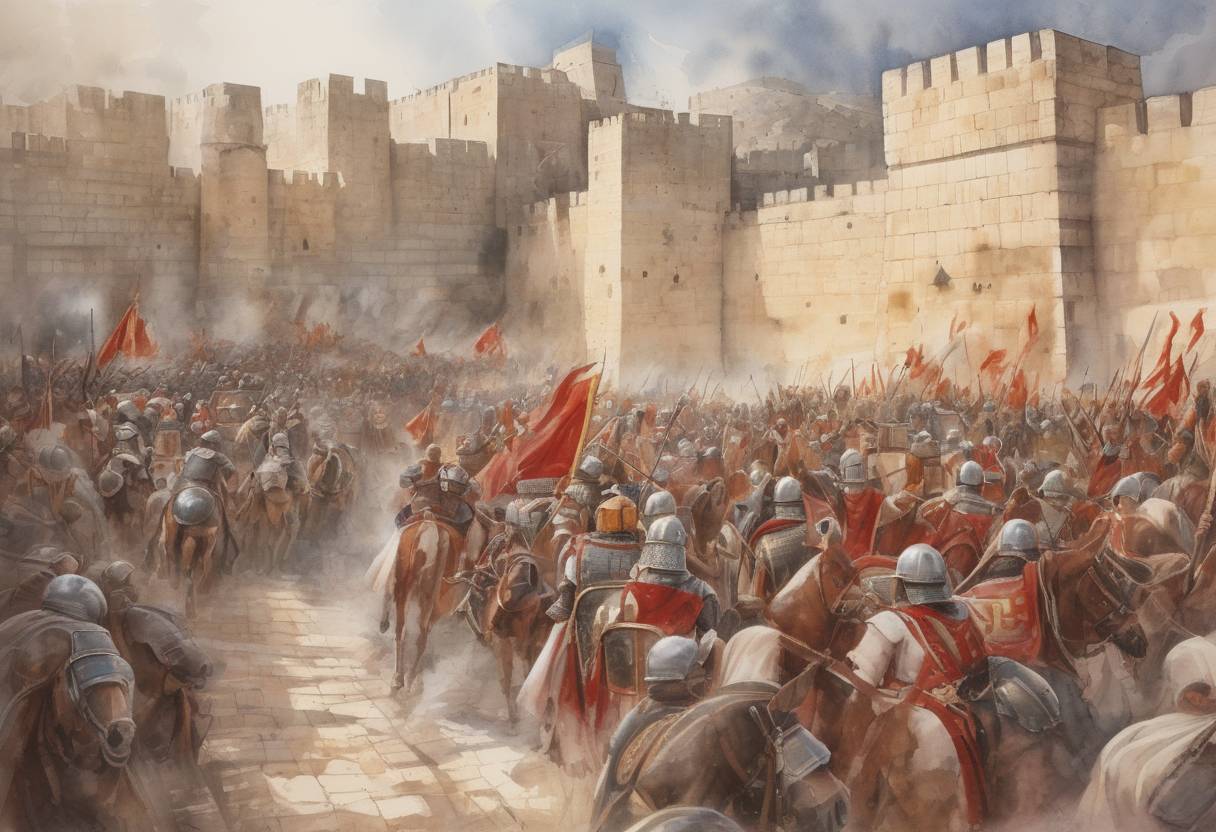
The Siege of Jerusalem in 70 CE was a pivotal event during the First Jewish-Roman War, also known as the Great Jewish Revolt. On May 30, 70 CE, the Roman forces, under the command of General Titus, reached a critical juncture in the siege as they successfully breached the Second Wall of Jerusalem, leading to fierce combat within the city.
The First Jewish-Roman War began in 66 CE as a result of growing tensions between the Roman Empire and the Jewish population in Judea. The revolt was fueled by religious and political grievances, including heavy taxation and Roman interference in Jewish religious practices. The conflict escalated, and by 70 CE, the Roman Empire was determined to crush the rebellion and reassert control over the region.
The siege of Jerusalem commenced in April 70 CE. The city was heavily fortified, with three concentric walls protecting its inhabitants. The Romans, led by Titus, son of Emperor Vespasian, employed a combination of direct assault and siege tactics to penetrate these defenses.
On May 30, 70 CE, after weeks of relentless assault, the Roman forces managed to breach the Second Wall. This wall was a crucial part of Jerusalem’s defenses, and its breach marked a significant turning point in the siege. The Romans utilized siege engines and battering rams to create an opening, allowing their troops to enter the city.
The breach led to intense fighting within Jerusalem as Roman soldiers clashed with Jewish defenders. The defenders, comprised of various factions, including Zealots and other rebel groups, fought fiercely to repel the invaders. However, the Roman military’s discipline and superior numbers gradually overwhelmed the defenders.
The breach of the Second Wall was a decisive moment in the siege, paving the way for the eventual fall of Jerusalem. Following the breach, the Romans continued their assault, eventually capturing the Antonia Fortress and the Temple Mount. By August 70 CE, the Romans had destroyed the Second Temple, a catastrophic event for the Jewish people, marking the end of the revolt.
The destruction of Jerusalem and the Second Temple had profound consequences. It led to the dispersal of the Jewish population, known as the Jewish Diaspora, and significantly altered the religious and cultural landscape of Judaism. The event also solidified Roman control over Judea, which remained under Roman rule until the Byzantine period.
The Siege of Jerusalem and the subsequent destruction of the Second Temple are considered pivotal moments in Jewish history. They marked the end of the Second Temple period and the beginning of Rabbinic Judaism. The events also had lasting impacts on Jewish-Roman relations and are remembered as a symbol of resistance and tragedy in Jewish history.
The Roman victory at Jerusalem demonstrated the might of the Roman Empire and its ability to suppress revolts within its territories. The siege and its aftermath were chronicled by the Jewish historian Flavius Josephus, providing a detailed account of the events and their significance.
In summary, the breach of the Second Wall on May 30, 70 CE, was a critical event in the Siege of Jerusalem, leading to the eventual fall of the city and the destruction of the Second Temple, with lasting historical and cultural repercussions.
Source: en.wikipedia.org