The First Session of the United States Congress in Washington, D.C.
1800 · Washington, D.C., United States
The United States Congress held its first session in Washington, D.C., in the partially completed Capitol building.
July 4, 1800
The Second Federal Congress convened for the last time in Philadelphia. Preparations were underway to move the government to the new capital city, Washington, D.C.
Philadelphia, United States | Second Federal Congress
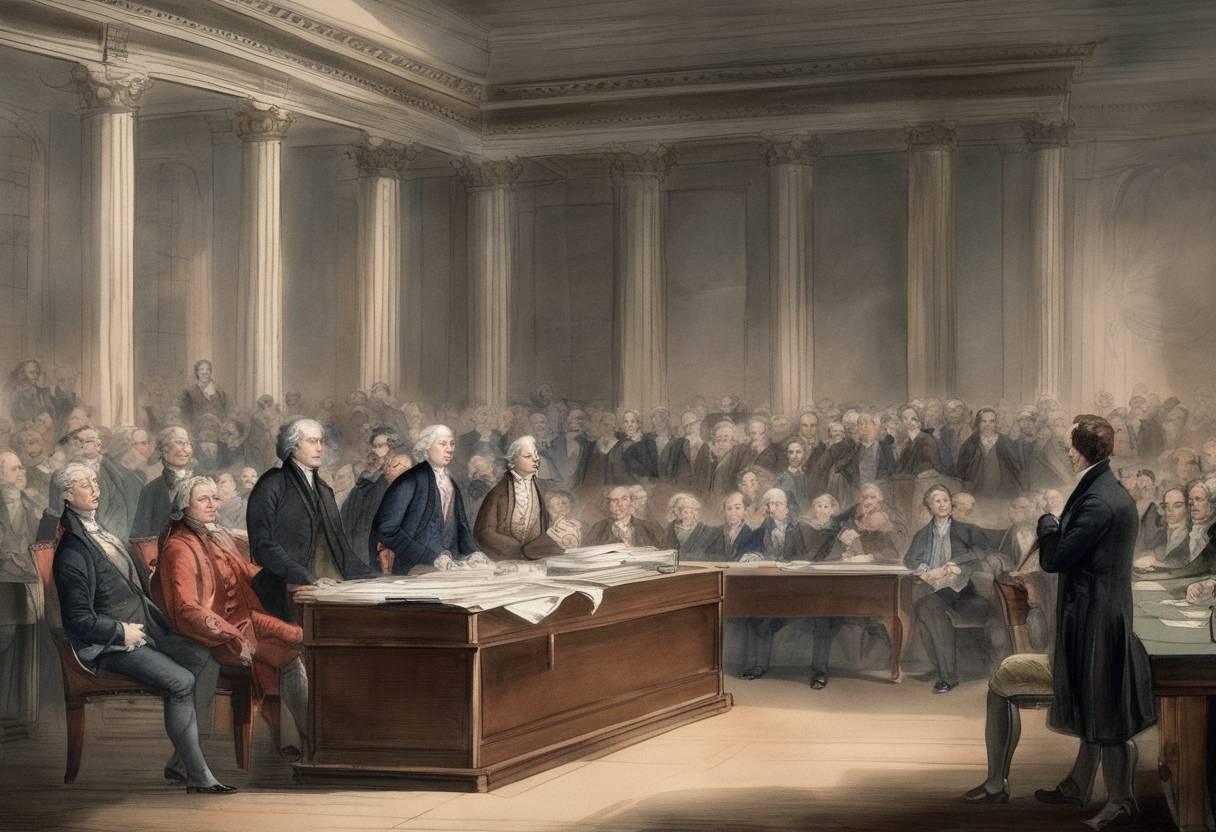
On July 4, 1800, the Second Federal Congress of the United States convened in Philadelphia for the final time. This meeting marked the end of an era as Congress prepared to relocate the seat of the federal government to its new capital, Washington, D.C. This transition was a significant milestone in the early development of the United States and symbolized a new chapter for the nation’s governance.
Philadelphia’s Historical Role: Since 1790, Philadelphia had served as the temporary capital of the United States while construction on the new federal city was underway. The decision to move the capital was rooted in the Residence Act of 1790, which selected a site along the Potomac River for the future capital.
Design and Construction of Washington, D.C.: The new capital was designed by Pierre Charles L’Enfant, whose plan included broad avenues and designated areas for congressional buildings. Construction began in earnest in the 1790s, with notable structures like the President’s House (later known as the White House) and the U.S. Capitol under development.
Final Proceedings in Philadelphia: On this Independence Day, the Congress met for one last session in Philadelphia’s Congress Hall. This marked the culmination of several legislative sessions that had taken place in this historic city, which had also hosted the Continental Congress and the Constitutional Convention.
Preparation for Relocation: As Congress wrapped up its business in Philadelphia, preparations were already in motion to facilitate the move. Government documents and necessary artifacts were packed and transported to the new capital.
Establishment of Washington, D.C.: The move to Washington, D.C. was completed over the following months. By November 1800, the federal government was fully operational in the new capital. The relocation sought to provide a geographically neutral site that would represent all states fairly.
Legacy of Philadelphia as a Seat of Government: Philadelphia remained a cultural and economic hub but relinquished its role as the political center. Its legacy as the cradle of American democracy continues to be celebrated.
The events of July 4, 1800, highlighted the American commitment to establishing enduring governmental structures and laid the foundation for the burgeoning nation’s development. The transition to Washington, D.C., marked a pivotal evolution in the United States’ political landscape.
Source: history.house.gov