Adolf Hitler's Suicide on April 30, 1945
1945 · Berlin, Germany
Adolf Hitler, the leader of Nazi Germany, committed suicide in his underground bunker in Berlin as Soviet forces closed in on the city.
July 20, 1944
The 20 July plot, an attempt to assassinate Adolf Hitler, failed. The plot was led by Claus von Stauffenberg and other conspirators within the German military.
Rastenburg, Poland | German military
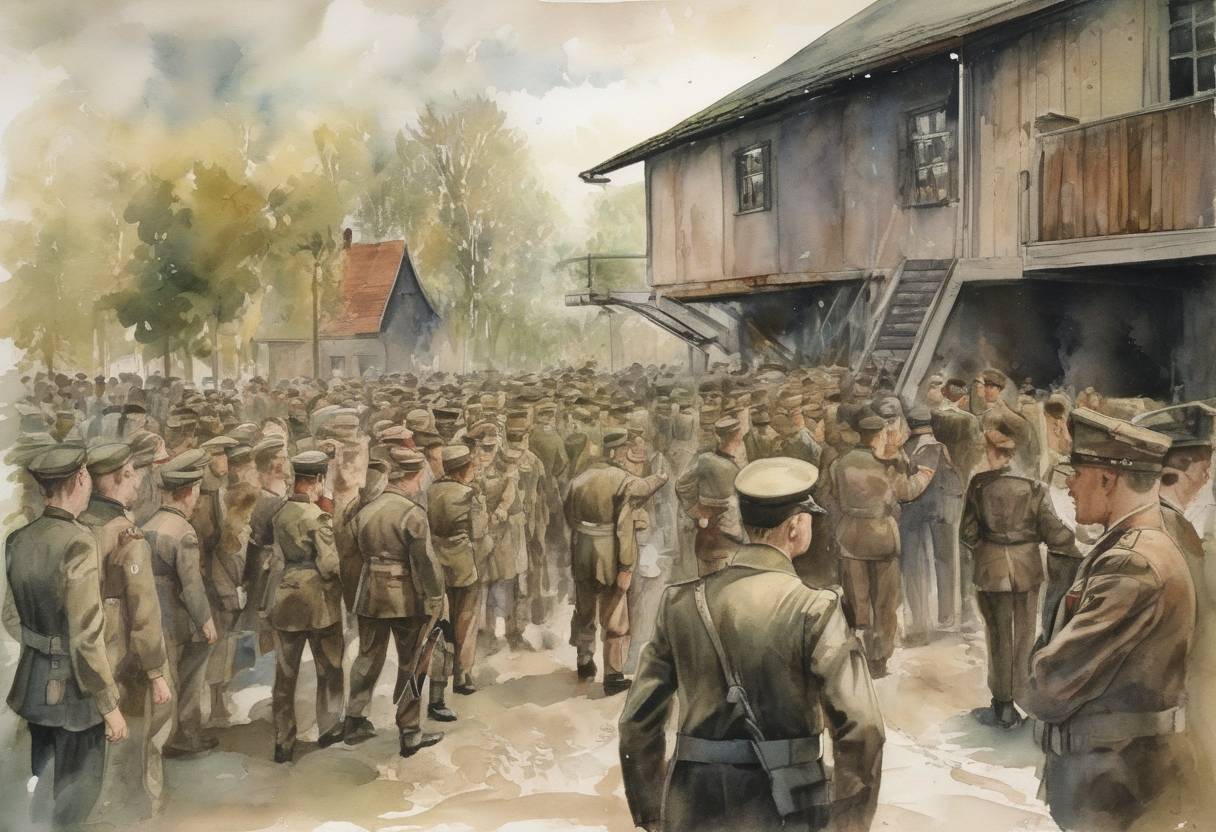
On July 20, 1944, a significant event unfolded in Nazi Germany: an attempt to assassinate Adolf Hitler, known as the 20 July Plot or Operation Valkyrie. This plot was orchestrated by a group of high-ranking German military officers and civilians who opposed Hitler’s regime. The most prominent figure among the conspirators was Colonel Claus von Stauffenberg.
By 1944, the tide of World War II had turned against Germany. The Allied forces had landed in Normandy, and the Soviet Union was advancing from the east. Many within the German military and government believed that Hitler’s leadership was leading Germany to ruin. This discontent fostered a resistance movement within the German military, which sought to remove Hitler from power and negotiate a peace settlement with the Allies.
The plan involved Stauffenberg attending a meeting at Hitler’s Wolf’s Lair headquarters in East Prussia. He carried a briefcase containing a bomb, which he placed under the table near Hitler. Stauffenberg then excused himself from the room, ostensibly to make a phone call.
At 12:42 PM, the bomb detonated. However, the explosion failed to kill Hitler, who survived with minor injuries. The heavy oak table and the positioning of the briefcase shielded him from the full force of the blast.
The failure of the assassination attempt led to a swift and brutal crackdown by the Nazi regime. Stauffenberg and several key conspirators were arrested and executed on the same day. Over the following weeks, the Gestapo arrested thousands of people suspected of involvement in the plot. Many were executed or sent to concentration camps.
The 20 July Plot had significant consequences:
The 20 July Plot highlights the internal opposition to Hitler within Germany and underscores the complexities of resistance during the Nazi era. It serves as a poignant reminder of the moral courage required to stand against oppressive regimes, even when success seems unlikely.
The plot’s legacy continues to be commemorated in Germany, where it is seen as an important chapter in the country’s history of resistance to dictatorship.
Source: en.wikipedia.org