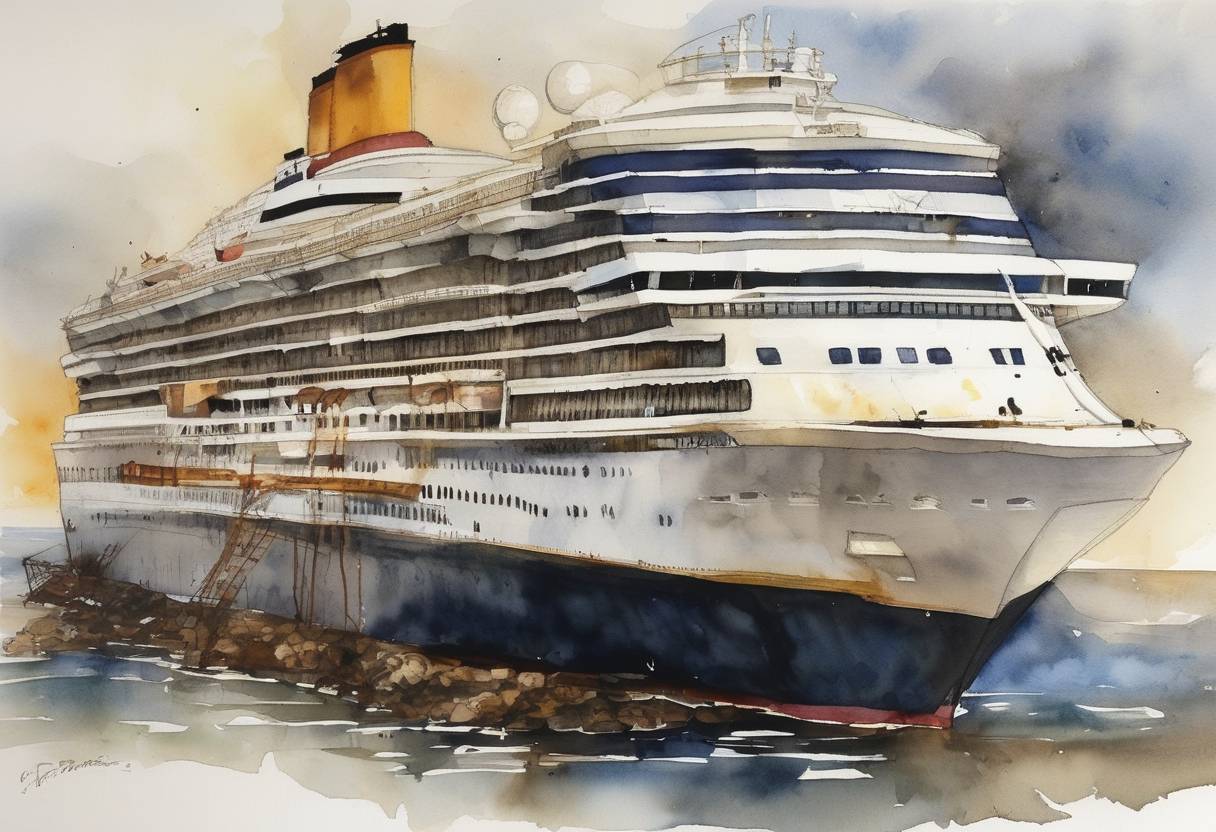
The Costa Concordia and Its Aftermath on January 26, 2012
Declaration of ‘Total Loss’
On January 26, 2012, the owners of the Costa Concordia officially declared the luxury liner a ‘total loss.’ This declaration came just weeks after the vessel had capsized off the coast of Tuscany on January 13, 2012, following a collision with submerged rocks near the Italian island of Giglio. The disaster resulted in 32 fatalities and numerous injuries among passengers and crew aboard.
Salvage Operation
The salvage operation for the Costa Concordia represented one of the largest and most complex endeavors in maritime history. The scale of the operation was immense due to the vessel’s size—114,500 gross tons—and the challenging conditions at the wreck site. The nearly two-year-long salvage project involved refloating and towing the ship, which eventually succeeded in July 2014. The undertaking, supervised by the Italian company Titan Salvage and the Italian firm Micoperi, marked a monumental effort in engineering and logistics.
Legal and Environmental Repercussions
In the wake of the accident, the captain of the Costa Concordia, Francesco Schettino, faced charges including manslaughter, causing a shipwreck, and abandoning ship. His trial received significant media attention, culminating in his conviction and a 16-year prison sentence.
On the environmental front, immediate concerns arose about the potential impact on the marine ecosystem around the island of Giglio. The operation aimed to minimize environmental damage by carefully containing fuel and other hazardous substances. Long-term monitoring continued to assess the ecological impact of the disaster.
Historical Significance
The Costa Concordia incident and its subsequent handling set precedents in maritime safety and crisis management. It highlighted the need for stringent safety protocols and raised questions about human error and technological failings in modern maritime navigation. The incident continues to be a reference point for improvements in passenger ship safety standards globally.