Establishment of the U.S. Mint
1791 · Philadelphia, United States
The United States Congress passed a resolution creating the U.S. Mint, which was signed into law by President George Washington on April 2, 1792.
July 6, 1785
The dollar was unanimously chosen as the monetary unit for the United States by the Continental Congress.
New York City, United States | Continental Congress
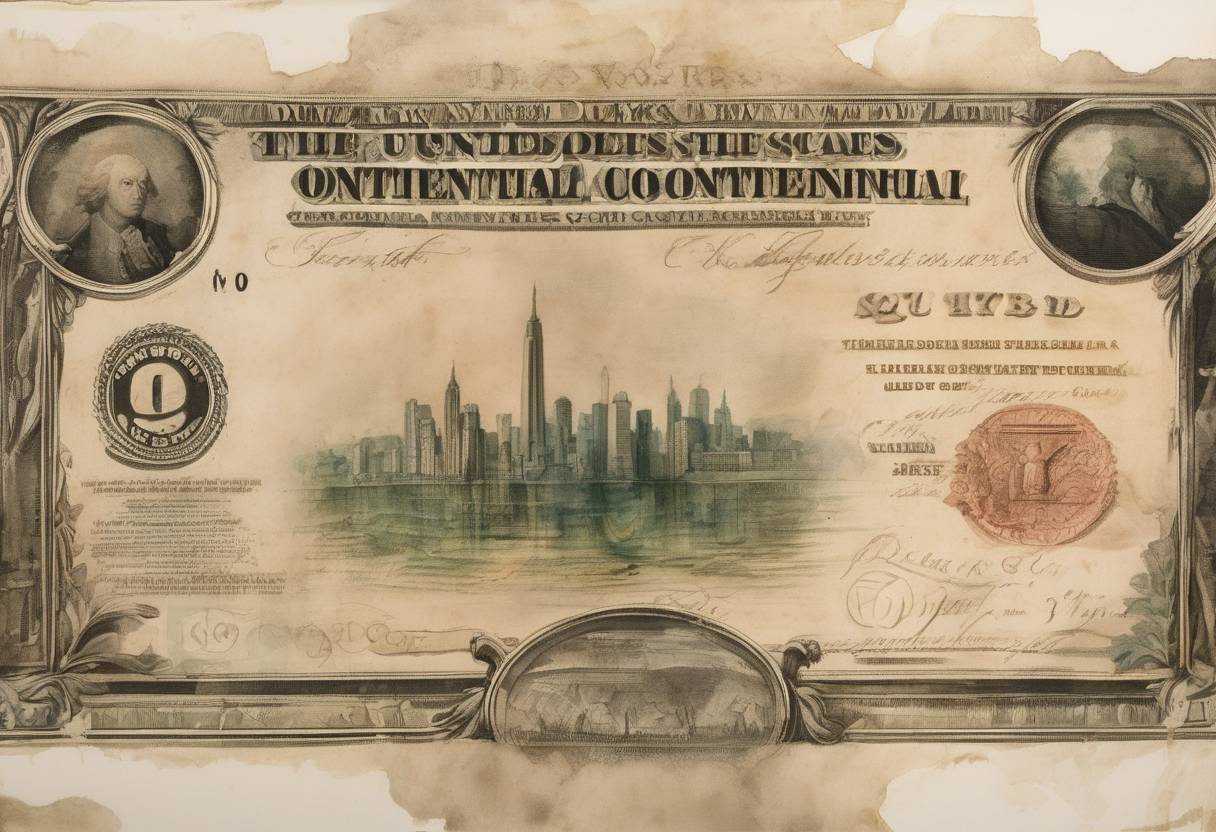
On July 6, 1785, the Continental Congress made a pivotal decision that would shape the economic future of the United States: it unanimously chose the dollar as the official monetary unit of the country. This decision was a significant step in establishing a unified and stable economic system for the newly independent nation.
Economic Chaos Post-Independence: Following the American Revolutionary War, the United States faced severe economic challenges. The lack of a standardized currency led to confusion and instability. Various forms of currency were in circulation, including foreign coins, state-issued money, and Continental currency, which had depreciated significantly.
Need for a Standardized Currency: The economic disarray underscored the need for a standardized national currency to facilitate trade, stabilize the economy, and unify the states under a common financial system.
Influence of the Spanish Dollar: The Spanish dollar, or “piece of eight,” was widely used in the Americas and was familiar to the American public. Its popularity and stability made it a logical choice as a model for the new currency.
Thomas Jefferson’s Proposal: Thomas Jefferson, a prominent advocate for a decimal-based currency system, proposed the adoption of the dollar. He argued that a decimal system would simplify calculations and transactions.
Robert Morris and the Bank of North America: Robert Morris, the Superintendent of Finance, played a crucial role in advocating for a national currency. He had previously established the Bank of North America, which helped stabilize the economy during the war.
Unanimous Vote: On July 6, 1785, the Continental Congress voted unanimously to adopt the dollar as the official monetary unit of the United States. This decision marked the first time a country adopted a decimal-based currency system.
Decimal System: The dollar was divided into 100 cents, reflecting Jefferson’s influence and the desire for a simple and efficient monetary system.
Establishment of the U.S. Mint: The decision paved the way for the establishment of the U.S. Mint in 1792, which began producing coins based on the dollar system.
Economic Stability: The adoption of the dollar helped stabilize the U.S. economy by providing a consistent and reliable currency, facilitating trade and commerce.
Legacy: The dollar’s adoption set a precedent for other nations considering decimal-based currency systems and remains a cornerstone of the U.S. economy today.
In summary, the decision to adopt the dollar as the monetary unit was a foundational moment in U.S. history, reflecting the nation’s commitment to economic unity and stability. It laid the groundwork for the financial systems that would support the country’s growth and development in the years to come.
Source: en.wikipedia.org