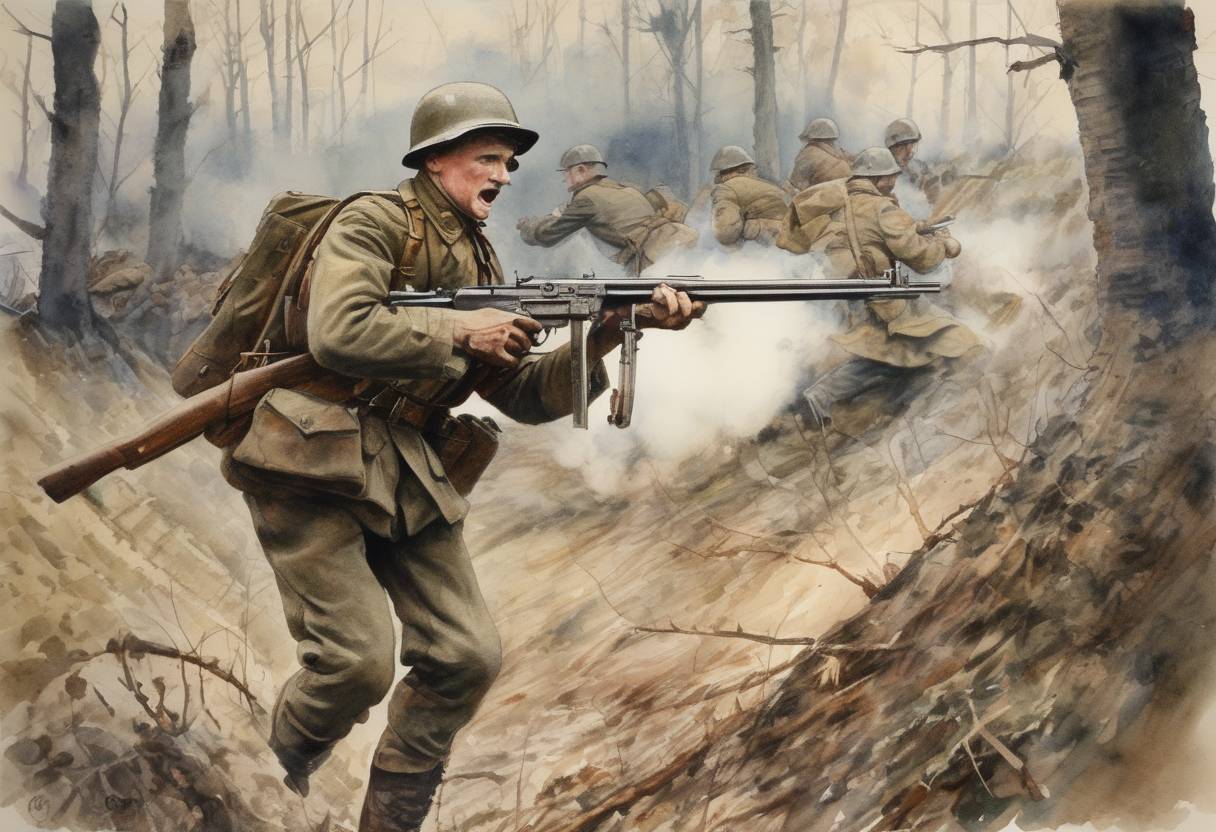
The Heroic Actions of Corporal Alvin C. York on October 8, 1918
On October 8, 1918, during the Meuse-Argonne Offensive in World War I, Corporal Alvin C. York performed an extraordinary act of bravery that would earn him the Medal of Honor and cement his place in military history. This offensive was part of the final Allied push to break through the German lines on the Western Front.
Context and Background
Meuse-Argonne Offensive: This was one of the largest operations of the American Expeditionary Forces (AEF) during World War I, involving over a million American soldiers. It aimed to cut off the vital German rail hub at Sedan, which was crucial for German supply lines.
Alvin C. York: Born in rural Tennessee, York was drafted into the U.S. Army in 1917. Initially a conscientious objector due to his religious beliefs, he eventually reconciled his duties with his faith and became a committed soldier.
The Event
The Mission: On the morning of October 8, York’s unit, part of the 82nd Infantry Division, was tasked with advancing through the Argonne Forest to capture a German-held rail line. They encountered heavy resistance from German machine gun nests.
York’s Actions: As his unit was pinned down by intense machine gun fire, York took command after several of his superior officers were killed or incapacitated. Demonstrating remarkable marksmanship and tactical acumen, he led a small group of men in a flanking maneuver.
Capture of German Soldiers: York single-handedly silenced a machine gun nest and, with the help of his men, captured 132 German soldiers. His actions effectively neutralized the German position, allowing the American forces to advance.
Aftermath and Recognition
Medal of Honor: For his extraordinary heroism, York was awarded the Medal of Honor. The citation highlighted his courage, leadership, and the significant impact of his actions on the success of the mission.
Legacy: York’s story became legendary, symbolizing the bravery and effectiveness of American soldiers during World War I. His actions were later depicted in the 1941 film “Sergeant York,” which further popularized his story.
Historical Significance
Impact on the War: York’s actions contributed to the success of the Meuse-Argonne Offensive, which was a critical factor in the eventual Allied victory and the end of World War I.
Cultural Icon: Alvin C. York became an American folk hero, representing the ideal of the citizen-soldier who rises to greatness in times of need.
York’s legacy endures as a testament to individual valor and the broader contributions of American forces in World War I. His story continues to inspire and remind us of the sacrifices made during one of history’s most devastating conflicts.