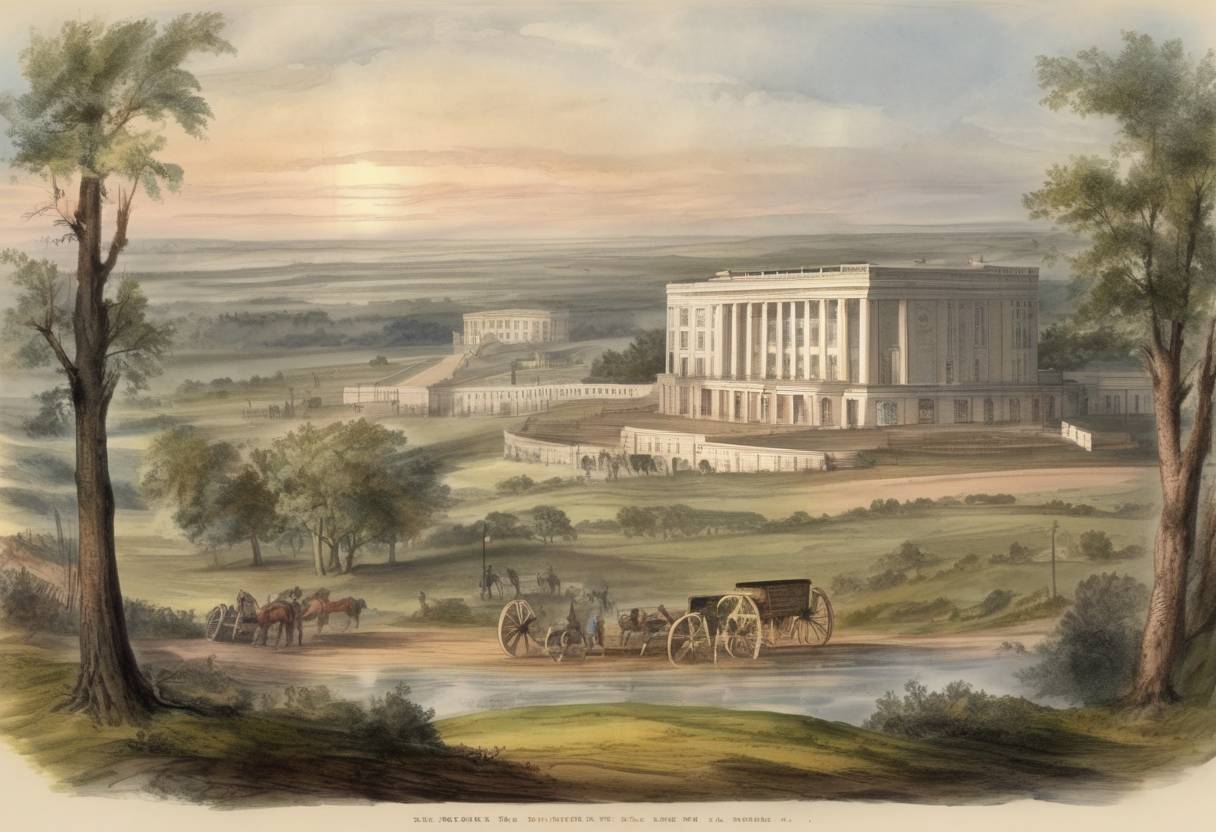
Kansas Admitted to the Union as the 34th State
On January 29, 1861, Kansas was officially admitted to the United States as the 34th state. This event marked the culmination of a turbulent period in American history known as “Bleeding Kansas,” which was characterized by violent conflicts over the issue of slavery.
Background
The Kansas-Nebraska Act of 1854 was a pivotal piece of legislation that allowed the territories of Kansas and Nebraska to decide for themselves whether they would permit slavery, based on the principle of popular sovereignty. This act effectively repealed the Missouri Compromise of 1820, which had prohibited slavery north of the 36°30′ parallel.
The prospect of Kansas becoming a slave state led to a rush of both pro-slavery and anti-slavery settlers into the territory, each hoping to influence the outcome of the first elections. This resulted in a period of intense and often violent conflict between the two factions, earning the territory the nickname “Bleeding Kansas.”
Key Events Leading to Statehood
Lecompton Constitution (1857): Pro-slavery advocates drafted this constitution to allow slavery in Kansas. However, it was rejected by the anti-slavery settlers and eventually by the U.S. Congress.
Wyandotte Constitution (1859): This anti-slavery constitution was adopted by Kansas settlers and eventually accepted by Congress, paving the way for Kansas to enter the Union as a free state.
Political Tensions: The national debate over slavery was intensifying, with the Republican Party, which opposed the expansion of slavery, gaining strength. The admission of Kansas as a free state was a significant victory for the anti-slavery movement.
Admission to the Union
Kansas was admitted to the Union on January 29, 1861, just months before the outbreak of the American Civil War. Its admission as a free state was a significant blow to the pro-slavery factions and highlighted the deep divisions within the country over the issue of slavery.
Aftermath and Significance
Civil War Context: The admission of Kansas as a free state added to the tensions that led to the Civil War, which began in April 1861. Kansas’s entry into the Union underscored the sectional conflicts that were tearing the nation apart.
Legacy of Bleeding Kansas: The events in Kansas were a precursor to the larger national conflict over slavery, illustrating the violent and contentious nature of the debate.
State Development: Following its admission, Kansas continued to develop economically and politically, contributing to the Union’s efforts during the Civil War and beyond.
Kansas’s journey to statehood is a critical chapter in American history, reflecting the broader struggles over slavery and state rights that defined the era.