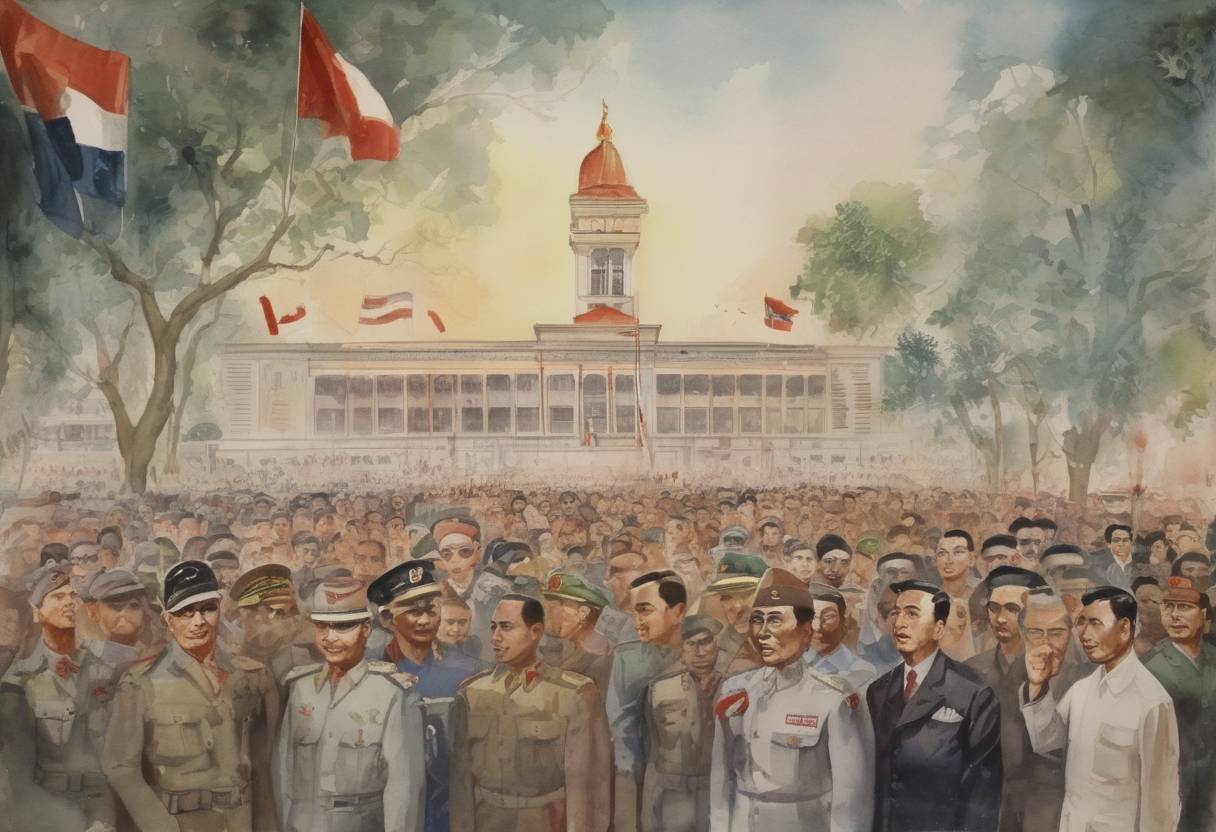
Indonesia Declares Independence: August 17, 1945
On August 17, 1945, Indonesia proclaimed its independence from Dutch colonial rule, marking a pivotal moment in the nation’s history. This declaration was made by two prominent nationalist leaders, Sukarno and Mohammad Hatta, who played crucial roles in the country’s struggle for sovereignty.
Historical Context
Colonial Background
- Dutch Colonial Rule: Indonesia, known as the Dutch East Indies during colonial times, had been under Dutch control for over three centuries. The archipelago was a valuable colony due to its rich natural resources, including spices, rubber, and oil.
- Japanese Occupation: During World War II, the Japanese occupied Indonesia from 1942 to 1945. This period weakened Dutch authority and fostered Indonesian nationalist sentiments.
Rise of Nationalism
- Nationalist Movements: The early 20th century saw the rise of nationalist movements in Indonesia, with figures like Sukarno and Hatta advocating for independence.
- Japanese Support: The Japanese occupation initially supported Indonesian nationalist leaders, hoping to gain local support against the Allies. However, as the war turned against Japan, they encouraged Indonesian independence to maintain influence.
The Proclamation of Independence
- Date: August 17, 1945
- Location: Jakarta, at Sukarno’s residence on Jalan Pegangsaan Timur 56.
- Proclamation: Sukarno, with Hatta by his side, read the Proclamation of Indonesian Independence. The brief declaration announced the end of colonial rule and the establishment of a free Indonesia.
- Sukarno: A charismatic leader and orator, Sukarno became Indonesia’s first President. He was instrumental in uniting diverse ethnic and religious groups under the banner of nationalism.
- Mohammad Hatta: A respected economist and politician, Hatta served as Indonesia’s first Vice President. He was a key strategist in the independence movement.
Aftermath and Significance
- Dutch Response: The Netherlands initially refused to recognize Indonesian independence, leading to a four-year armed struggle known as the Indonesian National Revolution.
- International Recognition: Indonesia’s independence was eventually recognized by the international community, with the Dutch formally acknowledging sovereignty on December 27, 1949.
- Legacy: The proclamation is celebrated annually as Indonesia’s Independence Day, a symbol of national unity and resilience.
Broader Historical Impact
- Decolonization: Indonesia’s successful fight for independence inspired other colonized nations in Asia and Africa to pursue their own paths to sovereignty.
- Cold War Context: The emergence of Indonesia as an independent nation during the early Cold War period added a significant player to the geopolitical landscape of Southeast Asia.
Indonesia’s declaration of independence on August 17, 1945, remains a cornerstone of its national identity and a testament to the enduring spirit of its people in their quest for self-determination.