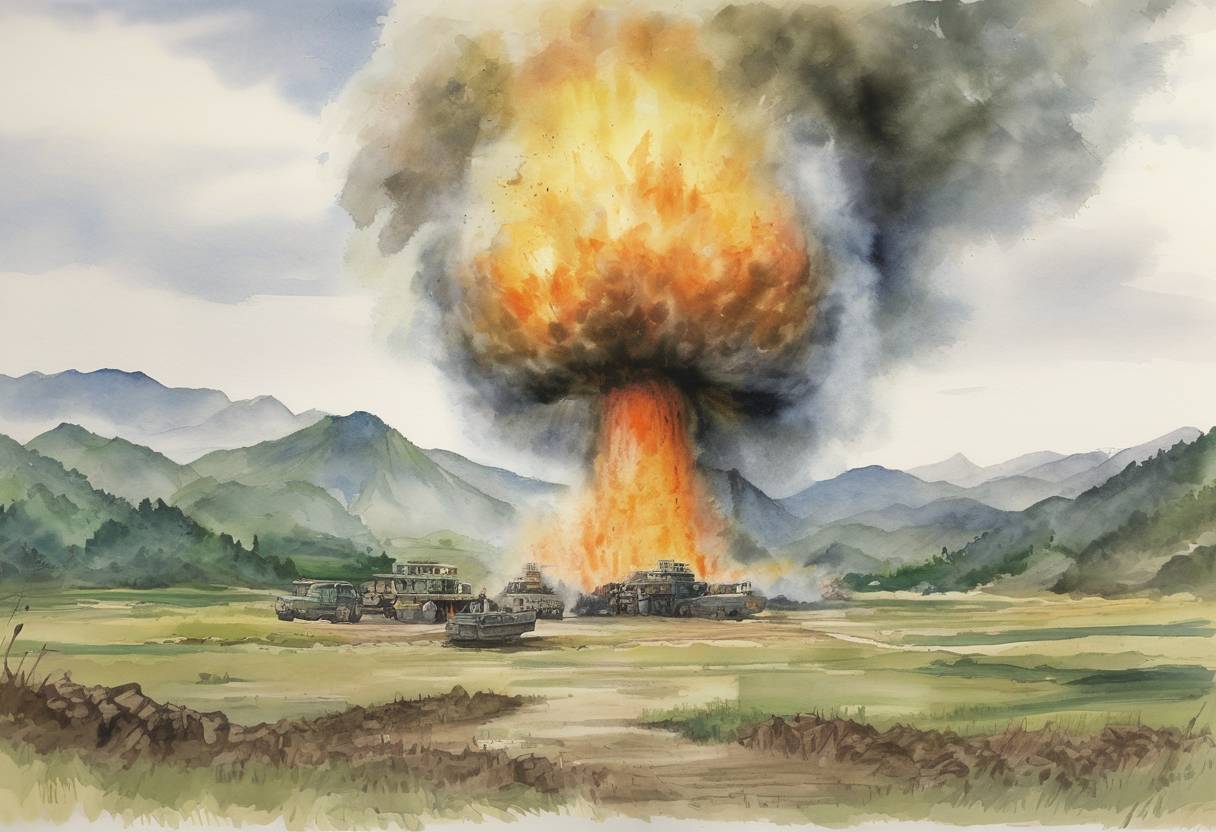
North Korea’s First Nuclear Test: October 9, 2006
On October 9, 2006, North Korea conducted its first nuclear test, marking a significant and alarming development in international relations and global security. This underground detonation took place in the northeastern part of the country, at the Punggye-ri Nuclear Test Site. The test was a pivotal moment in North Korea’s pursuit of nuclear capabilities and had profound implications for regional and global geopolitics.
Context Leading Up to the Test
Nuclear Ambitions: North Korea’s nuclear ambitions can be traced back to the late 20th century. The country had been developing its nuclear program for decades, despite international efforts to curb its progress through diplomacy and sanctions.
Six-Party Talks: Prior to the test, North Korea had been involved in the Six-Party Talks, a series of negotiations aimed at denuclearizing the Korean Peninsula. These talks included North Korea, South Korea, Japan, China, Russia, and the United States. However, the talks had stalled, and North Korea had withdrawn from the Nuclear Non-Proliferation Treaty (NPT) in 2003.
International Tensions: The test came amid heightened tensions between North Korea and the international community, particularly the United States, which had labeled North Korea as part of the “Axis of Evil” in 2002.
The Test
Details of the Detonation: The nuclear test was conducted underground and was estimated to have a yield of less than one kiloton, which is relatively small compared to other nuclear tests. Despite its limited yield, the test demonstrated North Korea’s capability to develop nuclear weapons.
International Reaction: The test drew widespread condemnation from around the world. The United Nations Security Council quickly convened and unanimously adopted Resolution 1718, imposing sanctions on North Korea. These sanctions aimed to restrict North Korea’s access to materials and technology that could further its nuclear and missile programs.
Aftermath and Consequences
Increased Sanctions and Isolation: The test led to increased international sanctions and further isolated North Korea diplomatically and economically. Despite these measures, North Korea continued to develop its nuclear and missile programs.
Regional Security Concerns: The nuclear test heightened security concerns in East Asia, particularly for South Korea and Japan. Both countries, along with the United States, increased their military readiness and cooperation in response to the perceived threat.
Impact on Diplomacy: The test complicated diplomatic efforts to denuclearize the Korean Peninsula. While the Six-Party Talks resumed briefly after the test, they ultimately failed to achieve lasting progress, and North Korea continued its nuclear development.
Broader Historical Significance
North Korea’s first nuclear test in 2006 was a critical juncture in the country’s nuclear development and had lasting implications for international security. It underscored the challenges of nuclear non-proliferation and highlighted the complexities of engaging with a reclusive and defiant regime. The test set the stage for future nuclear tests by North Korea and remains a pivotal moment in the ongoing tensions on the Korean Peninsula.